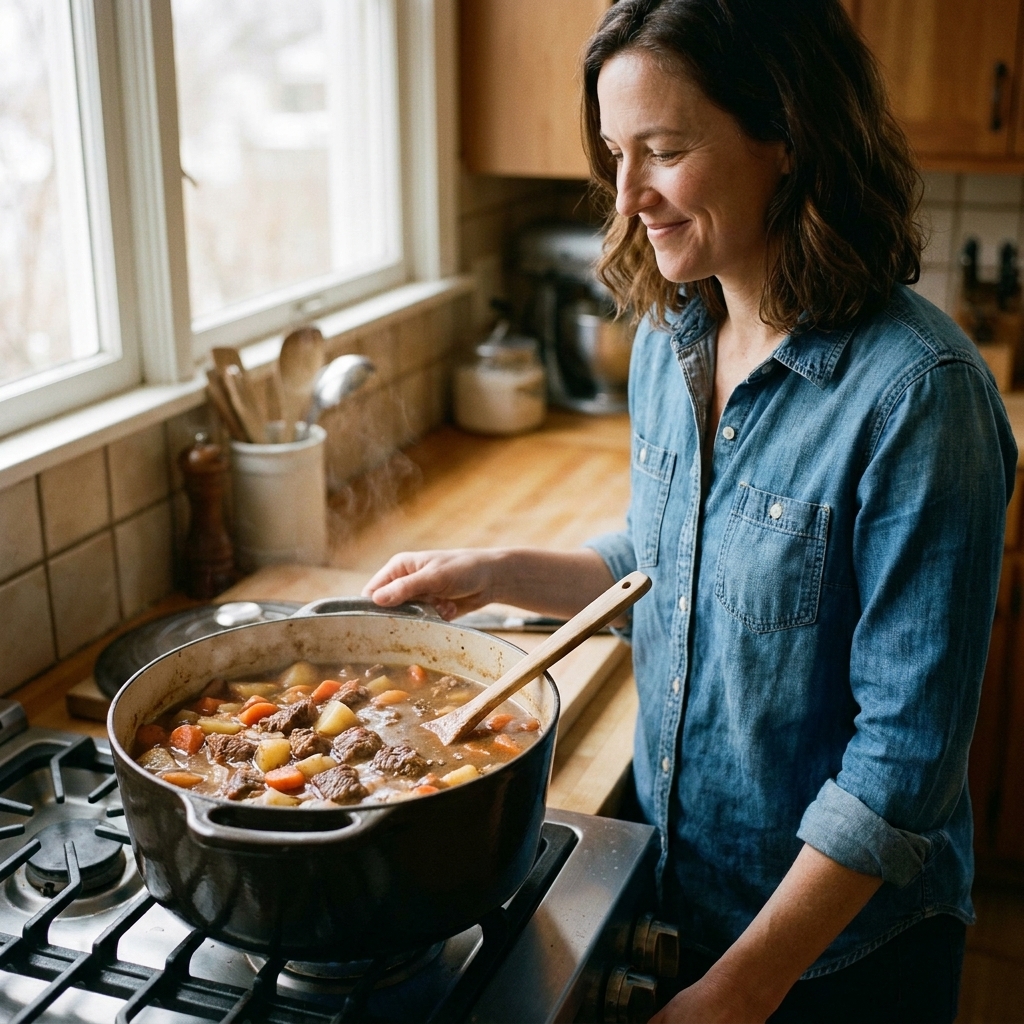
If you have ever lifted the lid on a slow cooker and thought, this tastes great, but it is way too brothy, you are not alone. Slow cookers are designed to trap moisture. That is wonderful for tenderness and hands-off cooking, but it also means you often do not get the same natural thickening you would from simmering uncovered on the stove.
The good news is you can still land that hearty, spoon-coating stew consistency without leaving the lid ajar or trying to “reduce” for hours. These are my seven most reliable ways to thicken slow cooker soups and stews, plus when to use each one and how to avoid lumps.
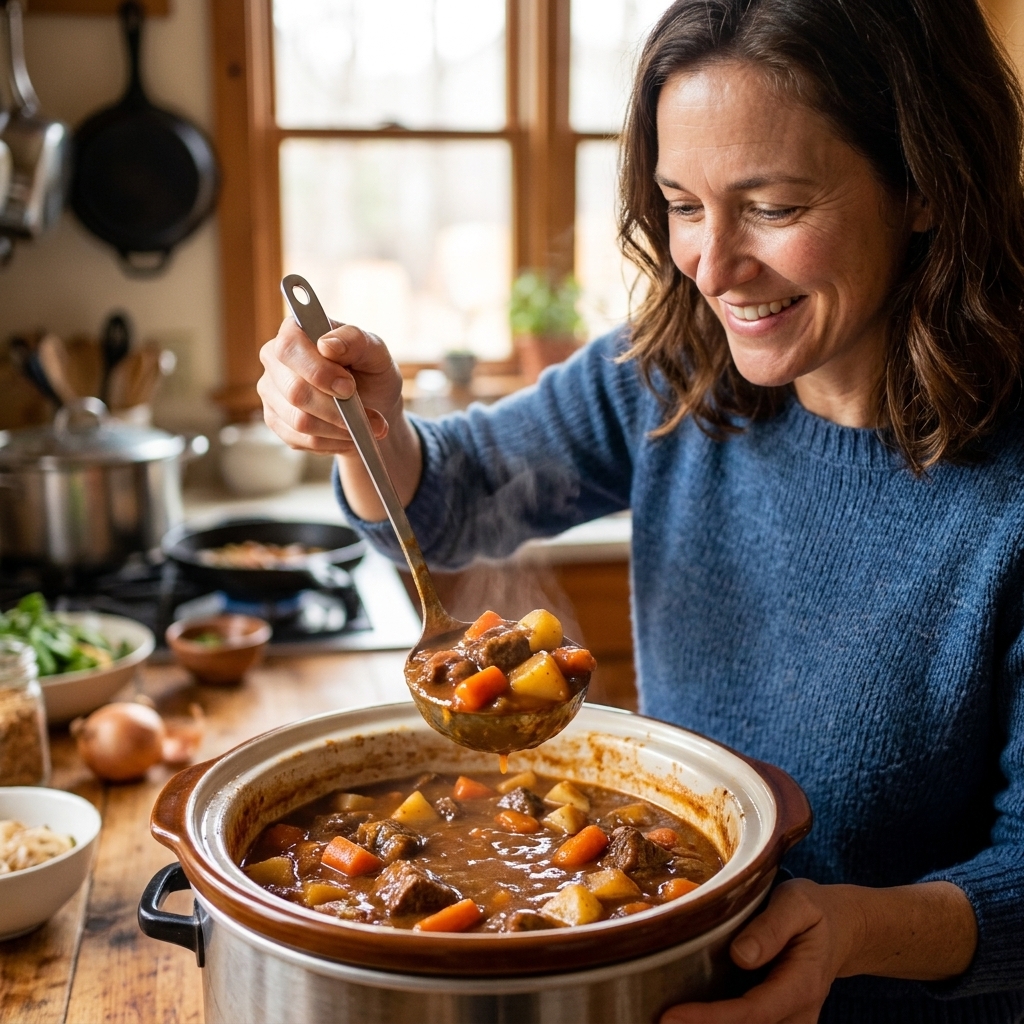
Before you thicken
Do this first, especially if you are cooking with potatoes, beans, pasta, or rice.
- Let it rest 10 to 15 minutes on Warm. Many stews thicken slightly as they cool and starches settle.
- Skim excess fat. A thick layer of fat on top can make a stew feel thin underneath. Skim it or blot with a paper towel.
- Remove bay leaves and big herb stems. It sounds unrelated, but it is easier to whisk or puree smoothly without fishing things out midstream.
Quick note on terminology: I say “slow cooker” throughout. “Crock-Pot” is a common brand name people use generically, and the tips apply either way.
1) Quick roux
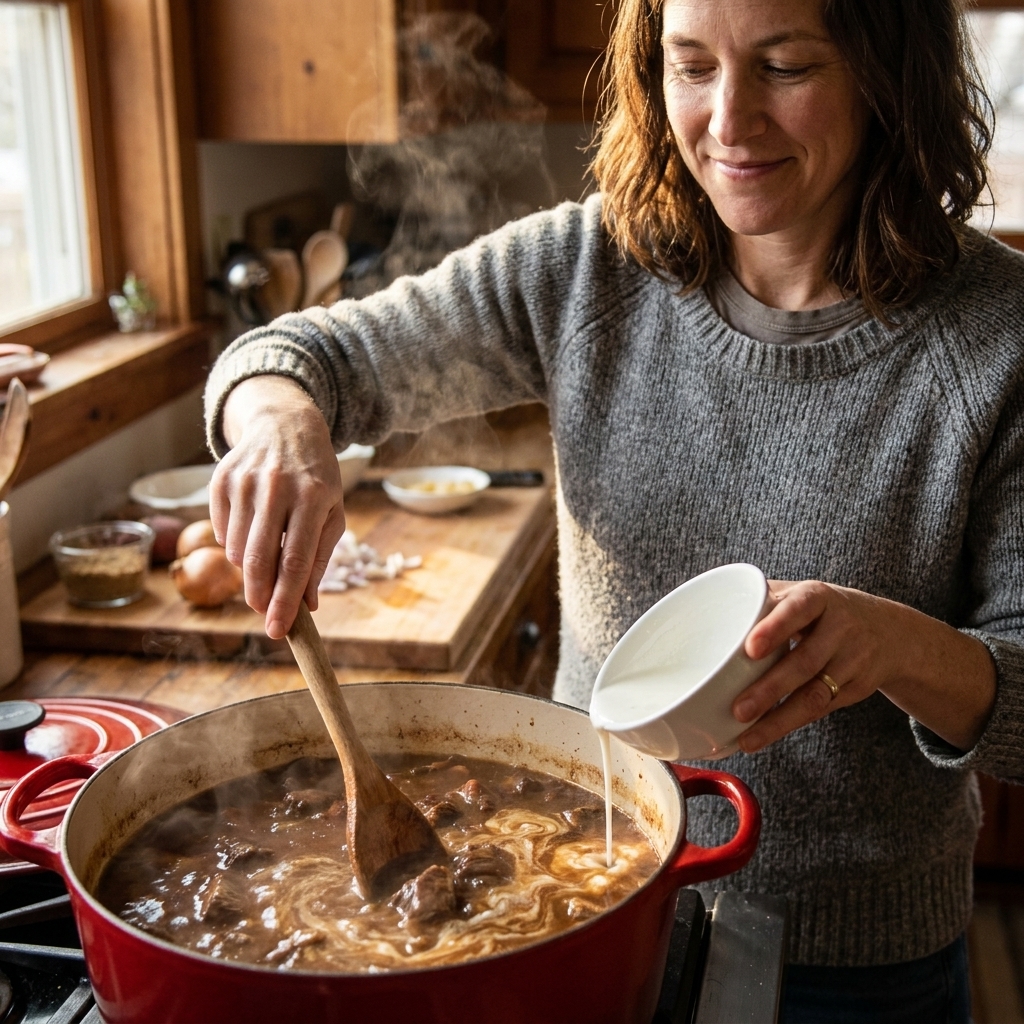
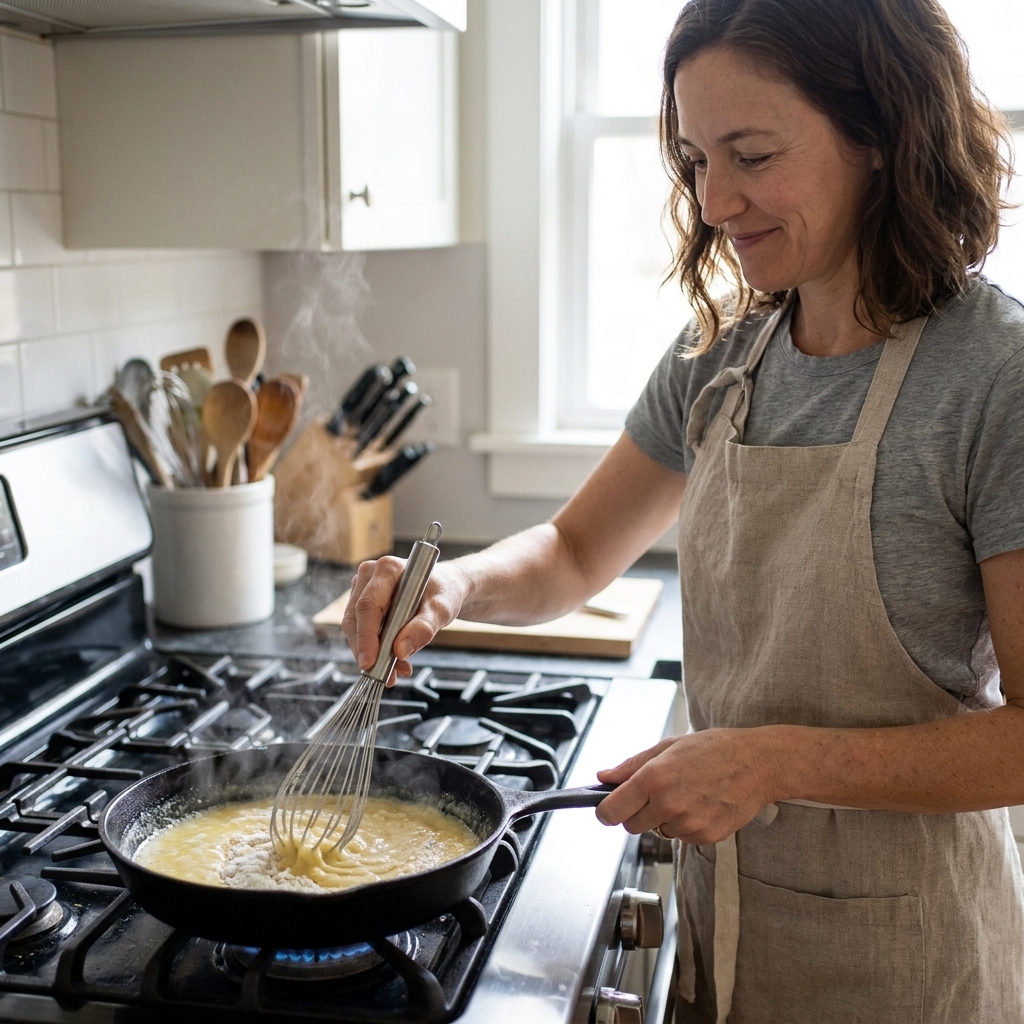
A roux is my go-to when I want a classic, silky stew texture. It thickens evenly and holds up well for leftovers.
How to do it
- Melt 2 tablespoons butter (or oil) in a small skillet.
- Whisk in 2 tablespoons flour.
- Cook 1 to 2 minutes until it smells toasty, like pie crust.
- Whisk in 1 cup hot broth taken from the slow cooker until smooth.
- Stir the roux mixture back into the slow cooker, cover, and cook on High for 15 to 30 minutes.
Best for
Beef stew, chicken stew, pot-pie-style fillings, chowders, and creamy vegetable soups.
Clara tip
Cook the roux at least a minute. Raw flour taste is real, and slow cookers do not “boil it out” quickly.
2) Cornstarch or arrowroot slurry
This is the weeknight emergency button. It is quick, effective, and does not require extra pans if you do not mind mixing in a mug.
How to do it
- Stir together 1 tablespoon cornstarch (or arrowroot) with 1 tablespoon cold water until smooth.
- Stir it into the slow cooker.
- Cover and cook on High for 10 to 20 minutes, stirring once halfway through if you can.
Best for
Anything broth-forward: taco soup, chicken tortilla soup, beef and barley soup, vegetable soup that needs body.
Clara tip
Arrowroot stays a little glossier and is great if you are avoiding corn. Cornstarch can lose some thickness if it is simmered hard for a long time, stirred a lot, or cooked in very acidic soups, so use it when you are close to serving.
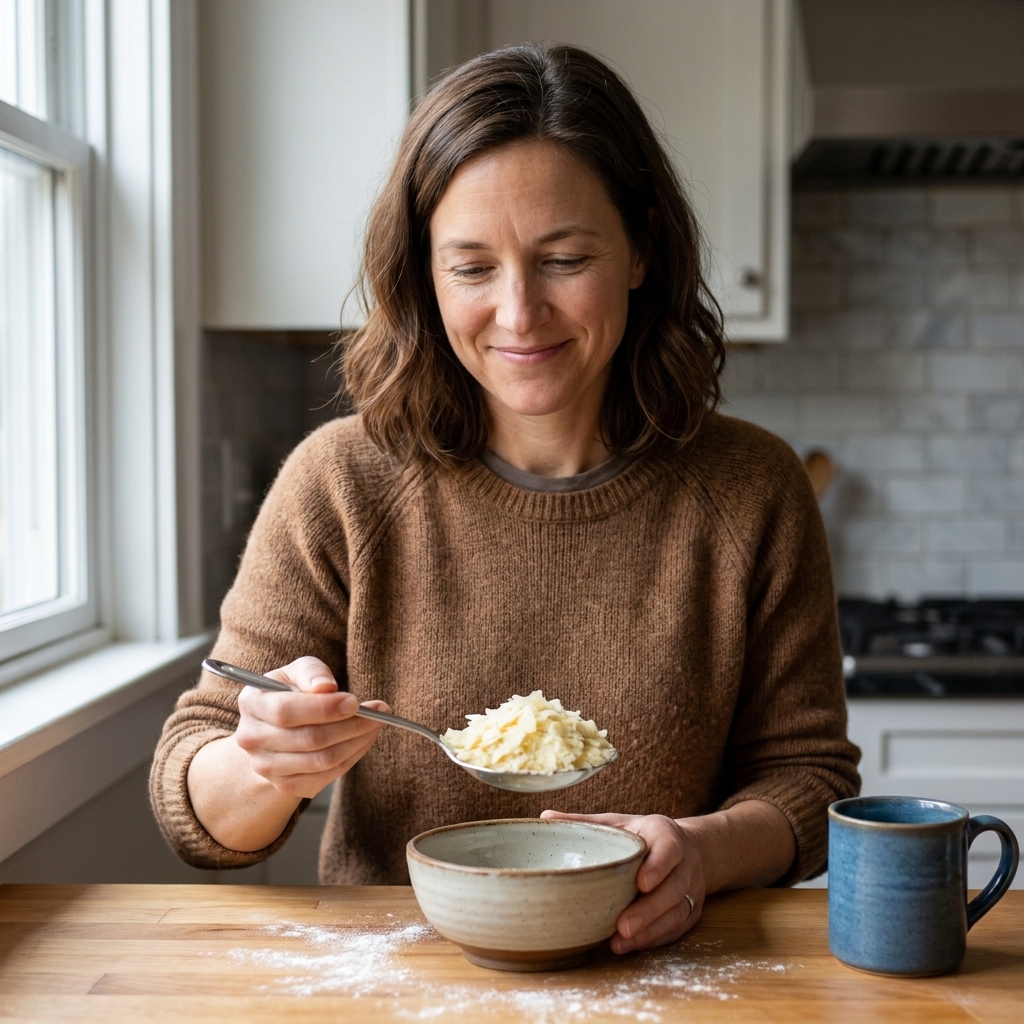
3) Potato flakes
Upstate New York winters taught me this one. Potato flakes are a sneaky thickener that adds comfort without turning your stew into gravy.
How to do it
- Sprinkle in 1 to 2 tablespoons potato flakes.
- Stir well, cover, and wait 5 minutes.
- Add more in small pinches until it is where you want it.
Best for
Chilis, beef stew, sausage and kale soup, lightly creamy vegetable soups, and anything you want thicker without adding flour.
Clara tip
Potato flakes keep thickening as they sit. Stop when it is almost perfect and let it rest.
4) Puree part of it
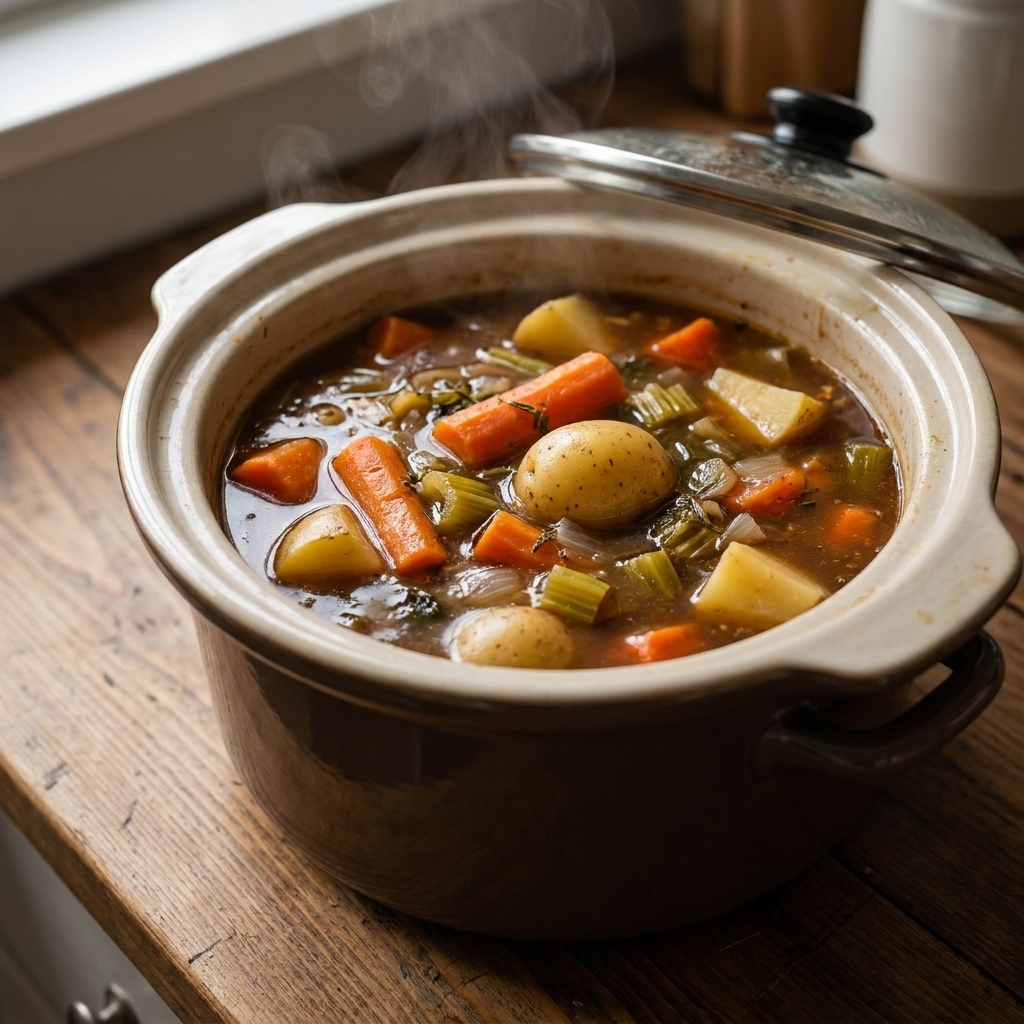
If your soup already has starchy vegetables or beans, you can thicken it by blending a portion. This builds body without changing the flavor much, and it feels very from scratch.
How to do it
- Scoop out 2 to 3 cups of the soup solids plus some broth.
- Blend until smooth using a blender, or use an immersion blender right in the crock (carefully).
- Stir the puree back into the slow cooker and heat through.
Blender safety note
If you are using a countertop blender, work in batches and vent the lid (or remove the center cap and cover with a towel). Hot soup expands fast and can pop the top if it is sealed tight.
Great ingredients to puree
- Potatoes, sweet potatoes
- Carrots, parsnips, winter squash
- White beans, chickpeas, lentils
- Cauliflower (surprisingly creamy)
Best for
Bean soups, lentil soups, chicken and vegetable soup, creamy squash soups, and chowder-style recipes.
Clara tip
Blend the vegetables, not the meat. Pureed beef stew is nobody’s idea of cozy.
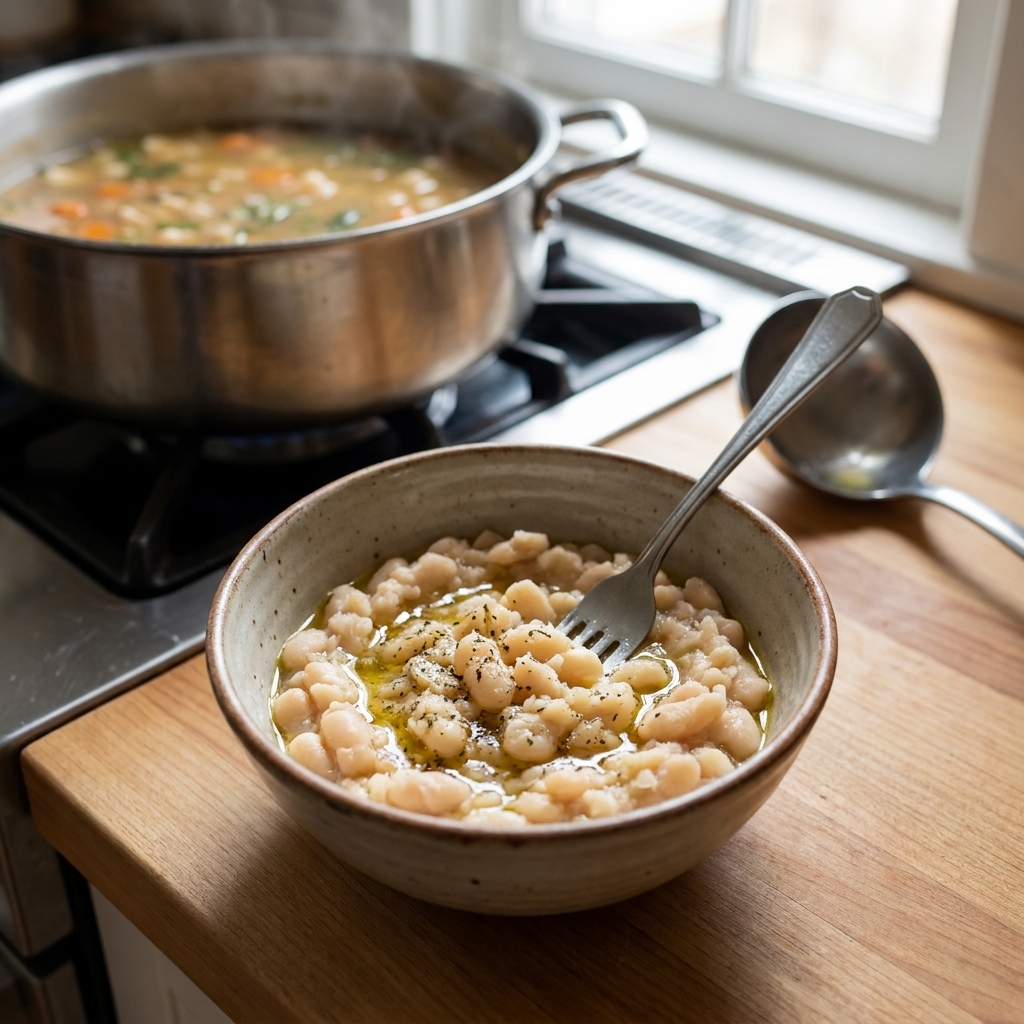
5) Mashed white beans
If you want thickness and protein without dairy or flour, mashed beans are my favorite trick. They make brothy soups feel hearty, almost like they have been simmering all day on the stove.
How to do it
- Drain and rinse 1 can of white beans (cannellini or great northern).
- Mash with a fork with a splash of broth, or blend into a smooth paste.
- Stir into the slow cooker and cook on High for 15 minutes.
Best for
Chicken soups, vegetable soups, minestrone, turkey chili, and sausage soups.
Clara tip
White beans disappear the best. Black beans will thicken too, but they announce themselves in both color and flavor.
6) Dairy, added gently
Dairy does not just add richness. It can also add thickness, especially if you use something with structure like cream cheese. The key is timing and temperature so it stays smooth.
How to do it
- For cream cheese: cube 2 to 4 ounces, soften slightly, then whisk into hot soup until melted. Cook 10 minutes to fully blend.
- For sour cream or yogurt: temper it first by stirring a ladle of hot broth into the dairy, then stir the warmed mixture back into the slow cooker.
- Keep the slow cooker on Low or Warm once dairy is in to avoid curdling.
Best for
Chicken enchilada soup, creamy tomato soup, loaded potato soup, white chicken chili, and stroganoff-style stews.
Clara tip
If you plan to freeze leftovers, go easy on sour cream or yogurt. Cream cheese usually holds up better, though the texture can still change a bit after thawing.
7) Match the starch
Sometimes the right thickener is a pantry staple that matches the vibe of the bowl.
Option A: Flour slurry
Whisk 2 tablespoons flour with 2 tablespoons cold water until smooth, stir in, then cook on High 20 to 30 minutes. Flour needs time to fully cook.
Option B: Masa harina
Whisk 1 to 2 tablespoons masa harina with a little warm broth, then stir it in. It thickens and adds a gentle corn flavor that belongs in chili.
Option C: Rolled oats
Stir in 2 to 3 tablespoons quick oats and cook 15 minutes. They soften and thicken subtly. If you do not want to see oat bits, blend a scoop of soup after they soften.
Best for
- Flour slurry: beef stew, turkey stew, vegetable soups
- Masa harina: chili, tortilla soup, taco soup
- Oats: lentil soup, vegetable stew, hearty chicken soup
Bonus: body, not starch-thick
If what you really want is that rich, lip-sticking “body,” focus on gelatin and collagen. Using chuck roast, shanks, oxtail, or bone-in chicken naturally adds it as they cook. In a pinch, an unflavored gelatin packet stirred into hot broth can give a stew a fuller mouthfeel. It will not turn soup into gravy, but it can make it feel more luxurious.
How much to use
It depends on how much liquid is in the slow cooker and how thick you want it, but these starting points work well for most 6 to 8 quart batches.
- Roux: about 2 tbsp fat + 2 tbsp flour thickens roughly 4 to 6 cups liquid
- Cornstarch slurry: about 1 tbsp cornstarch + 1 tbsp water thickens roughly 2 to 3 cups liquid
- Potato flakes: 1 tbsp at a time, wait 5 minutes between additions
- Puree: blend 2 to 3 cups of soup and stir back in
- Mashed beans: 1 can beans for a big pot, half a can for smaller batches
When in doubt, start small. You can always add more. It is much harder to backtrack from cement chili.
If you want reduction
I am firmly in the “do not leave the lid ajar” camp. Slow cookers need that sealed environment to stay at a safe, steady temperature, and you can lose a lot of heat chasing a little evaporation.
If you truly need to reduce, you have two better options: finish uncovered on High for 20 to 30 minutes (stirring occasionally), or transfer the liquid to a saucepan and simmer it down on the stove, then stir it back in. That is the fastest way to concentrate flavor and thicken by evaporation.
Troubleshooting
My slurry clumped
Slurries must be mixed with cold water first, then stirred into hot soup. If you already have clumps, whisk vigorously or blend a small portion of the soup and stir it back in.
It thickened, but the flavor tastes flat
Thickening can mute seasoning. Add a pinch more salt, a squeeze of lemon, a splash of vinegar, or a spoon of tomato paste. Acid wakes up slow-cooked flavors beautifully.
It got too thick
Stir in warm broth a little at a time. Then taste and adjust salt again. Broth will dilute seasoning.
It looks thick, but feels greasy
Skim fat from the surface. Then brighten with acid. Greasy stews often need less fat and more balance, not more thickener.
My cook-once move
If I know we will have leftovers, I purposely thicken slightly less than perfect on day one. By day two, the fridge does its magic. Potatoes, beans, and grains absorb broth, and suddenly you have a stew that feels like it has been simmering forever.
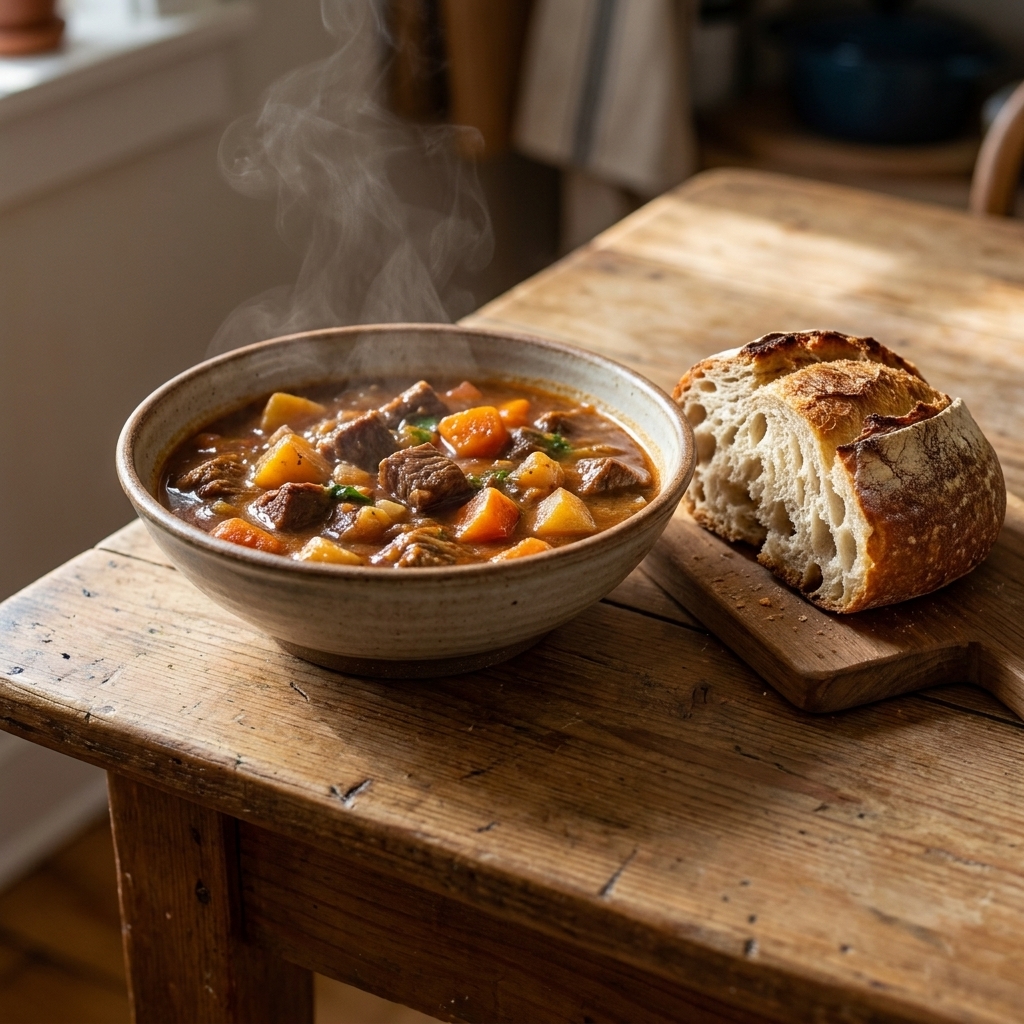
Warm it gently, add a splash of broth if needed, and serve with the crustiest bread you can find. I have been known to plan my bakery run around that second bowl.