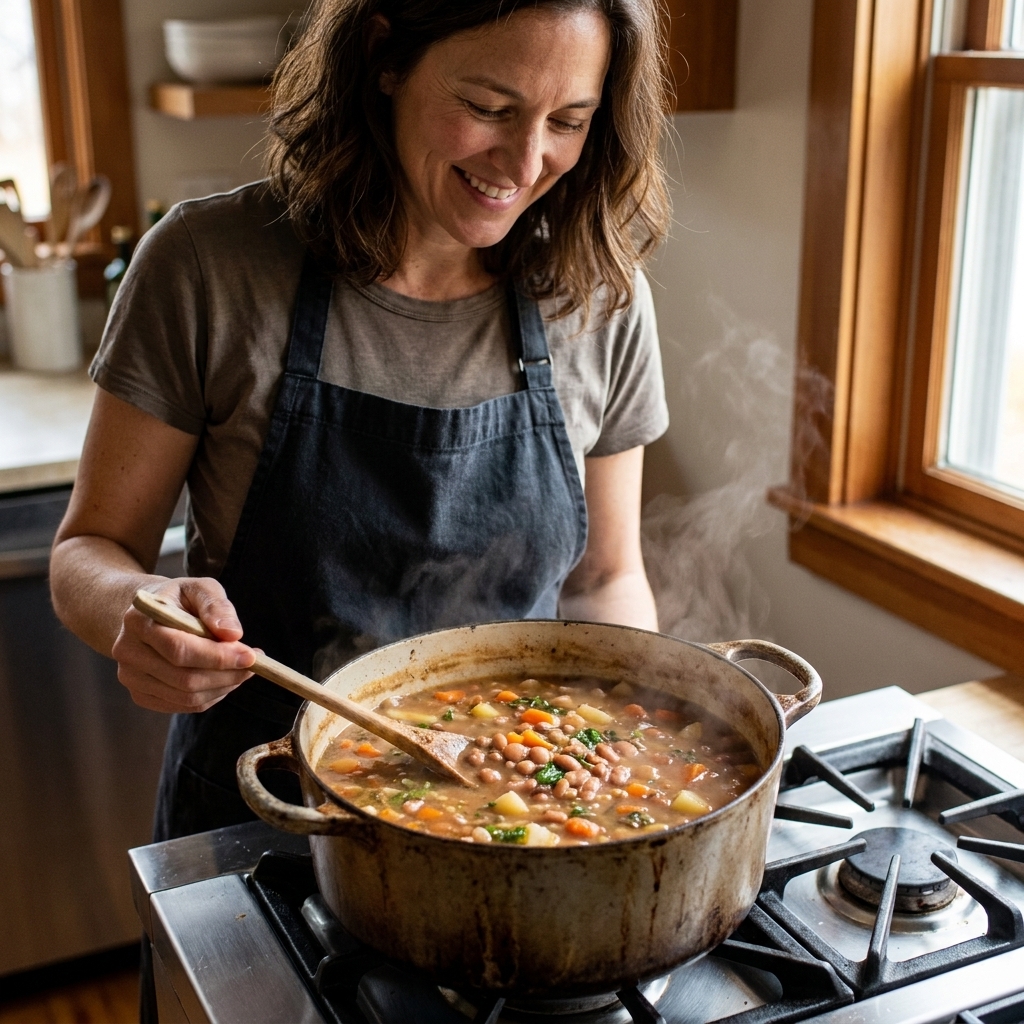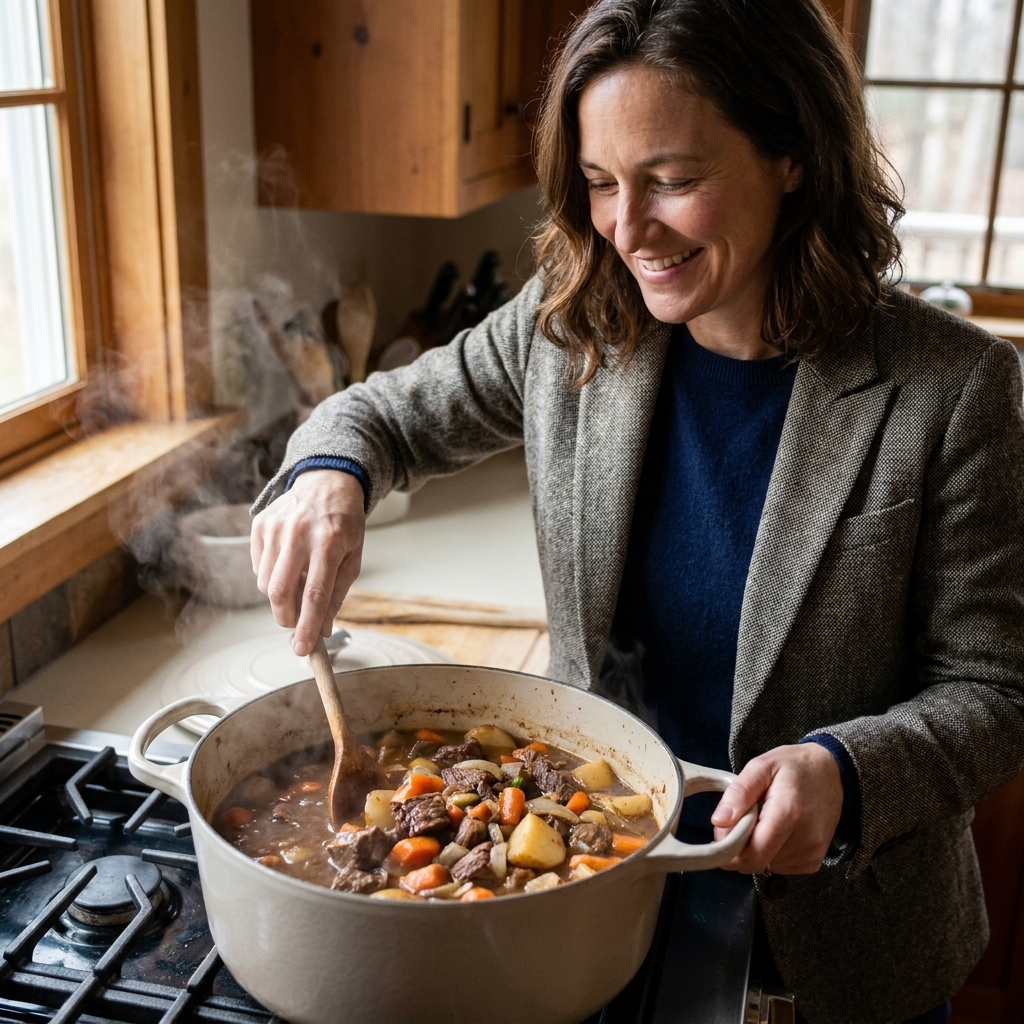
We have all been there. You hustle a quick weeknight stew onto the stove, you take a proud little taste, and the flavor is great but the texture is more “soupy” than “stewy.” The good news is you do not need an extra hour of simmering to get that cozy, spoon-coating body. You just need the right thickener and a plan.
This is my grab-and-go guide to thickening stews in under 5 minutes, with the exact amounts I use in my own Dutch oven when dinner needs to happen now.
Before you thicken: two quick checks
1) Is it simmering?
Most quick thickeners work best at a gentle boil or steady simmer. If your stew is barely warm, you will chase thickness and overdo it.
2) How much liquid is in the pot?
These amounts assume about 4 cups of broth or gravy in the pot (a typical weeknight stew). If you have a big pot, scale up. If you have a small skillet stew, scale down.
One more thing: Stew often thickens a little as it cools, especially if you used gelatin-rich stock. Aim for “just a touch looser than perfect” while it is piping hot.
The fastest thickeners
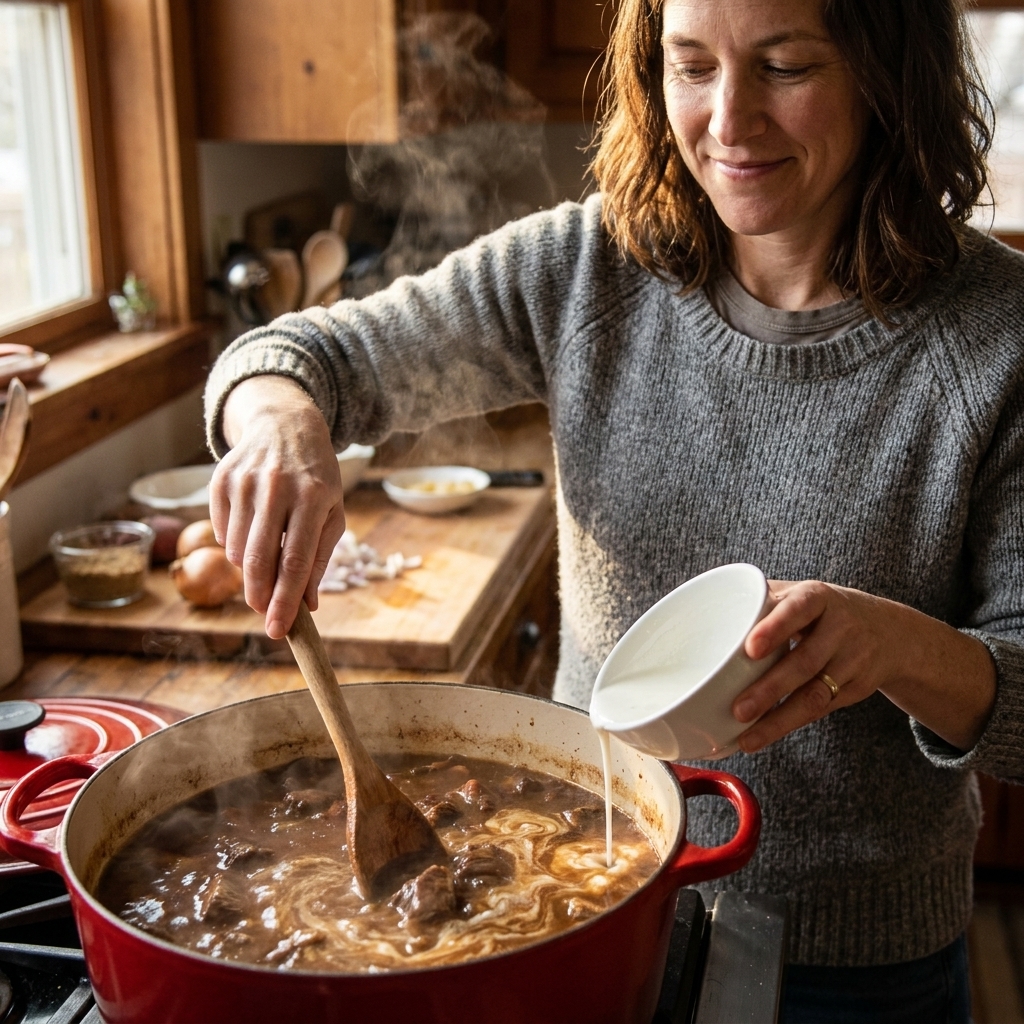
Cornstarch slurry (silky, glossy, dependable)
If you want a classic, gravy-like finish in a hurry, cornstarch is the speed champion.
- Mix: Start with 1 tablespoon cornstarch + 1 tablespoon cold water (or broth) for every 1 1/2 cups liquid.
- Add: Stir the slurry into the gently simmering stew.
- Wait: 60 to 90 seconds, then reassess. It thickens quickly.
Clara tip: Always mix cornstarch with cold liquid first. If you sprinkle it straight into hot stew, you will get little gel-like lumps that never quite dissolve.
Also: Cornstarch is happiest when you thicken near the end. A long, hard boil can loosen it over time, and repeated reheating can make the texture less reliable.
Instant potato flakes (cozy, matte, extremely fast)
Instant potato flakes are my stealth thickener for beef stew, chicken stew, and anything that wants a hearty, homey vibe. They thicken almost on contact.
- Start with: 1 tablespoon flakes per 1 cup liquid.
- Sprinkle: Over the surface while stirring constantly.
- Wait: 30 to 60 seconds. Add more in 1 teaspoon pinches.
Flavor note: Potato flakes bring a mild potato taste. In most stews it reads as “comforting.” In a bright lemony stew or seafood stew, pick a different option.
Mashed beans (thickens and adds protein)
White beans are magic for thickening quick stews without making them taste “starchy.” This is especially good for turkey, chicken, sausage, and vegetable stews.
- Mash: 1/2 cup canned white beans (rinsed) with a fork, or blend with a splash of broth.
- Stir in: Add the beans, then simmer 1 to 2 minutes.
- Result: A creamy body that feels slow-simmered.
Clara tip: If your stew has chunky vegetables you want to keep intact, mash the beans separately. If you are fine with a rustic texture, you can mash them right in the pot along the side.
Other quick options
Flour slurry (soft, old-school thickness)
Flour takes slightly longer than cornstarch and needs a couple minutes to cook out the raw taste, but it makes a very traditional stew gravy.
- Mix: Start with 2 tablespoons all-purpose flour + 3 tablespoons cold water per 2 cups liquid.
- Add: Stir in while simmering, whisking well.
- Simmer: 2 to 3 minutes, stirring, until it no longer tastes “floury.”
- Adjust: If you want it thicker, add another half batch and simmer 2 minutes more.
Heads up: Flour thickening is more opaque than cornstarch and can mute bright flavors slightly. Taste and adjust salt and acid afterward.
Quick roux (one pan, richer flavor)
If you want a deeper, richer stew flavor fast, a roux helps. This is the classic butter + flour move, just done quickly.
- Melt: 2 tablespoons butter in a small skillet.
- Whisk in: 2 tablespoons flour.
- Cook: 1 to 2 minutes until it smells toasty.
- Whisk in: A ladle of hot stew broth to make a smooth paste, then pour back into the pot.
Timing: You can do this in under 5 minutes if you keep the heat medium-high and whisk like you mean it.
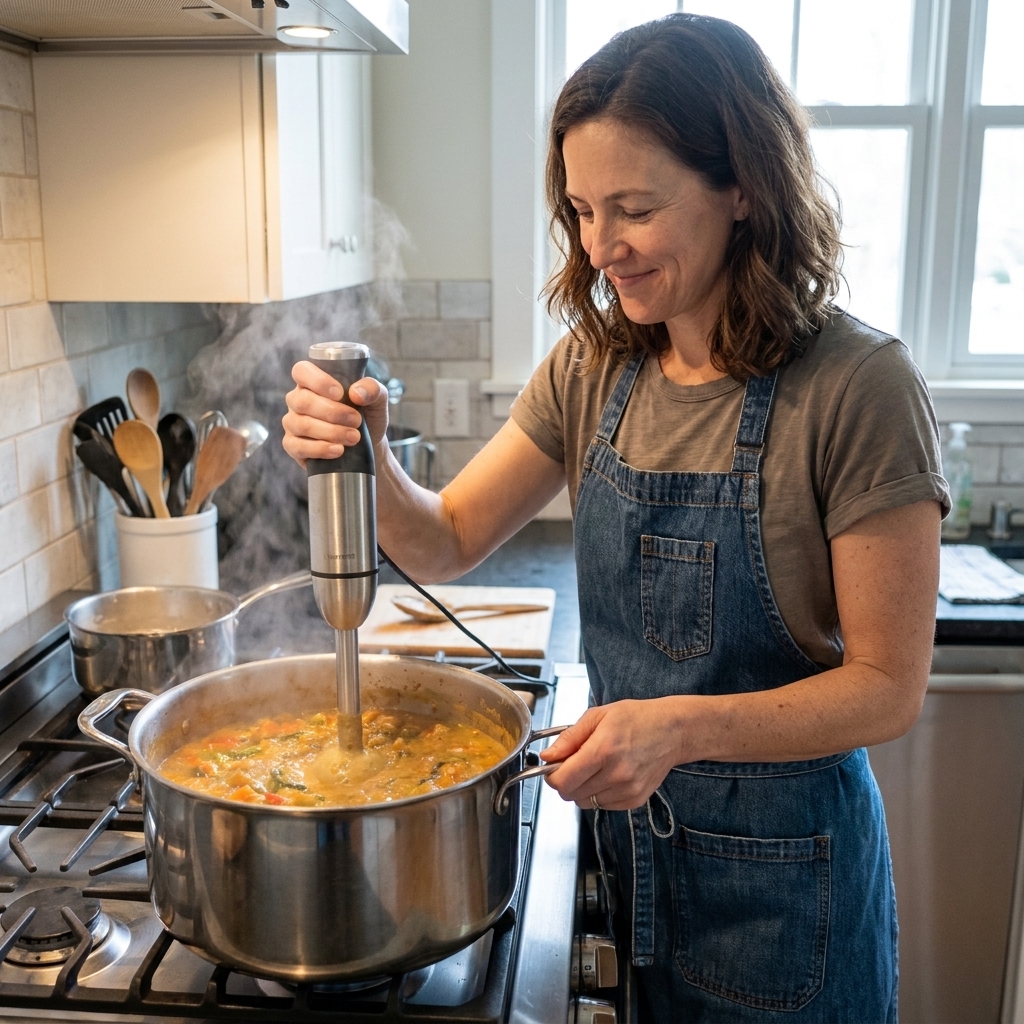
Quick puree (use what is already in the pot)
This is my “clean-out-the-fridge” method, and it works beautifully if your stew already has soft veggies.
- Scoop: 1 to 2 cups of stew solids and some liquid (potatoes, carrots, onions, beans, squash).
- Blend: Until smooth, then stir back in.
- Simmer: 1 minute to marry everything.
Thickener cheat sheet
| Thickener | Best for | Texture | How fast |
|---|---|---|---|
| Cornstarch slurry | Beef stew, chicken stew, gravy-style stews | Silky, glossy | 1 to 2 minutes |
| Instant potato flakes | Hearty beef and pork stews, rustic bowls | Cozy, matte | 30 to 60 seconds |
| Mashed beans | Turkey, chicken, veggie, sausage stews | Creamy, hearty | 1 to 3 minutes |
| Flour slurry | Traditional stews, pot roast style | Classic, opaque | 2 to 4 minutes |
| Puree from the pot | Veg-heavy stews, potato or squash stews | Natural, thick | 2 to 4 minutes |
Common problems and fixes
My stew got lumpy
- For cornstarch or flour: Keep simmering and whisk hard. If lumps remain, push the liquid through a fine-mesh strainer and return it to the pot.
- Prevent next time: Mix slurry in a cup with cold water until fully smooth before it touches heat.
I overthickened it
No shame. It happens fast.
- Stir in hot broth a splash at a time until it loosens.
- If it tastes flat afterward, add a pinch of salt and a small splash of acid (lemon juice or vinegar) to wake it back up.
It thickened, then turned thin again
This usually means the stew never came back to a true simmer, or you did not use quite enough thickener for the amount of liquid.
- Bring it back to a steady simmer.
- Add a half batch more slurry or a teaspoon of potato flakes, then wait 60 seconds before deciding.
It tastes starchy
- Let it simmer another 1 to 2 minutes so the thickener fully cooks.
- Add a small hit of brightness. A teaspoon of vinegar, lemon juice, or even a little tomato paste can balance that starchy note.
My 5-minute rescue routine
If you just want the quickest path to a thick, satisfying bowl, here is what I do:
- Bring stew to a gentle simmer.
- Make a cornstarch slurry: 1 tablespoon cornstarch + 1 tablespoon cold water.
- Stir it in, then simmer 60 seconds.
- Decide if you want it thicker. If yes, add half as much slurry again.
- Taste and adjust salt, then finish with something cozy like black pepper, a knob of butter, or chopped parsley.
FAQ
Can I thicken stew without flour or cornstarch?
Yes. Instant potato flakes, mashed beans, and blending a portion of the stew are all quick, reliable options.
Will cornstarch work in a slow cooker stew?
Absolutely, but add it near the end. Turn the slow cooker to high, stir in the slurry, and cook until it is hot and bubbling at the edges and the sauce thickens, usually 10 to 20 minutes depending on your cooker and how full it is.
Can I use oat flour or gluten-free flour blends?
Many work, but the thickening power varies by brand and blend. For the most predictable gluten-free thickening in under 5 minutes, I reach for cornstarch, arrowroot, or potato flakes.
Does arrowroot work the same as cornstarch?
Arrowroot thickens similarly, but it does not like a hard boil. Heat it just to a gentle simmer until it thickens, then keep it warm and serve soon after for the best texture.
One last cozy note
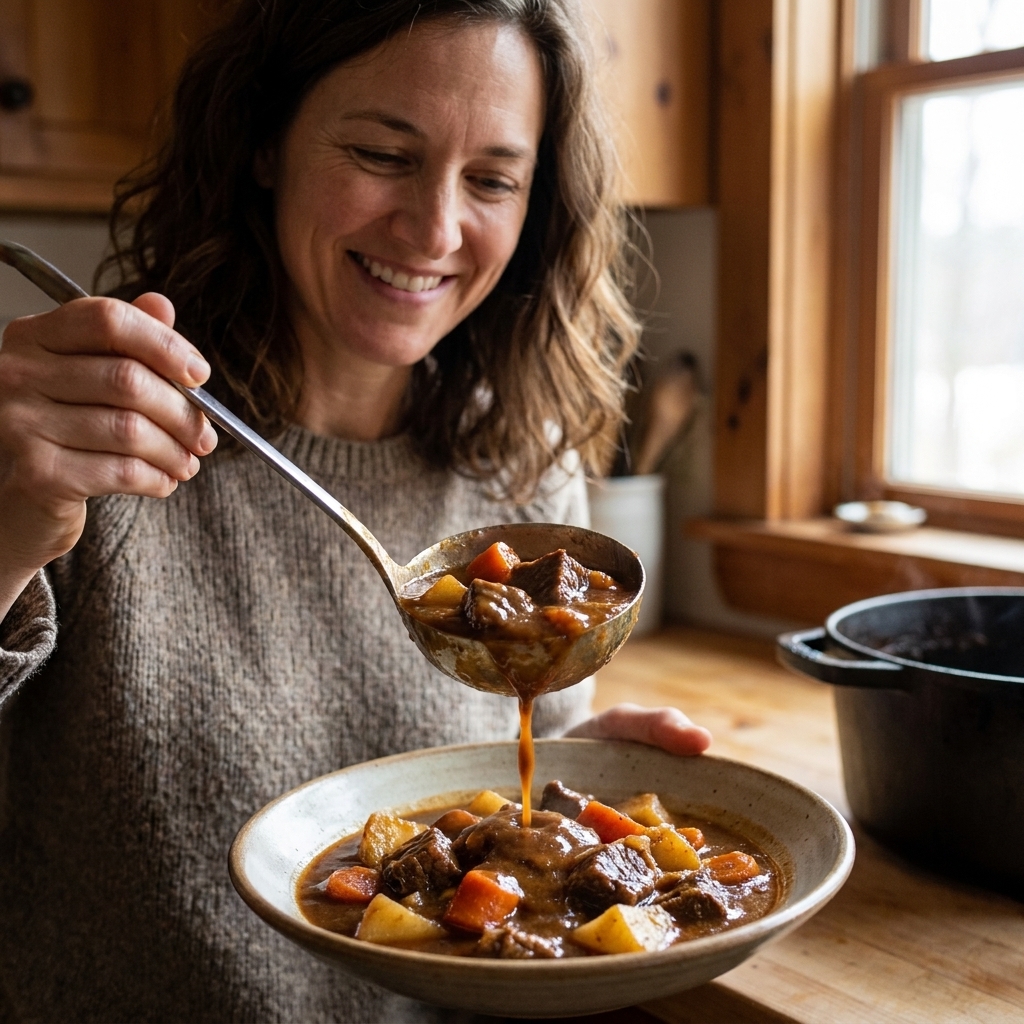
Thickening is not just about texture. It is about making the flavors cling to every bite so a quick stew eats like it had all afternoon. Keep one of these thickeners in your pantry and you will never feel stuck with a thin, sad bowl again.
If you have a favorite thickening trick, or a stew that keeps coming out thinner than you want, share it in the comments. The small details (what is in the pot, and how much liquid you are working with) make it easier to choose the right fix.