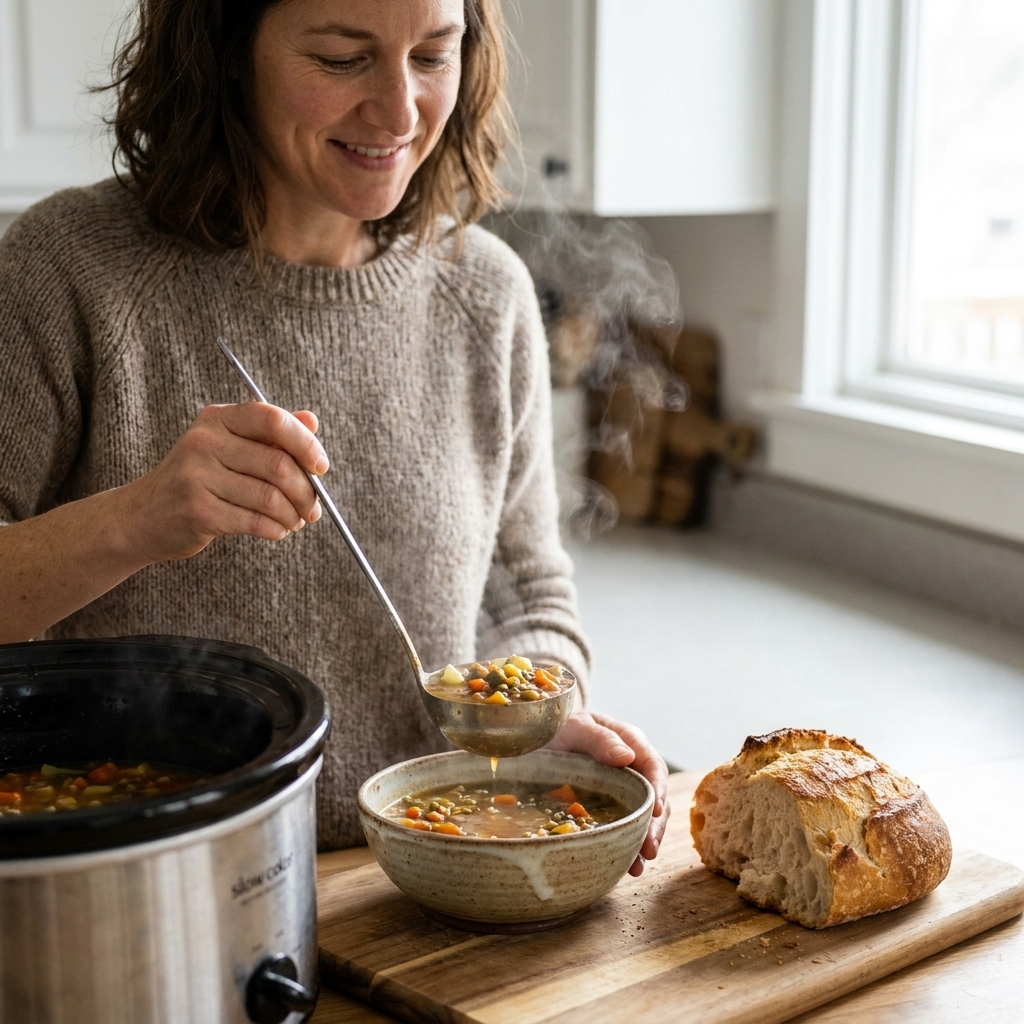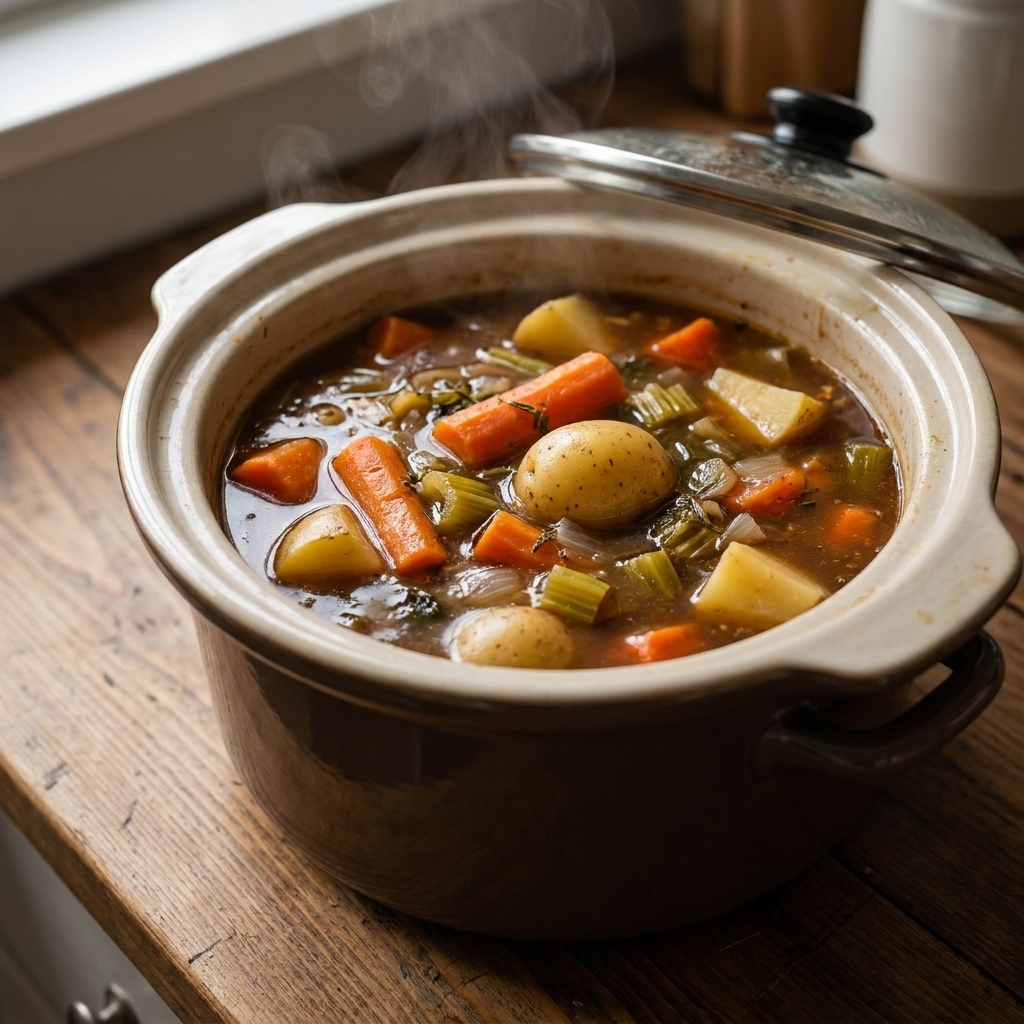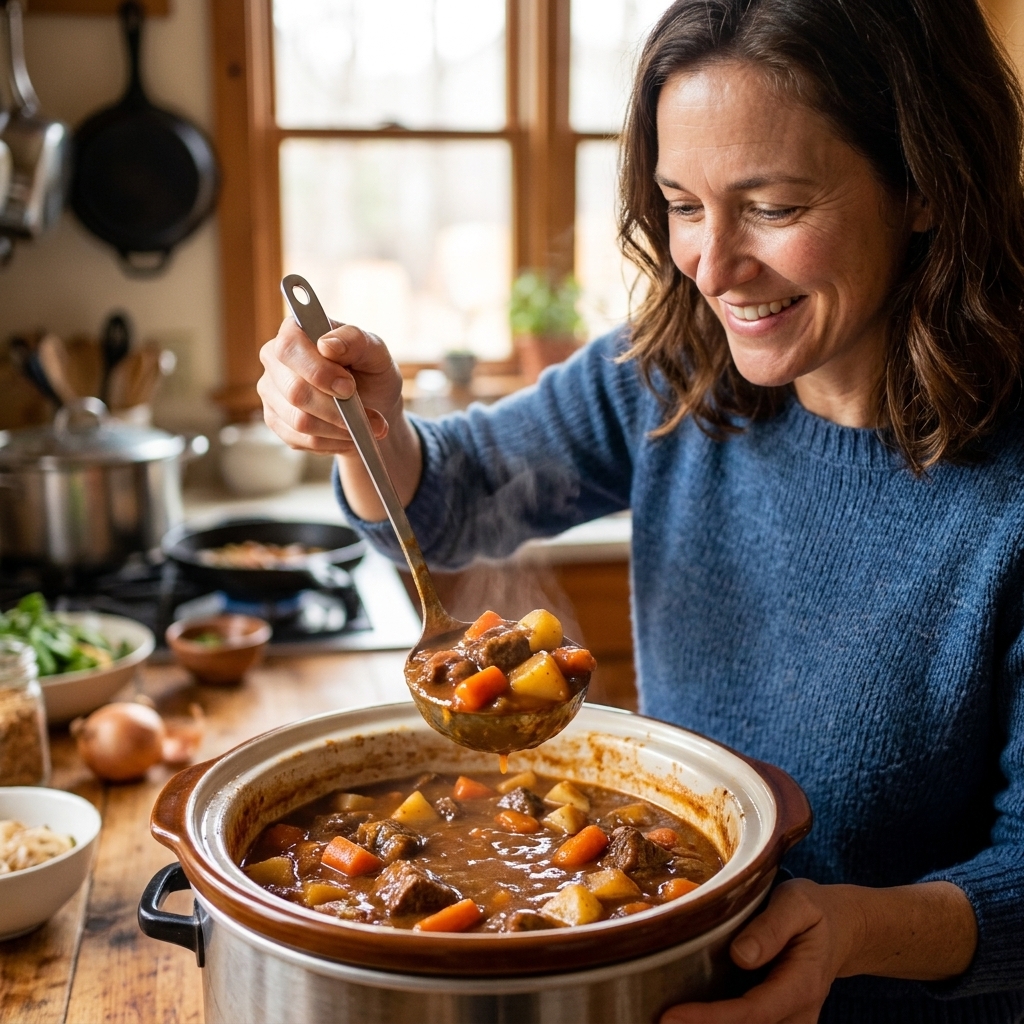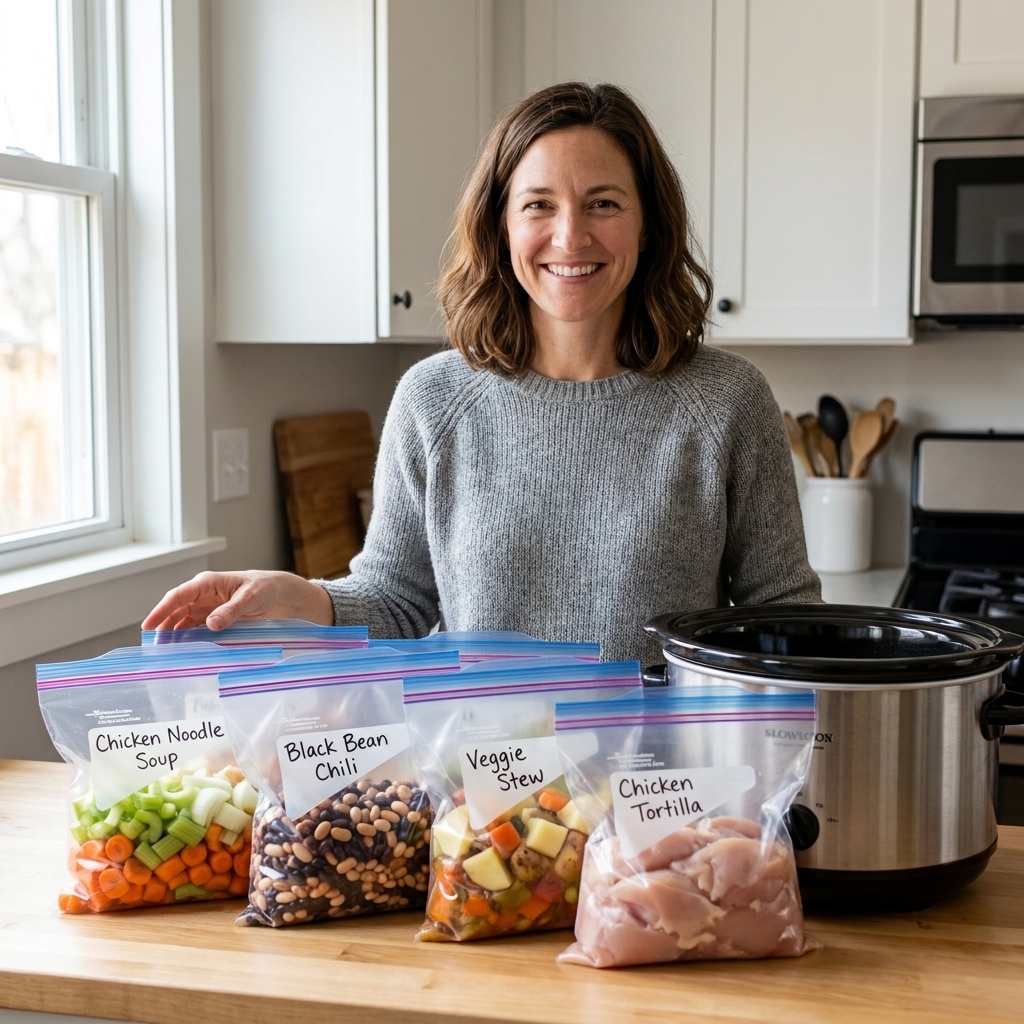
If you have a beloved stovetop soup recipe and you want it to simmer away in the slow cooker while you get on with your day, you are in the right kitchen. The slow cooker is a cozy miracle, but it does not behave like a bubbling pot on the stove. It traps steam, reduces very slowly with the lid on, and cooks with gentler heat. That means you cannot just dump everything in and hope for the best.
Below is my reliable, cook-once-eat-twice method for converting almost any stovetop soup into a slow cooker version that tastes like you tended it all afternoon.
The two big differences
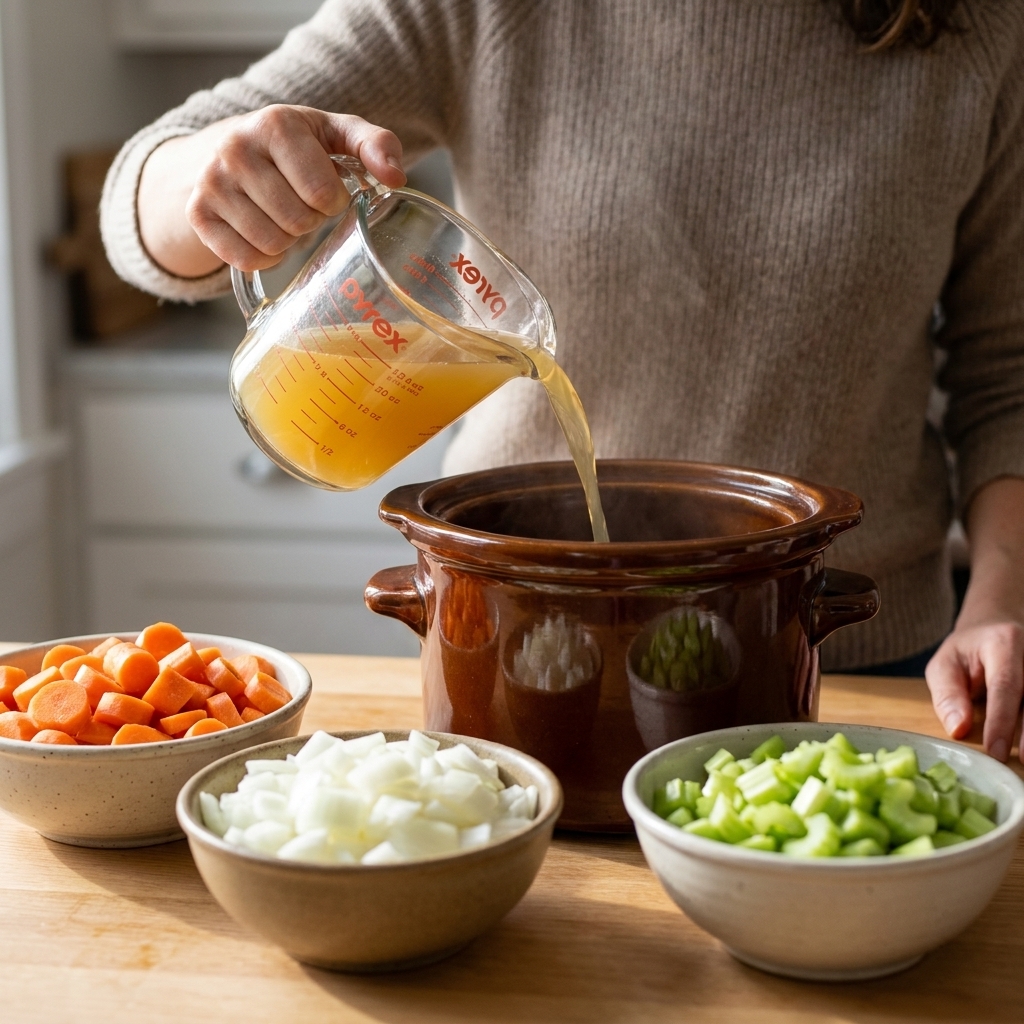
Most stovetop soup recipes assume you will lose liquid to evaporation as the pot simmers. Slow cookers hold onto moisture, so if you use the same amount of broth or water, you often end up with a thin, bland soup. How much it reduces depends on your model, how full the crock is, and whether the lid is vented, but the baseline is: plan for much less evaporation than the stove.
The second difference is timing and heat. Stovetop simmering is hotter and more direct. Slow cookers are lower and steadier, which is wonderful for tougher meats, dried beans, and deep flavor. It is less wonderful for delicate vegetables, seafood, dairy, pasta, and anything you want crisp-tender.
Liquid ratios
Use these ratios as your starting point, then adjust based on how brothy you like your soup.
- Most brothy soups: use 75% to 85% of the stovetop liquid. In plain terms, reduce broth by 15% to 25%.
- Soups that simmer uncovered on the stove for 30 minutes or more: use 70% to 80% of the stovetop liquid. The longer the uncovered simmer on the stove, the more you should reduce for the slow cooker.
- Thick soups (potato soup, chowders, creamy tomato): use 65% to 75% of the liquid to start, because you usually rely on reduction for body.
- Very chunky soups with lots of watery vegetables (zucchini, mushrooms, tomatoes): lean toward the lower end, 70% to 80%.
If more than one category fits: start with the lower liquid amount. It is easier to add broth later than to fix a soup that is washed out.
Quick liquid math
- If the stovetop recipe uses 8 cups broth, start with 6 to 6 1/2 cups in the slow cooker.
- If it uses 6 cups broth, start with 4 1/2 to 5 cups.
- If it uses 4 cups broth, start with 3 to 3 1/2 cups.
Clara tip: Start slightly under, then loosen with hot broth right before serving if you want it soupier.
Time conversions
Think of stovetop time as active simmering time, not the whole recipe time that includes chopping and sautéing. Then convert using this rule of thumb. These are starting points, not promises. Ingredients, volume, and slow cooker models vary.
- LOW: about 2 to 3 times the stovetop simmer time
- HIGH: about 1 to 1 1/2 times the stovetop simmer time
| Stovetop simmer time | Slow cooker on LOW | Slow cooker on HIGH |
|---|---|---|
| 10 to 15 minutes | 1 1/2 to 2 1/2 hours | 45 to 90 minutes |
| 20 to 30 minutes | 3 to 5 hours | 2 to 3 hours |
| 45 to 60 minutes | 6 to 8 hours | 3 to 4 1/2 hours |
| 90 minutes | 8 to 10 hours | 5 to 6 hours |
Reality check: The first time you convert a recipe, check earlier than you think you need to, especially if it has chicken breast, tender vegetables, or a smaller batch volume.
My conversion method
Step 1: Keep the flavor building
Stovetop recipes often start with sautéed onions, garlic, tomato paste, spices, or browned meat. That is not busywork. That is where soup gets its backbone.
- Sauté aromatics (onion, celery, carrot) in a skillet until the onion is translucent and the edges start to take on color.
- Toast spices for 30 seconds to wake them up.
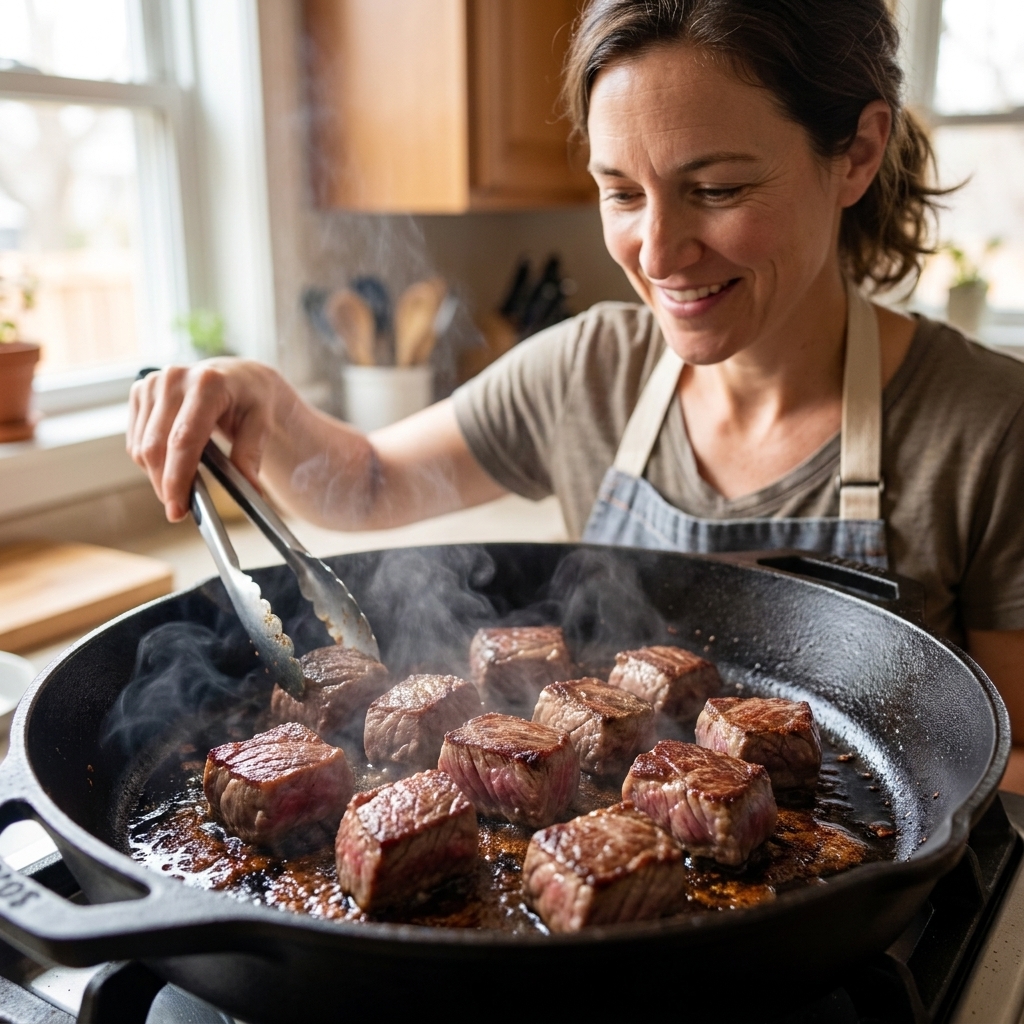
- Brown meat if the original recipe calls for it, or if the soup needs deeper flavor.
- Deglaze the skillet with a splash of broth, wine, or water and scrape up the browned bits. Pour that into the slow cooker.
Step 2: Reduce the liquid
Use the ratios above. If the stovetop recipe includes a vague line like “add water as needed,” ignore that and start conservative.
Step 3: Add sturdy ingredients early
Slow cookers excel at tenderizing. They can also turn vegetables to mush if you are not careful.
- Add at the beginning: lentils (depending on cook time), tough cuts of beef or pork, chicken thighs, squash, potatoes, carrots, celery, onions, canned tomatoes.
- Add later (last 30 to 90 minutes): zucchini, peas, spinach, bell peppers, corn, cooked meats, most seafood.
- Add at the very end: dairy, fresh herbs, lemon juice, vinegar, pesto, grated cheese.
Step 4: Finish like you would on the stove
A slow cooker soup often needs a bright finish. Right before serving, taste and adjust with salt, pepper, and one wake-it-up ingredient like lemon juice, a splash of vinegar, or a pinch of chili flakes.
Ingredient fixes
Dairy and creamy soups
Milk, cream, sour cream, and cream cheese can separate or turn grainy if they cook for hours. Treat dairy as a finisher.
- Cook the soup base first.
- Stir in dairy during the last 15 to 30 minutes on LOW.
- If you need thickness, use a slurry (1 tablespoon cornstarch + 1 tablespoon cold water) and cook until glossy, or blend a portion of the soup.
Pasta, rice, and grains
These soak up broth like little sponges and can turn your beautiful soup into stew glue.
- Best option: cook pasta or rice separately and add to bowls.
- If you want it all-in-one: add pasta during the last 20 to 40 minutes (HIGH works better here) and add an extra splash of broth since pasta drinks it up.
- For rice and barley, add during the last 60 to 90 minutes and keep an eye on the texture.
Beans
Slow cookers can handle beans, but timing and safety get complicated fast. Some beans soften beautifully from dry, others stay stubborn depending on age, water chemistry, acidity, and temperature. When in doubt, pre-cook beans until nearly tender or use canned.
- Red kidney beans: do not cook dry red kidney beans entirely in a slow cooker. If you are starting from dry, soak them, then boil vigorously for at least 10 minutes before adding them to the slow cooker to finish cooking, or simply use canned kidney beans.
- Acid slows softening: if your soup has lots of tomatoes, vinegar, or wine, beans can stay firm. Consider cooking beans until nearly tender first, then adding acidic ingredients.
Potatoes and starchy vegetables
Potatoes can hold their shape, but they can cook slower in a slow cooker than you might expect, especially in very thick mixtures.
- Cut potatoes evenly (about 3/4-inch chunks for soups).
- If you are using frozen hash browns for potato soup, add them at the start and plan to blend for creaminess.
Leafy greens
Spinach is a last-minute add. Kale is sturdier. If you want kale fully tender and silky, give it more time. If you want it with some chew, add it near the end.
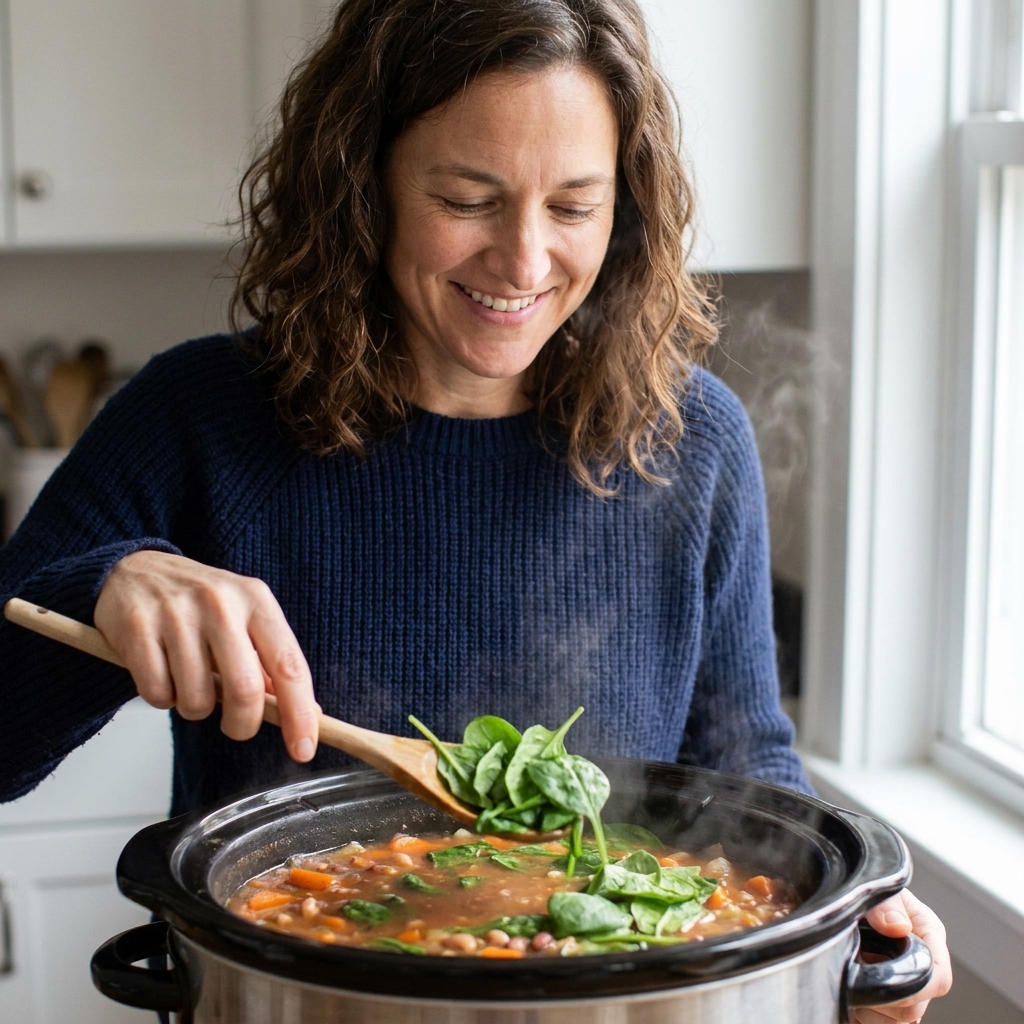
- Spinach: stir in for 5 minutes off heat.
- Kale: add for 30 to 60 minutes on LOW for noticeable texture, or longer if you like it very tender.
Common soup types
Chicken noodle soup
- Cook chicken thighs or breasts with aromatics and broth on LOW until tender.
- Shred chicken, return to pot.
- Add noodles near the end, or cook separately for the best leftovers.
Chili and thick stews
- Reduce liquid more aggressively (often 25% to 35%).
- Brown meat and sauté onions first.
- If it is too thin at the end, crack the lid for 20 to 30 minutes on HIGH, or mash a cup of beans into the pot.
Tomato soup
- Slow cook tomatoes, onion, garlic, and broth with reduced liquid.
- Blend smooth.
- Add cream at the end.
Seafood soups
- Build the base in the slow cooker.
- Add seafood during the last 15 to 30 minutes so it stays tender.
Troubleshooting
My soup is too watery
- Remove the lid and cook on HIGH for 20 to 45 minutes to let moisture escape (works best when the crock is not overly full).
- Blend 1 to 2 cups of soup and stir it back in.
- Add a slurry (cornstarch + cold water) or a beurre manié (soft butter + flour mashed together) and cook until thickened.
My soup tastes bland
- Add salt in small pinches, tasting as you go.
- Add acid: lemon juice or a splash of vinegar.
- Add depth: a spoonful of tomato paste, soy sauce, miso, or Worcestershire depending on the soup.
- Finish with fresh herbs.
My vegetables turned to mush
- Next time, add tender vegetables later.
- Cut pieces larger.
- Cook on LOW and shorten the total time.
My dairy curdled
- Lower the heat and stir in dairy at the end only.
- Choose heavy cream over milk when possible, it is more stable.
Example conversion
Let us say your stovetop recipe reads like this:
- Sauté onion, carrot, celery.
- Add garlic, thyme, 8 cups broth, 2 cups diced potatoes.
- Simmer 30 minutes.
- Add 1 cup cream and serve.
Here is the slow cooker version:
- Sauté onion, carrot, celery, garlic, and thyme in a skillet. Scrape into slow cooker.
- Add potatoes and 6 to 6 1/2 cups broth (instead of 8).
- Cook on LOW 4 to 5 hours (or HIGH 2 to 3 hours) until potatoes are tender.
- Stir in cream during the last 15 to 30 minutes on LOW.
- Taste and brighten with a small squeeze of lemon if it tastes flat.
FAQ
Can I put raw meat straight into the slow cooker?
You can, and it will be safe as long as it reaches a safe internal temperature. Flavor-wise, browning first usually wins. For ground beef or sausage, I always brown and drain it first so the soup does not turn greasy.
Do I need less seasoning in a slow cooker?
Often you need more at the end. Slow cookers mute high notes. I season lightly at the start, then adjust with salt, pepper, herbs, and a splash of acid right before serving.
Should I stir while it cooks?
No need. Every time you lift the lid, you lose heat and time. Stir once halfway only if you are worried about something sticking, especially with thicker soups. Adding dairy and thickeners late also helps prevent scorching around the edges.
How full should my slow cooker be for soup?
For even cooking and to avoid overflow, aim to fill the crock about 1/2 to 2/3 full. Very full slow cookers heat more slowly and can be harder to bring to a steady simmer.
How do I make sure slow cooker soup is cooked safely?
Cook until the soup is truly hot and steaming. As a checkpoint, poultry should reach 165°F, and leftovers should be reheated to 165°F before serving.
How do I make slow cooker soup taste like it simmered on the stove?
Do the stove steps that create flavor: sauté aromatics, brown meat, and bloom spices. Then finish with something bright (lemon, vinegar, fresh herbs). That combo makes a slow cooker soup taste truly intentional.
Slow cooker pep talk
The slow cooker is not a shortcut for great soup, it is a different path to it. Reduce the liquid, keep the browning step, and treat delicate ingredients like late arrivals. Do that, and you can convert just about any stovetop favorite into a cozy slow cooker dinner that feels like you have been home all day with a Dutch oven quietly doing its thing.