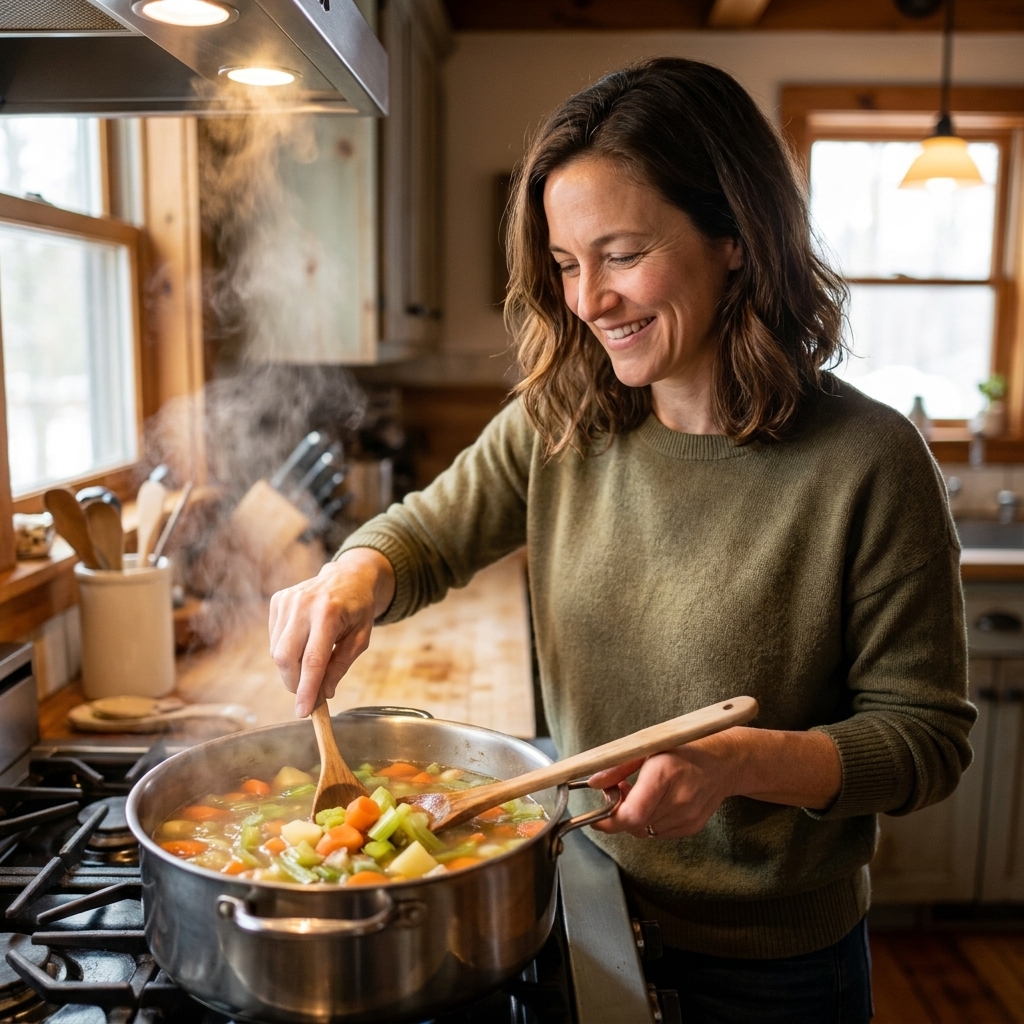
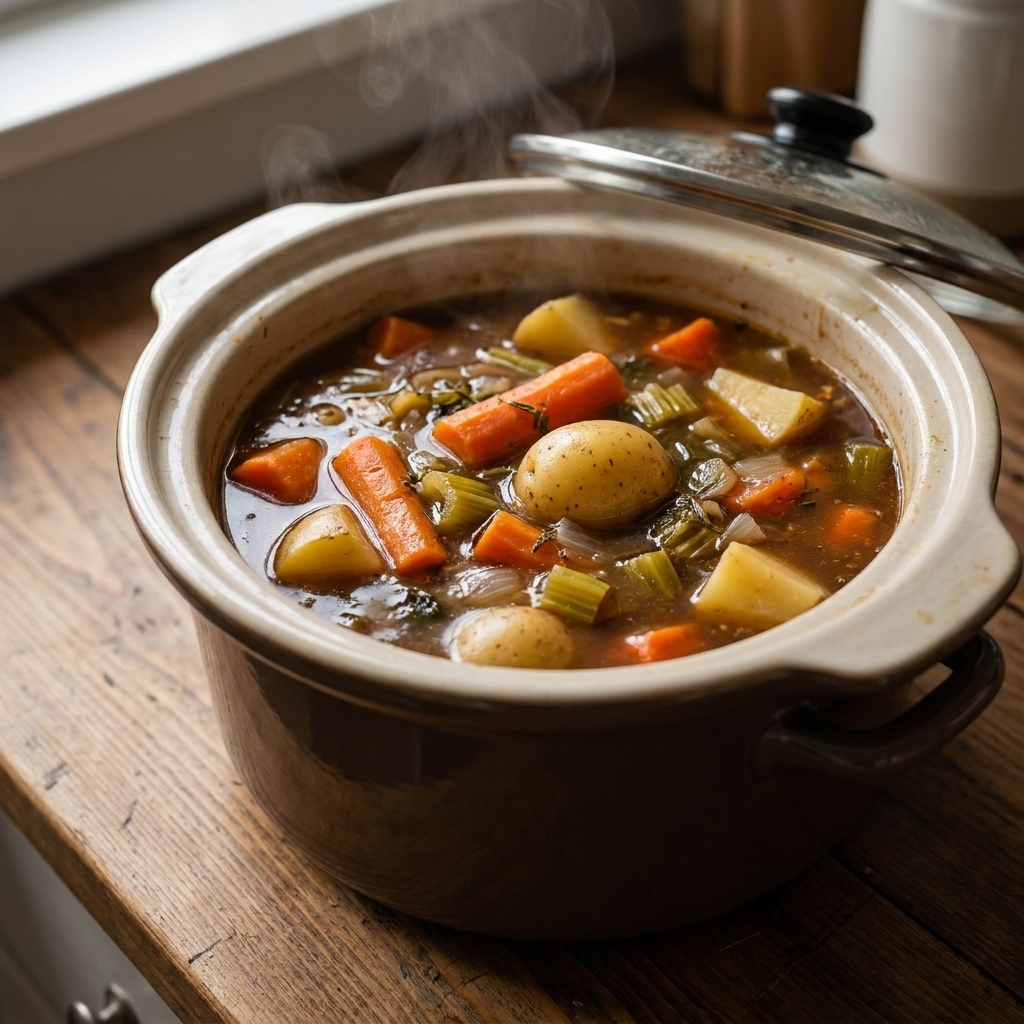
If you have ever lifted the slow cooker lid at dinnertime and found your carrots vanished into the broth and your potatoes turned to paste, you are not alone. Slow cookers are wonderful for hands-off soups, but they are also relentless. Eight hours on LOW is a long, steady, near-simmer kind of heat that never really quits, and most vegetables have a point where “tender” quietly turns into “disintegrating.”
The fix is not complicated. It is mostly about ingredient staging, plus a few small choices that stack the odds in your favor: how you cut things, which varieties you buy, and when you add acids, dairy, and salt. Here is exactly how I keep root vegetables perfectly spoon-tender in all-day slow cooker soups.
Why vegetables get mushy
In the slow cooker, mush usually comes from one of these:
- Too much time in the heat: vegetables keep softening long after they are technically cooked.
- Cut too small: a small dice cooks fast, then breaks down and disappears.
- Wrong type of vegetable (or variety): some potatoes and squash are naturally “fall-apart” types.
- Too much stirring: every time you stir, you are mechanically breaking down already-soft vegetables.
- Hot spots and placement: ingredients right on the bottom and sides can cook faster than things floating in the middle, especially in smaller or hotter-running models.
The good news is that you can solve most of this with timing, plus smarter cuts and a little pot strategy.
The golden rule: stage vegetables
When I want “cook all day” flavor but “just cooked” vegetables, I treat the slow cooker like a little schedule. Not everything goes in at 8 a.m. Some things go in early for body and broth flavor, and some go in later to keep their shape.
Vegetables that can go in at the start
- Onions (they melt and sweeten, which is great)
- Celery (softens a lot, but adds classic soup flavor)
- Parsnips (hold fairly well, especially in larger chunks)
- Turnips or rutabaga (best in hearty soups, cut large)
- Hard winter squash (if you want it to partially break down on purpose)
Vegetables that are better later
- Potatoes: add for the last 3 to 5 hours on LOW for 1 to 1 1/2 inch chunks, or 45 to 90 minutes on HIGH if added at the end.
- Carrots: add for the last 3 to 4 hours on LOW for thick pieces, or 45 to 75 minutes on HIGH to finish.
- Sweet potatoes: add for the last 2 to 4 hours on LOW, or 30 to 60 minutes on HIGH (they soften faster than regular potatoes).
- Zucchini and summer squash: last 30 to 60 minutes, or they dissolve.
- Green beans: last 1 to 2 hours for a tender bite.
- Frozen peas and corn: stir in during the last 10 to 20 minutes.
- Leafy greens (spinach, kale): last 10 to 30 minutes, depending on how silky you want them.
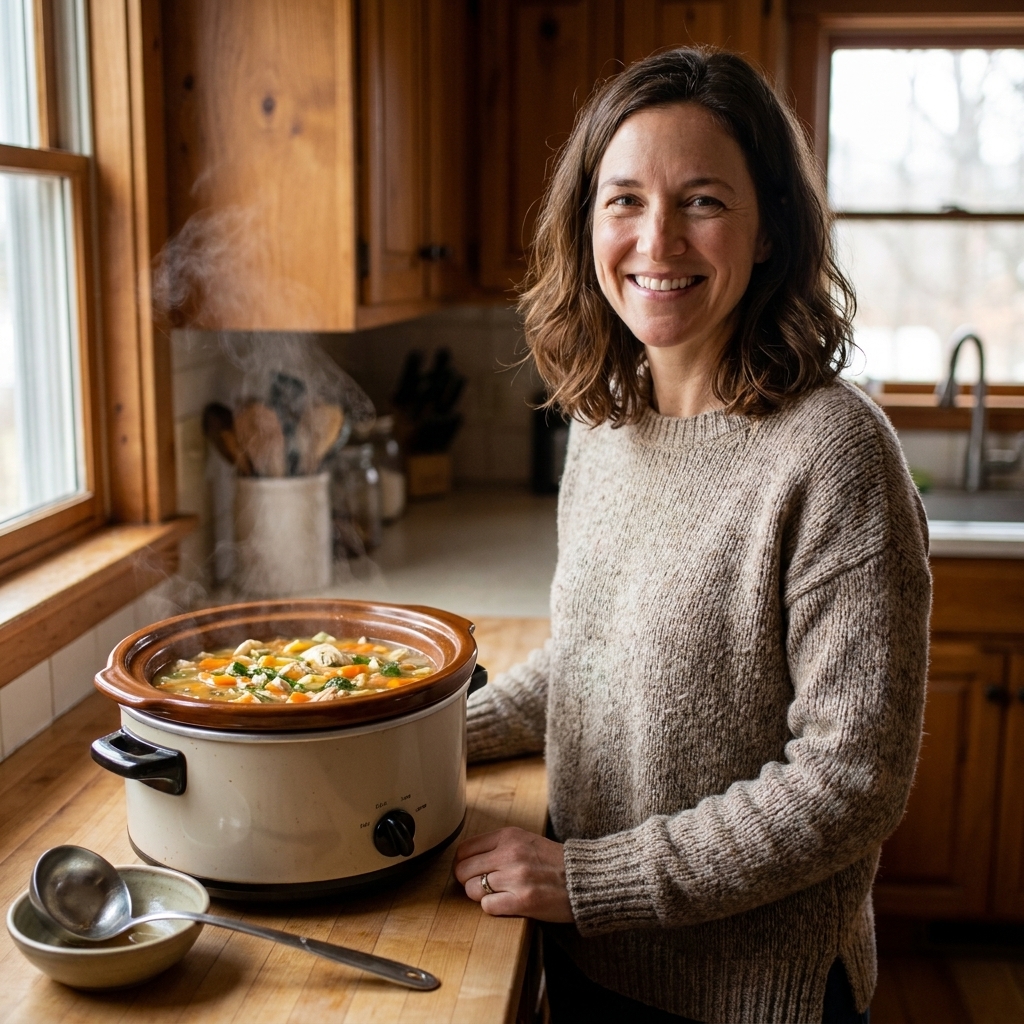
My “workday soup” trick: If you are out of the house all day, let the soup base cook all day (broth, aromatics, beans or meat). When you get home, add your potatoes and carrots and switch to HIGH to finish. Keep it tight: think 45 to 90 minutes for sturdy roots, then greens and quick veg at the very end.
Cut size matters
In upstate New York, my winter soups were basically a survival tactic, and I learned quickly that bigger chunks buy you time. In a slow cooker, you want pieces that can take a long, gentle heat without collapsing.
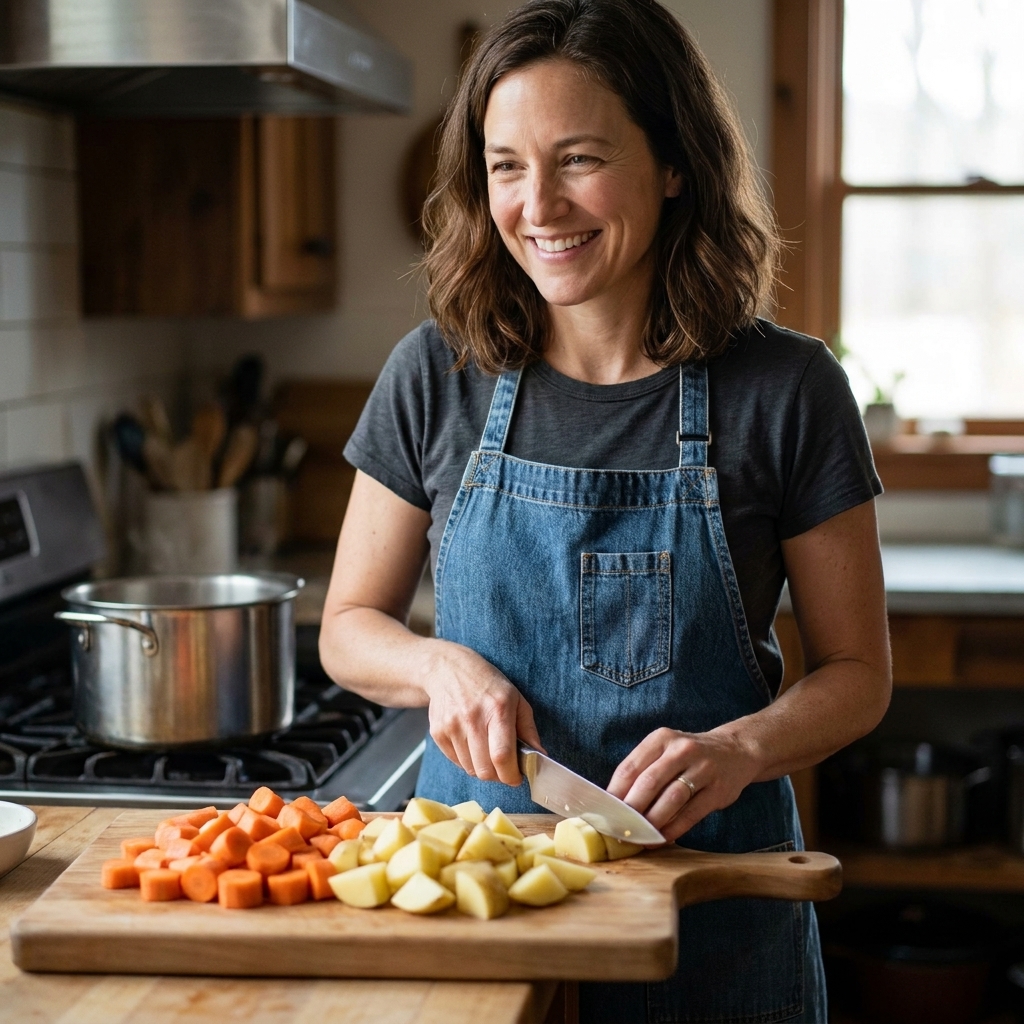
- Potatoes: 1 to 1 1/2 inch chunks for long cooks. If you dice smaller than that, you are volunteering for mash.
- Carrots: thick half-moons (about 1/2 inch) or 1 inch chunks. Thin coins soften fast.
- Celery: 1/2 inch slices. Celery will soften no matter what, so do not stress this one.
Also: keep your cuts consistent. Mixed sizes mean some pieces are perfect while others are falling apart.
Pick the right potato
Potatoes are the number-one mush culprit. The variety you buy really matters:
- Best for holding shape: Yukon Gold, red potatoes, fingerlings. They stay creamy but keep their edges better.
- Most likely to fall apart: russets. They are wonderful for thickening, but they break down quickly in soups.
If you love russets, use them strategically: add them early when you want some breakdown for body, then add a second potato that holds its shape later. Cook once, eat twice, and you get a soup that reheats like a dream.
Acid, dairy, and salt
This is where slow cooker soups can get sneaky, because long cook times amplify little choices.
Use acid on purpose
Acid does not have one single effect in soup. It can slow softening in many vegetables and beans by helping them stay firmer, which sounds great until you realize it can also leave things oddly firm if you add a lot early. With potatoes in particular, an acidic broth can keep the outside from breaking down and sometimes makes the centers take longer to turn tender.
So the goal is control: build the base, then brighten later.
- Canned tomatoes: add in the last 1 to 2 hours if you can for a fresher taste and better texture control. If you start with tomatoes, plan on softer vegetables and give potatoes extra time to get truly tender.
- Wine: for the smoothest flavor, reduce it on the stove first, then add whenever you want. If you add it straight to the slow cooker, give it enough time on higher heat to mellow. For many pots, that means 1 to 2 hours on HIGH, not just a quick splash at the end.
- Lemon or vinegar: stir in at the end, just before serving.
One important bean note: If your soup has dried beans, heavy acid too early can keep them tough. Let beans get tender first, then add tomatoes or other acids.
Keep dairy for the finish
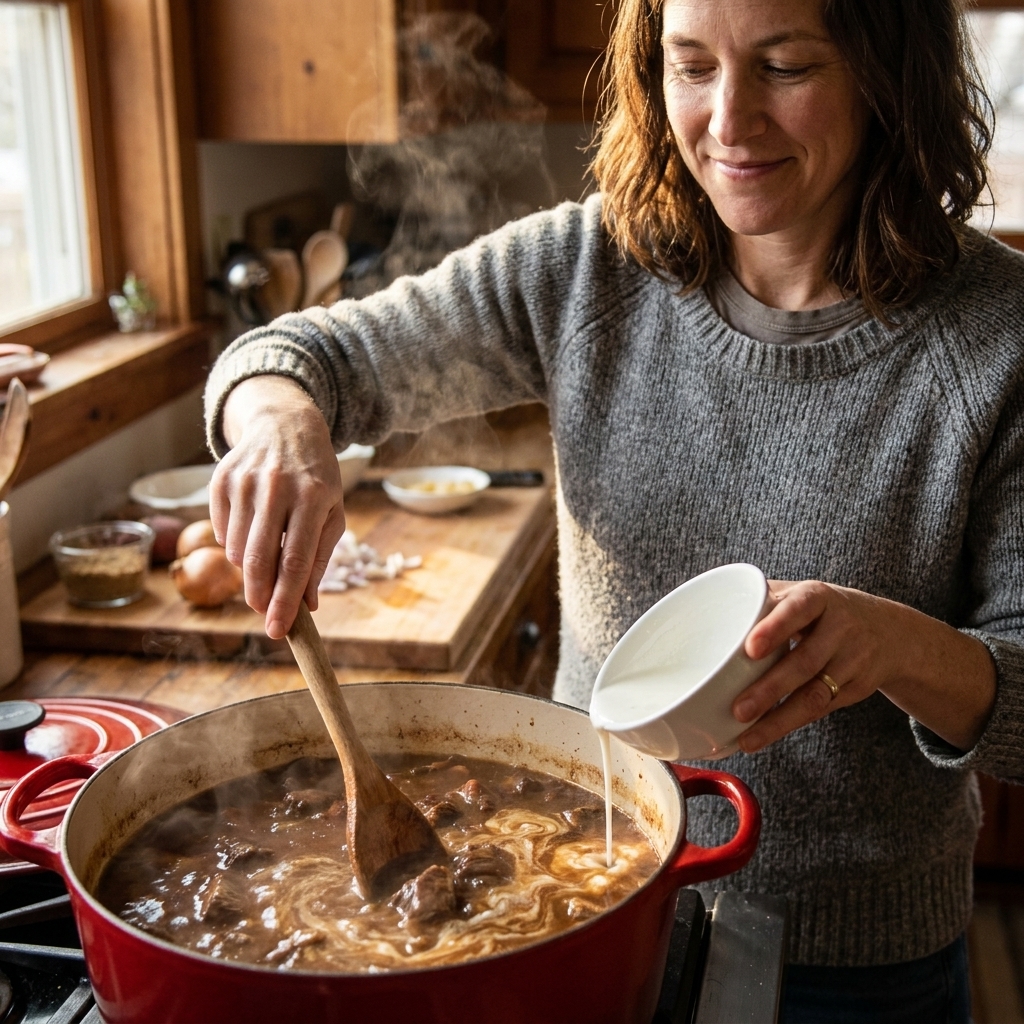
Cream, milk, and sour cream should go in at the end so they do not split and so your vegetables do not get endlessly stirred while you try to fix it. If you want a creamy soup, finish with dairy and let it heat through gently for 10 to 20 minutes.
Salt with intention
Salt does not automatically make vegetables mushy, but salting aggressively up front can throw off your judgment later. Slow cookers do not always “reduce” like a stovetop simmer, but flavors still mingle and concentrate in their own way over time, and your salt perception changes as the soup develops. I do a light salt in the beginning, then adjust at the end once everything is cooked.
Use LOW and HIGH well
LOW and HIGH are not just “time options.” They are texture tools.
- LOW (6 to 10 hours): best for broth development, beans, tougher cuts of meat, and soups where you do not mind some vegetable breakdown.
- HIGH (3 to 5 hours): helpful for finishing vegetables added late, and for keeping pieces intact because they spend less total time in the pot.
If you are home for the afternoon, a great approach is: build flavor on LOW for a few hours, then add your potatoes and carrots and switch to HIGH until they are fork-tender but not crumbling.
Thicken without overcooking
Sometimes vegetables get stirred and smashed because we are trying to thicken a thin soup. Try one of these instead:
- Blend a small portion: scoop out 1 to 2 cups of soup (mostly broth plus a few soft onions or beans), blend, and stir it back in. You get body without destroying all the chunks.
- Mashed beans: mash a ladle of white beans against the side of the slow cooker and stir.
- Slurry at the end: whisk 1 tablespoon cornstarch with 1 tablespoon cold water (double it for a big cooker), stir in, and cook on HIGH 10 to 15 minutes.
Leave the vegetables alone as much as possible. Stir gently and only when needed.
Timing cheat sheet (LOW)
Every slow cooker runs a little different, but this will get you very close. Use fork-tender as your final answer.
| Ingredient | When to add on LOW | Notes |
|---|---|---|
| Onion | Start | Great flavor base, soft is fine |
| Celery | Start | Softens a lot, adds aroma |
| Carrots | Last 3 to 4 hours | Cut thick for best texture |
| Yukon Gold or red potatoes | Last 3 to 5 hours | 1 to 1 1/2 inch chunks |
| Sweet potatoes | Last 2 to 4 hours | Soften faster than regular potatoes |
| Zucchini | Last 30 to 60 minutes | Very quick, do not overcook |
| Frozen peas or corn | Last 10 to 20 minutes | Stir in, let heat through |
| Spinach | Last 5 to 10 minutes | Wilts fast |
| Kale | Last 20 to 30 minutes | Needs more time to soften |
Common mushy scenarios
“My potatoes dissolved but the soup tastes great.”
Call it a win and lean in. Add a second batch of potatoes in bigger chunks for the last 45 to 90 minutes on HIGH, or add cooked diced potatoes at the end. Another cozy option is to turn it into a thicker, chowder-style soup with a splash of cream and plenty of black pepper.
“Carrots are bland and soft.”
Add them later next time, but for tonight: brighten the whole pot with a small squeeze of lemon or a teaspoon of vinegar right before serving. It will make the carrot flavor pop. Also check your salt level at the end.
“Everything turned to mush because I had to leave it 10 hours.”
For true all-day days, build the base early with ingredients that do not mind long cooking (onion, celery, beans, meat, broth). Keep the potatoes and carrots prepped in a container in the fridge. When you walk in the door, add them and cook on HIGH until tender.
FAQ
Should I cook vegetables separately and add them to slow cooker soup?
You can, and it works beautifully when you want perfect texture. Roast potatoes and carrots on a sheet pan until just tender, then stir them into the soup in the last 15 to 30 minutes so they soak up flavor without falling apart.
Does opening the lid make vegetables mushy?
Not directly, but it drops the temperature and extends cooking time, which can lead to overcooking. If you are checking doneness, do it quickly.
Can I add vegetables frozen?
Frozen peas and corn are great near the end. For frozen carrots or mixed vegetables, expect them to soften faster than fresh, and add them later than you think you need to.
Why are my potatoes oddly firm or gritty?
Firm potatoes in soup are often about the broth: a very acidic base (tomatoes, wine, vinegar) can slow how potatoes soften, especially if the acid goes in early. Gritty texture can also come from potato age, storage conditions, or variety. If it happens a lot, try Yukon Golds, avoid very old potatoes, and add acidic ingredients later in the cook.
My all-day soup formula
When I want the slow cooker to do the heavy lifting while I live my life, this is what I do:
- Morning: broth + onions + celery + garlic + beans or meat + herbs and spices.
- After work: add carrots and potatoes in big chunks. Nestle them toward the center instead of pressing them tight against the sides.
- Finish: switch to HIGH until just tender, then add greens, frozen veg, and any acid or dairy right before serving.
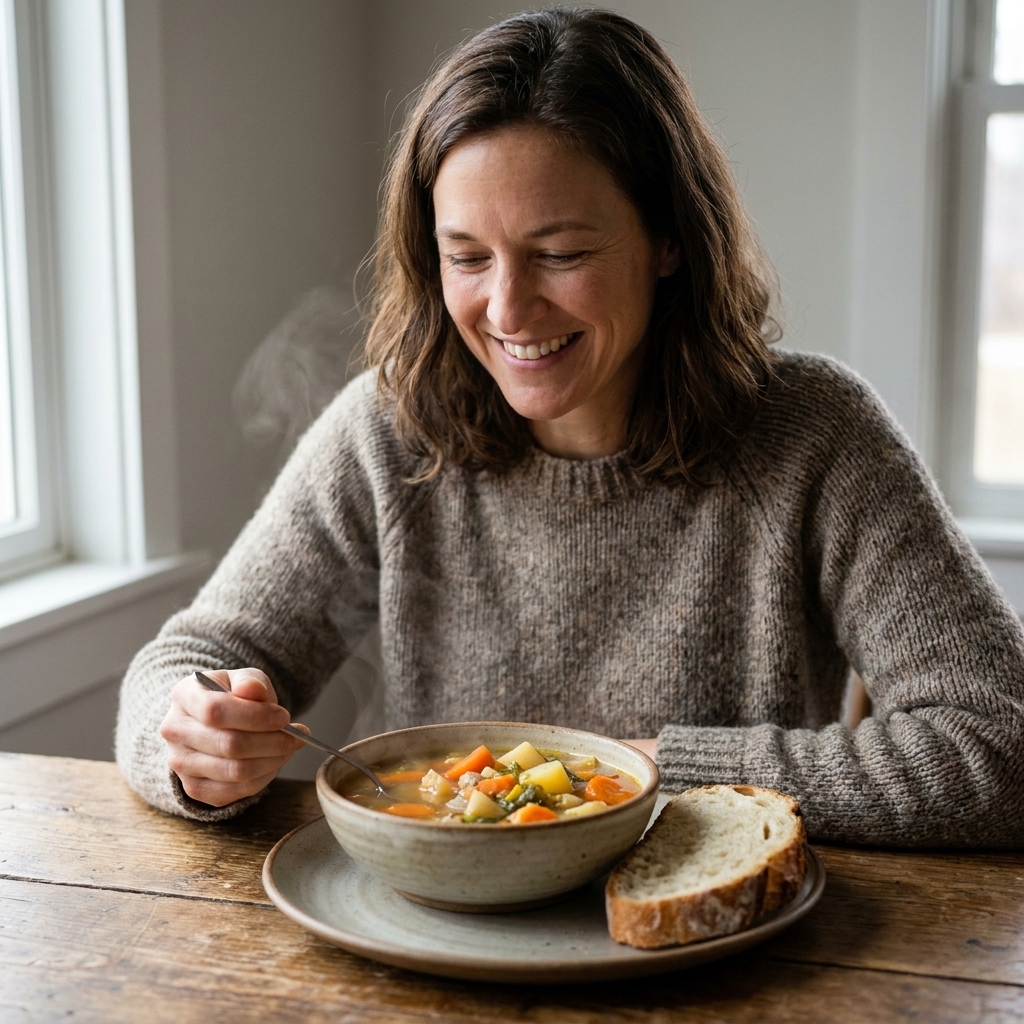
It is the best of both worlds: deep, simmered flavor and vegetables that still look like vegetables. Serve it with something crusty, because that is non-negotiable in my kitchen.