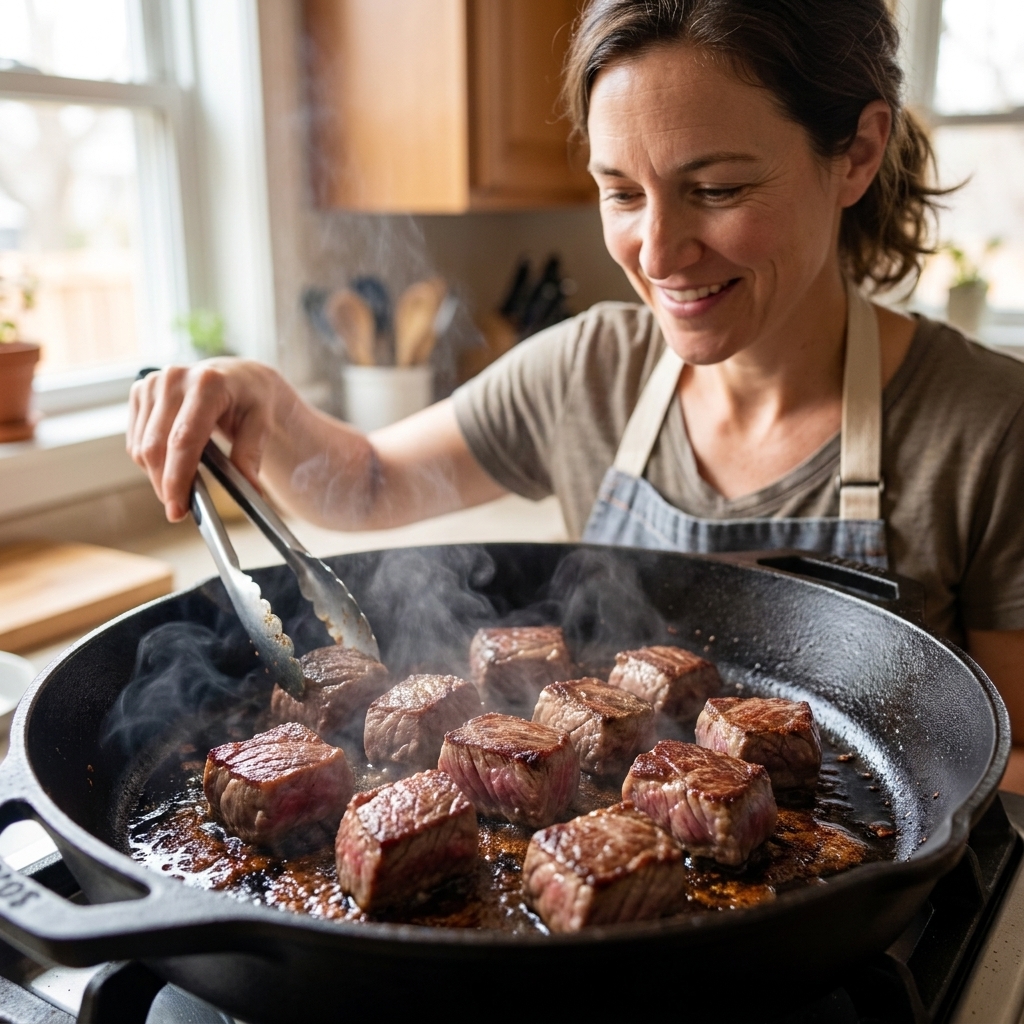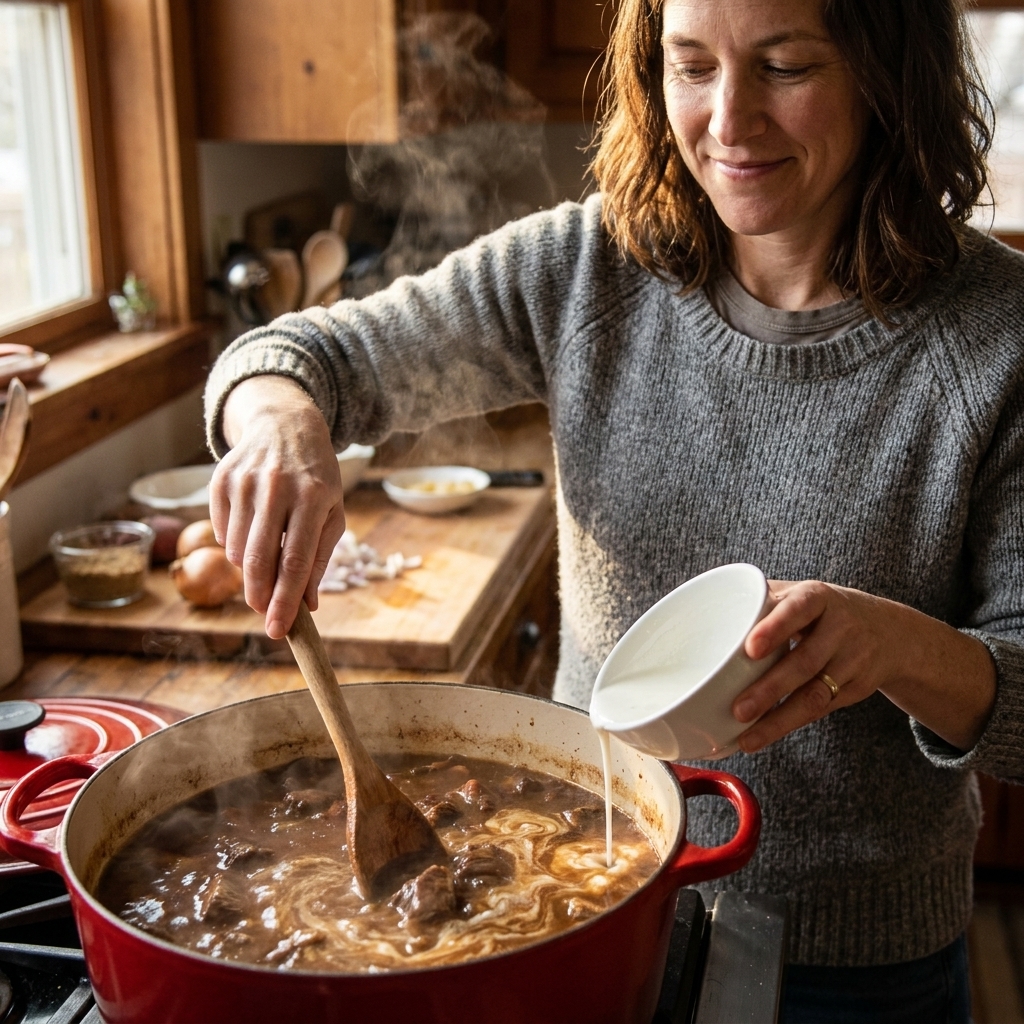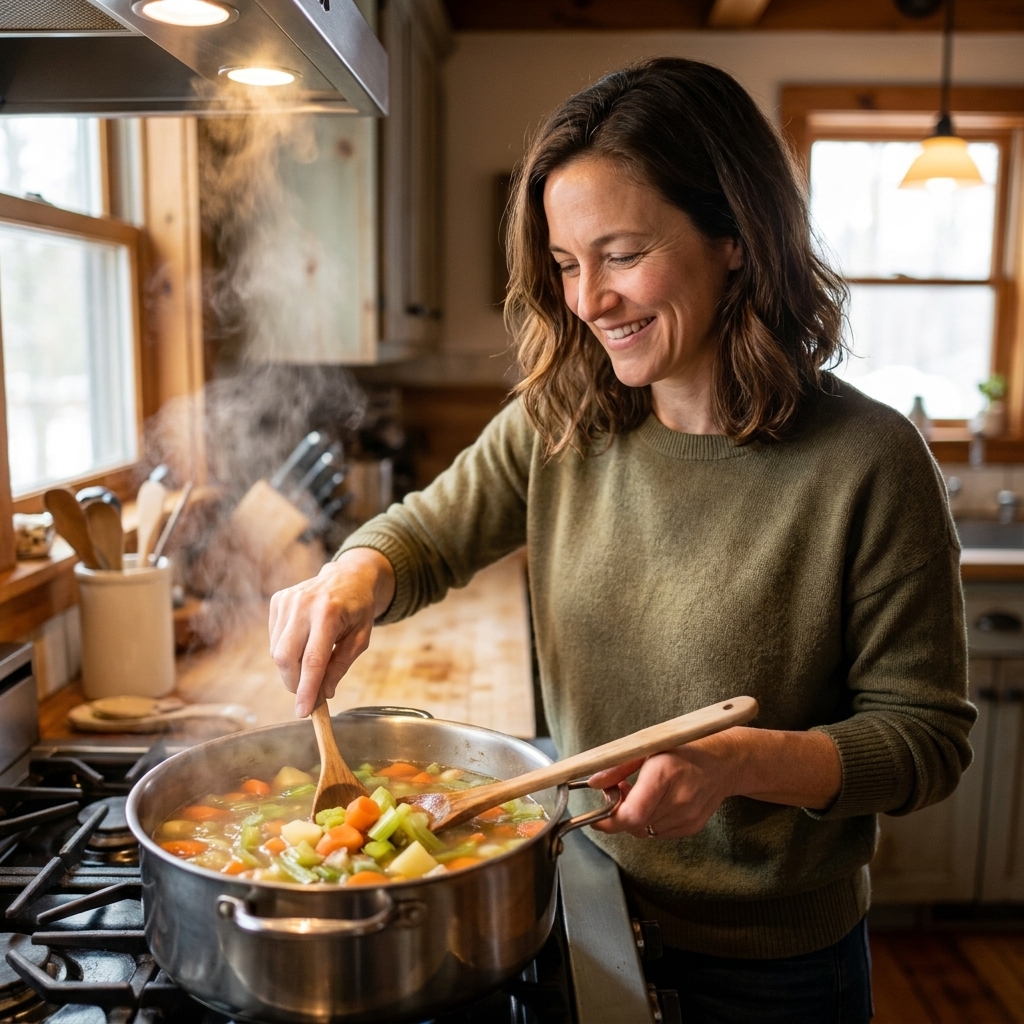
Some nights, the only thing standing between you and a comforting dinner is the thought of putting on shoes. This is where pantry-staple stews shine. If you have a can of beans, a couple of root vegetables rolling around in the crisper drawer, and any kind of broth or bouillon, you are in business.
I grew up in upstate New York where winter seemed to last eight months, and a pot of something sturdy on the stove was basically a household utility. This is my no-stress, no-grocery-run approach: build a quick flavor base, add whatever hearty bits you have, and let it simmer until it tastes like you planned it all along.
The pantry-stew formula
Think of this like a choose-your-own-adventure that ends in a warm bowl.
1) Flavor base
- Aromatics: onion, garlic, carrots, celery, scallions, or even a spoon of dried onion flakes
- Cooking fat: olive oil, butter, bacon fat, or any neutral oil you keep around
- Tomato or not: a spoon of tomato paste or a can of diced tomatoes adds body, but you can skip it for a lighter broth
2) Hearty body
- Beans: cannellini, chickpeas, black beans, pintos, lentils
- Root veg: potatoes, sweet potatoes, carrots, parsnips, turnips, rutabaga
- Starch: small pasta, quick oats (yes, really), or cooked grains added at the end
3) Liquid
- Broth (homemade or boxed), bean liquid plus water, bouillon, or water with a generous hand of seasoning
4) A “make it taste like more” finisher
- Vinegar or lemon juice
- Grated cheese or a dab of yogurt
- Soy sauce, Worcestershire, or miso
- A pat of butter
- Fresh herbs, dried herbs, or a pinch of red pepper flakes
If you remember nothing else: salt early, brighten late. Salt helps everything taste like itself. A small splash of vinegar or lemon at the end wakes up the whole pot without taking it in a sour direction.
A pantry stew for tonight
This is my go-to “I swear there is nothing in the house” stew. It leans on canned beans and roots, but it is forgiving. Use what you have.
Makes: about 4 to 6 servings
Total time: about 40 to 55 minutes
Best pot: a 5 to 6 quart Dutch oven or soup pot
Ingredients (flexible)
- 2 tbsp olive oil (or butter)
- 1 onion, chopped (or 1 tbsp dried onion flakes)
- 2 to 3 cloves garlic, minced (or 1/2 tsp garlic powder)
- 2 carrots, chopped
- 2 medium potatoes, chopped (or sweet potatoes)
- 2 tbsp tomato paste (optional but recommended)
- 1 tsp dried thyme (or Italian seasoning)
- 1/2 tsp smoked paprika (optional, but cozy)
- 4 cups broth or water plus bouillon
- 2 cans beans, drained and rinsed (or 2 1/2 to 3 cups cooked beans)
- Optional starch, choose one: 3/4 to 1 cup small pasta (like ditalini or shells), or 1/2 cup quinoa, or 2 to 3 cups cooked rice or cooked barley added at the end
- Salt and black pepper
- To finish: 1 to 2 tsp vinegar or lemon juice, and a handful of greens if you have them
Method
- Sweat the aromatics. In a Dutch oven or soup pot, warm the oil over medium heat. Add onion, carrots, and a pinch of salt. Cook 6 to 8 minutes until softened.
- Bloom the flavor. Stir in garlic and cook about 30 seconds, stirring so it does not scorch. Add tomato paste (if using) and cook 1 to 2 minutes until it darkens slightly and smells sweet. Stir in thyme and paprika.
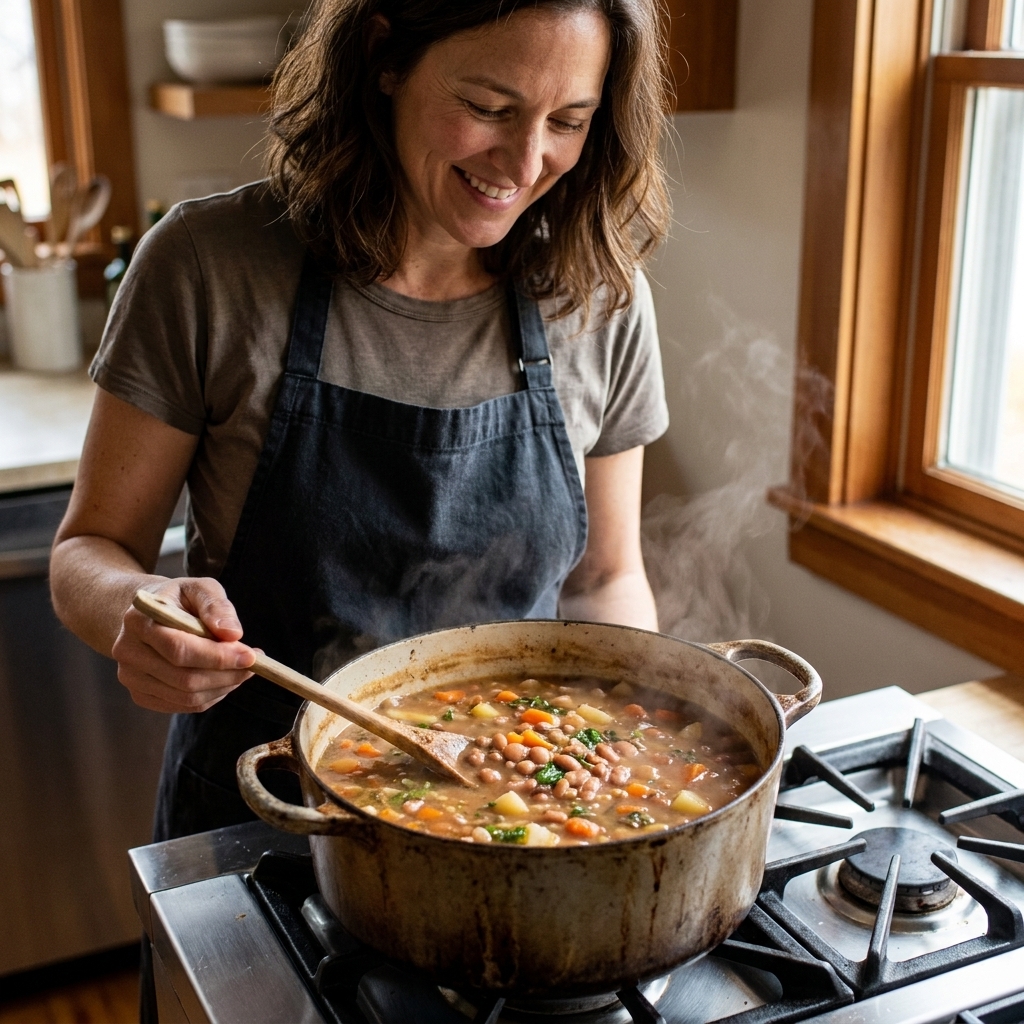
- Simmer the roots. Add potatoes and broth. Bring to a simmer, then partially cover and cook 12 to 18 minutes until the potatoes are nearly tender. You are looking for a steady simmer: small bubbles, not a rolling boil.
- Add beans (and starch, if using). Stir in beans. If using quinoa, add it now and simmer about 12 to 15 minutes until tender. If using small pasta, add it for the last 8 to 10 minutes. If using cooked rice or cooked barley, wait and stir it into individual bowls, or add it right at the end just to warm through.
- Adjust thickness. Simmer 5 to 10 minutes. For a thicker stew, mash a scoop of beans and potatoes against the side of the pot and stir back in.
- Finish like you mean it. Taste and add salt and pepper. Turn off heat, stir in vinegar or lemon juice. If you have spinach, kale, or frozen peas, stir them in and let the residual heat do the work.
Leftover note: If you add pasta, rice, or quinoa and plan to have leftovers, consider cooking it separately and adding to each bowl. Otherwise it will keep drinking your broth overnight and you will wake up to something closer to casserole.
Dried bean note: If you want to use dried beans, cook them separately (or plan a longer simmer) and stir them in once tender. Tomatoes and other acidic ingredients can slow bean softening, so save the vinegar and lemon for the end either way.
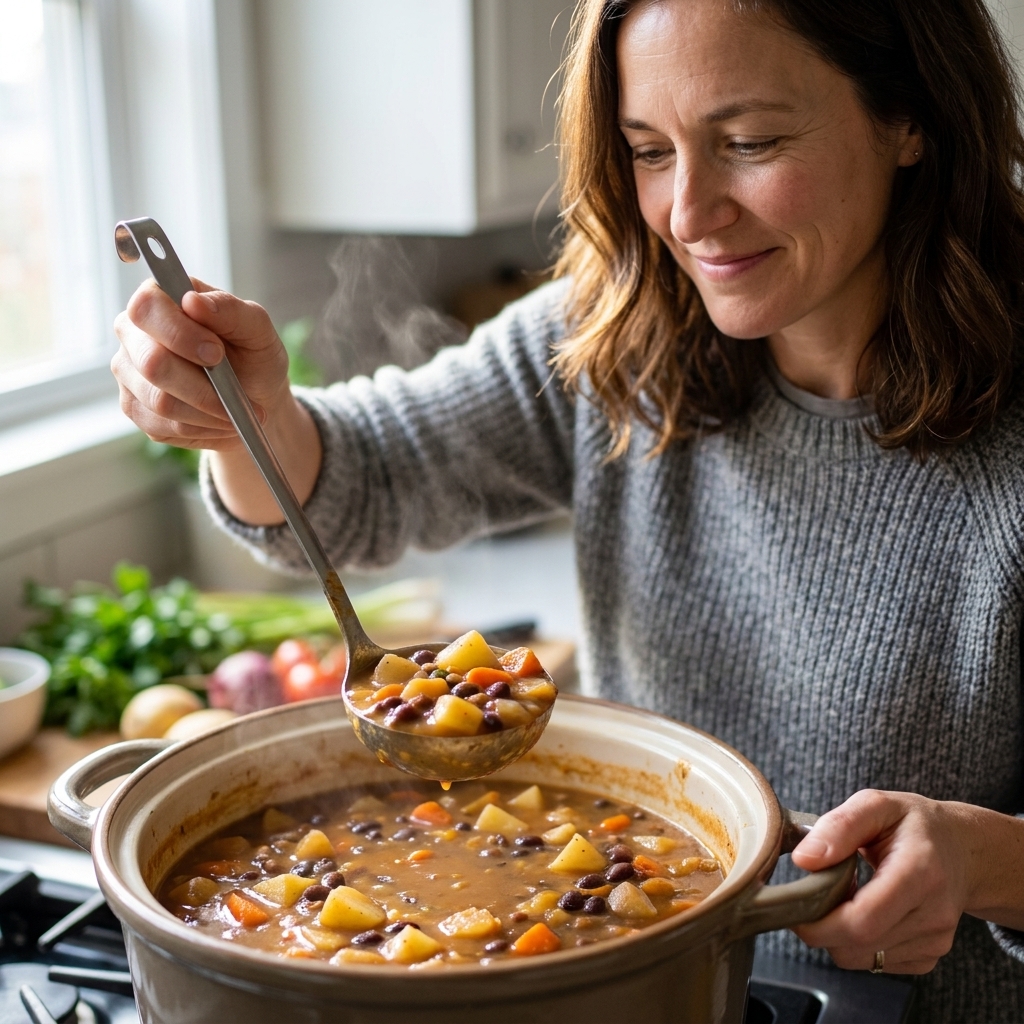
Big flavor from the pantry
This is the part I learned the hard way over years of “why does this taste flat?” trial and error. When you are cooking from the pantry, you want layers. Here are my most reliable tools.
Tomato paste does a lot
Even if you are not making a tomato stew, a tablespoon or two of tomato paste cooked in oil adds deep, savory backbone. Let it fry for a minute until it turns brick red and smells sweet.
Use umami boosters
- Soy sauce: 1 to 2 teaspoons for depth
- Worcestershire: great with lentils and beefy flavors
- Miso: whisk a spoonful into a little hot broth, then stir in at the end
- Parmesan rind: simmer it in the pot if you have one tucked in the freezer
Toast spices briefly
When you add dried spices to warm oil before liquid goes in, they wake up. It is a tiny step that makes pantry cooking taste less like emergency dinner.
Brighten at the end
If your stew tastes heavy, not bad, just a little tired, that is your cue for vinegar or lemon. Add it off the heat so it stays bright and you can stop at “lively” instead of overshooting into sharp.
Mix-and-match ideas
Here are combinations I make on repeat. Think of them as starting points, not rules.
Chickpea + sweet potato
- Chickpeas, sweet potato, onion
- Curry powder or garam masala, plus a little ginger if you have it
- Finish with lemon or a spoon of yogurt
Black bean + corn
- Black beans, canned corn, diced tomatoes
- Chili powder, cumin, smoked paprika
- Finish with lime, hot sauce, or shredded cheese
Lentil + carrot
- Brown or green lentils, carrots, onion
- Thyme, bay leaf, a splash of vinegar
- Finish with butter and black pepper
White bean + rosemary
- Cannellini beans, potatoes, onion
- Rosemary (dried is fine), lots of black pepper
- Finish with olive oil and grated Parmesan
Optional protein add-ins
- Sliced sausage browned with the onions
- Shredded leftover chicken stirred in near the end
- A can of tuna stirred in off the heat with lemon and black pepper, pantry dinner in a pinch

Thicken it, no flour
When you are cooking from the pantry, you might not have cream or a roux plan. No problem.
- Mash a portion: Smash some beans and potatoes against the pot and stir. Instant body.
- Blend a cup: Blend 1 cup of the stew and pour it back in for a silky texture.
- Add quick oats: 1 to 2 tablespoons simmered for 5 minutes disappears into the broth and thickens gently.
- Use instant potatoes: A spoonful at a time, whisked in. It sounds odd, but it works.
Cook once, eat twice
Pantry stews are practically designed for next-day magic.
Turn it into a new meal
- Stew to chili: Add chili powder, a can of tomatoes, and a splash of coffee or cocoa if you keep it around.
- Stew to pot pie-ish: Spoon into a baking dish, top with biscuits or puff pastry if you have it, bake until golden.
- Stew to soup: Thin with broth and add pasta or rice.
- Stew to grain bowl: Spoon thick stew over rice, quinoa, or toast.
Storage tips
- Cool, then refrigerate for 3 to 4 days.
- Freeze up to 3 months, with best quality in the first 2 to 3 months.
- If you cooked pasta or rice in the stew, expect it to thicken a lot overnight. Add broth when reheating.
Troubleshooting
It tastes bland
Add salt first. If it still tastes flat, add a small splash of vinegar or lemon. If it needs depth, stir in a teaspoon of soy sauce or a little miso.
It is too thin
Mash some beans and potatoes, or simmer uncovered for 10 to 15 minutes. A spoonful of quick oats also helps.
It is too salty
Add more water or unsalted broth, plus more beans or potatoes if you have them. A squeeze of lemon can rebalance the perception of salt.
Dried beans are taking forever
Older dried beans can be stubborn. If you are short on time, pivot to canned beans and save the dried beans for a weekend simmer. If you are cooking dried beans in the stew, keep acidic ingredients like tomatoes and vinegar for later so the beans soften on schedule.
My stew staples
I collect Dutch ovens the way some people collect shoes, but my pantry is not fancy. These are the workhorses that make last-minute stew nights easy.
- 2 to 3 types of canned beans (chickpeas, black beans, cannellini)
- One quick starch (small pasta or quinoa) plus a container of cooked grains in the freezer when I am on top of my life
- Broth or bouillon
- Tomato paste and canned tomatoes
- Dried herbs (thyme, oregano, bay leaves)
- Smoked paprika and cumin
- One umami bottle (soy sauce or Worcestershire)
- Vinegar and lemons when I remember
If you have those plus onions and potatoes, you can make something comforting almost any day of the week.