Leafy greens are the fastest way I know to turn a pot of beans, lentils, or veggie stew into something that looks alive. The trick is that greens are not all built the same. Kale can take a long simmer. Spinach goes from perky to limp in a blink. And chard lives right in the middle, with stems that need their own plan.
This is my home-cook roadmap for when to add kale, chard, and spinach so they stay vibrant, taste fresh, and keep a nice bite without turning your beautiful broth murky.
Why timing matters
Greens are mostly water and delicate plant cells. In a hot, bubbling stew, those cells collapse quickly. That is what wilting is, and it can be wonderful when it is controlled.
- Texture: Overcooking breaks greens down into stringy bits or a soft paste, depending on the leaf.
- Color: Bright green chlorophyll dulls with prolonged heat, especially if the pot is kept at a hard boil.
- Flavor: Long cooking can mute freshness and bring out stronger, more cabbage-like or sulfurous notes, especially with kale and mature chard.
My biggest rule: get your stew 100 percent done first (beans tender, potatoes cooked, lentils creamy, flavors balanced), then add greens based on how sturdy they are.
Timing cheat sheet
If you want the short answer you can tape to your fridge, here you go. These are typical timing windows for most home kitchens. Pot size, cut size, stew temperature, and even the variety of greens can nudge you to the shorter or longer end.
- Kale: add 15 to 25 minutes before serving for tender-but-not-mushy leaves. Add 30 to 45 minutes before serving if you like it very soft.
- Swiss chard: add chopped stems 10 to 15 minutes before serving, then add the leaves 3 to 5 minutes before serving.
- Spinach: add 30 to 90 seconds before serving, or stir in after you turn off the heat and let the residual heat wilt it. Older, mature spinach may want closer to 1 to 2 minutes.
Kale
Kale is your slow-simmer friend. It can hang out in hot liquid without dissolving, which makes it perfect for hearty vegetarian stews like lentil, white bean, chickpea, and vegetable barley.
Prep tips
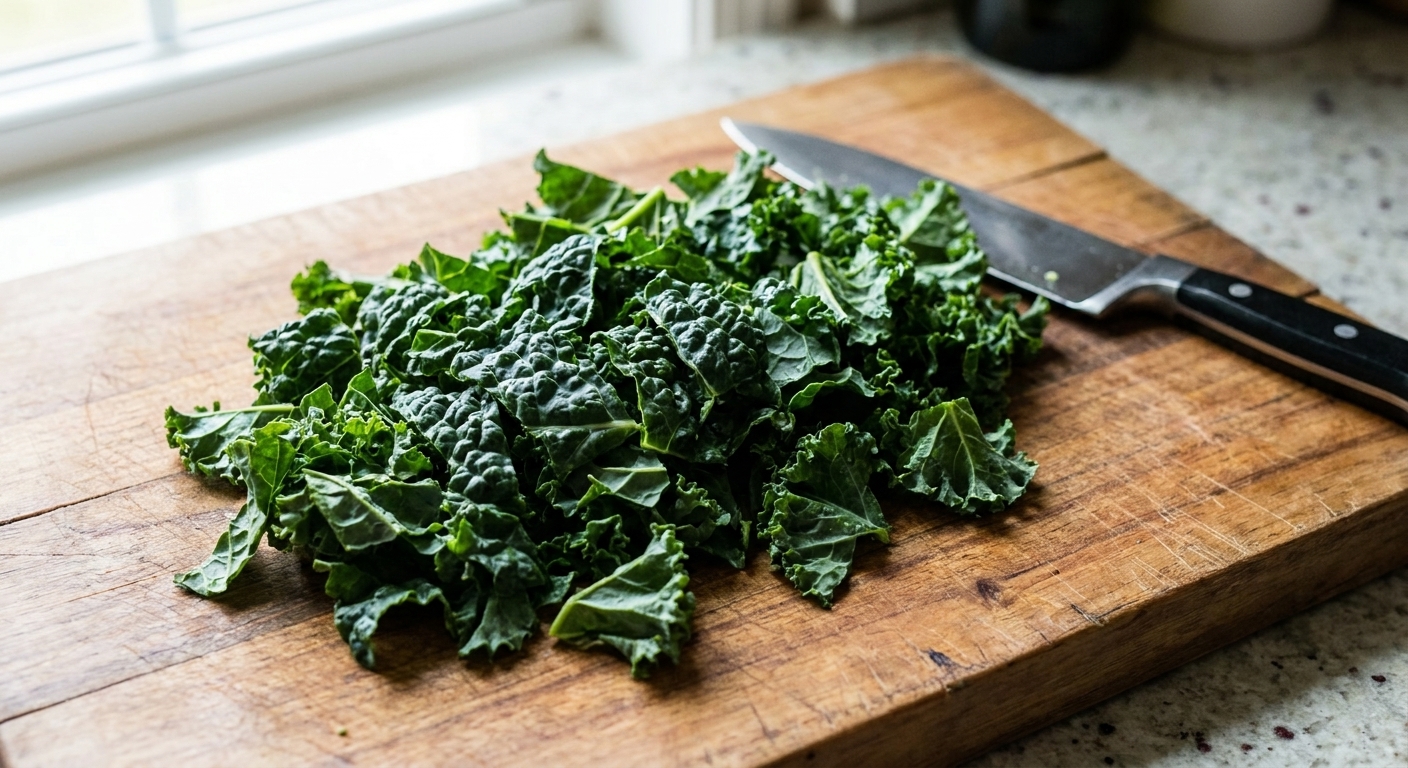
- Remove the ribs: stack leaves, slice out the thick center rib, then chop the leaves. Those ribs stay chewy unless you cook them much longer.
- Optional rib move: if you do not want to waste them, slice ribs thin and sauté them with onions, celery, and carrots at the beginning. They soften beautifully with a longer cook.
- Chop smart: for spoon-friendly stews, cut into bite-size pieces. Huge ribbons look pretty but are harder to eat.
- Wash like you mean it: kale can hold grit. A quick soak and swish in a bowl of cold water works better than a fast rinse.
When to add it
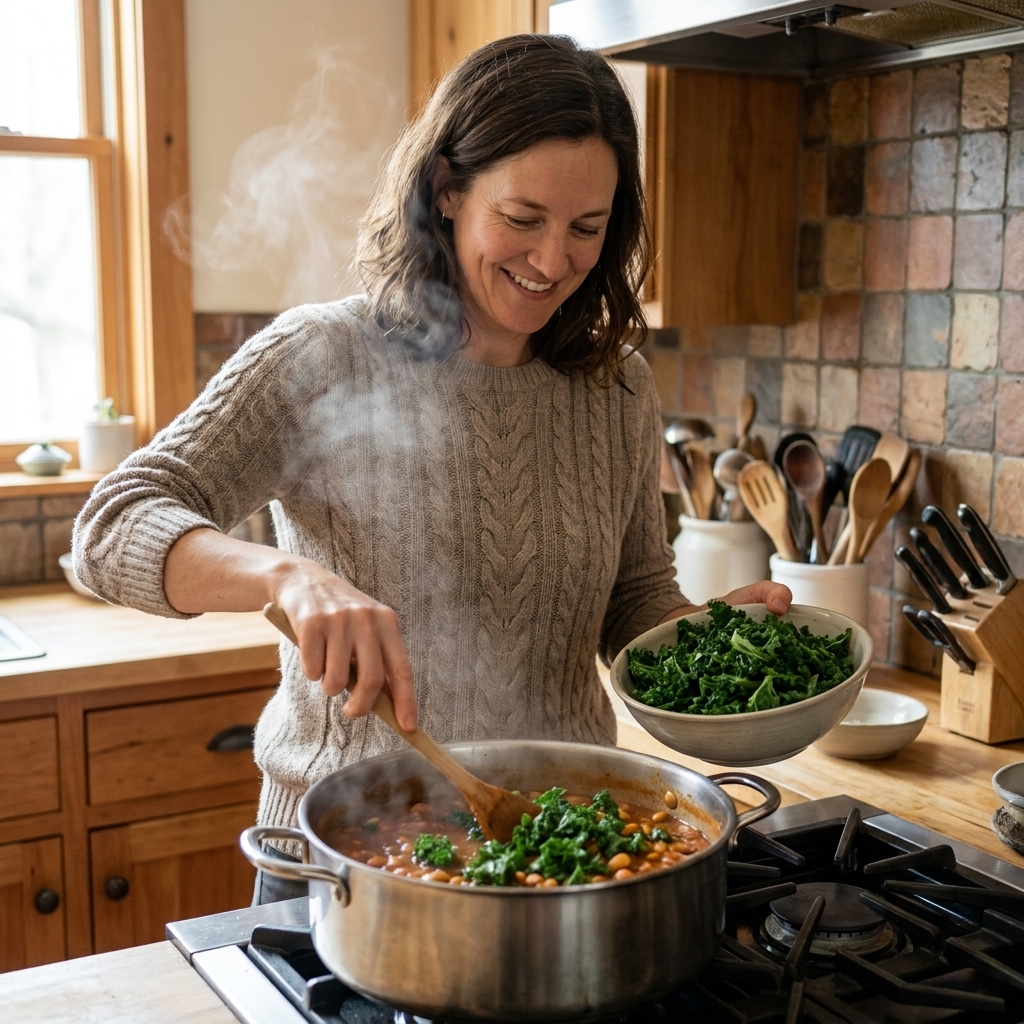
Add kale near the end, but not at the very end. In most vegetarian stews, I add it when everything else is cooked and I have about 20 minutes left. Keep the pot at a gentle simmer, not a rolling boil.
Cut size matters here. Big pieces or thick, curly kale tend to want the longer end. Thin ribbons or lacinato (dinosaur) kale can be happy on the shorter end.
- 15 to 25 minutes: tender, still green, nice chew.
- 30 to 45 minutes: very soft, more integrated into the broth, slightly duller color.
Flavor tip
Kale can read a bit bitter if your stew is all earthy notes (beans, mushrooms, potatoes). A small hit of acid right at the end brings it back to life. Think lemon juice or red wine vinegar.
If you want deeper stew flavor, a spoonful of tomato paste stirred in earlier can add richness. Then finish with a squeeze of lemon or a splash of vinegar right before serving.
Swiss chard
Chard is the best of both worlds: tender leaves with a little backbone, plus those gorgeous stems that act almost like a vegetable on their own. The mistake I see most often is adding it all at once. The leaves overcook while the stems stay crunchy.
Prep tips
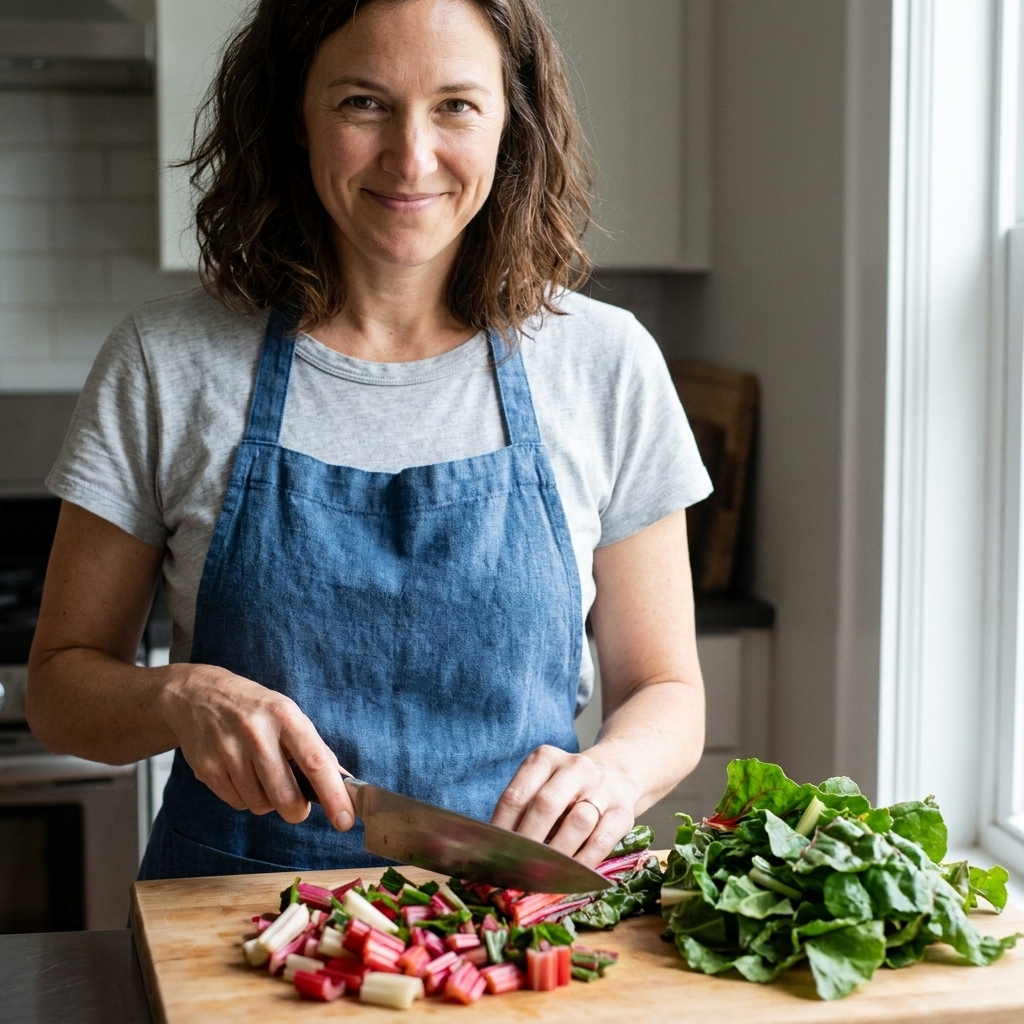
- Separate stems and leaves: slice stems into thin pieces, then chop the leaves.
- Keep stems small: 1/4-inch slices melt into the stew faster and eat easier.
- Do not fear rainbow chard: the colors dull a bit with heat, but the flavor is the same and it is still lovely in the bowl.
When to add it
Add the stems first, then the leaves.
- Stems: add 10 to 15 minutes before serving so they soften and sweeten.
- Leaves: add 3 to 5 minutes before serving, just long enough to wilt and turn silky.
Pairs well with garlic and heat
If your stew base is mild (say, creamy cannellini beans), chard really perks up with a little garlic, black pepper, and a pinch of red pepper flakes bloomed in oil before the liquids go in.
Spinach
Spinach is the most delicate of the bunch. It is also the one that can give you that gorgeous bright-green swirl through a stew when you time it right.
Prep tips
- Baby spinach: no chopping required. Just rinse and spin dry.
- Mature spinach: remove any thick stems and give it a rough chop so it does not clump.
- Frozen spinach: thaw and squeeze very well, then add a little earlier (about 2 to 3 minutes) so it warms through.
When to add it
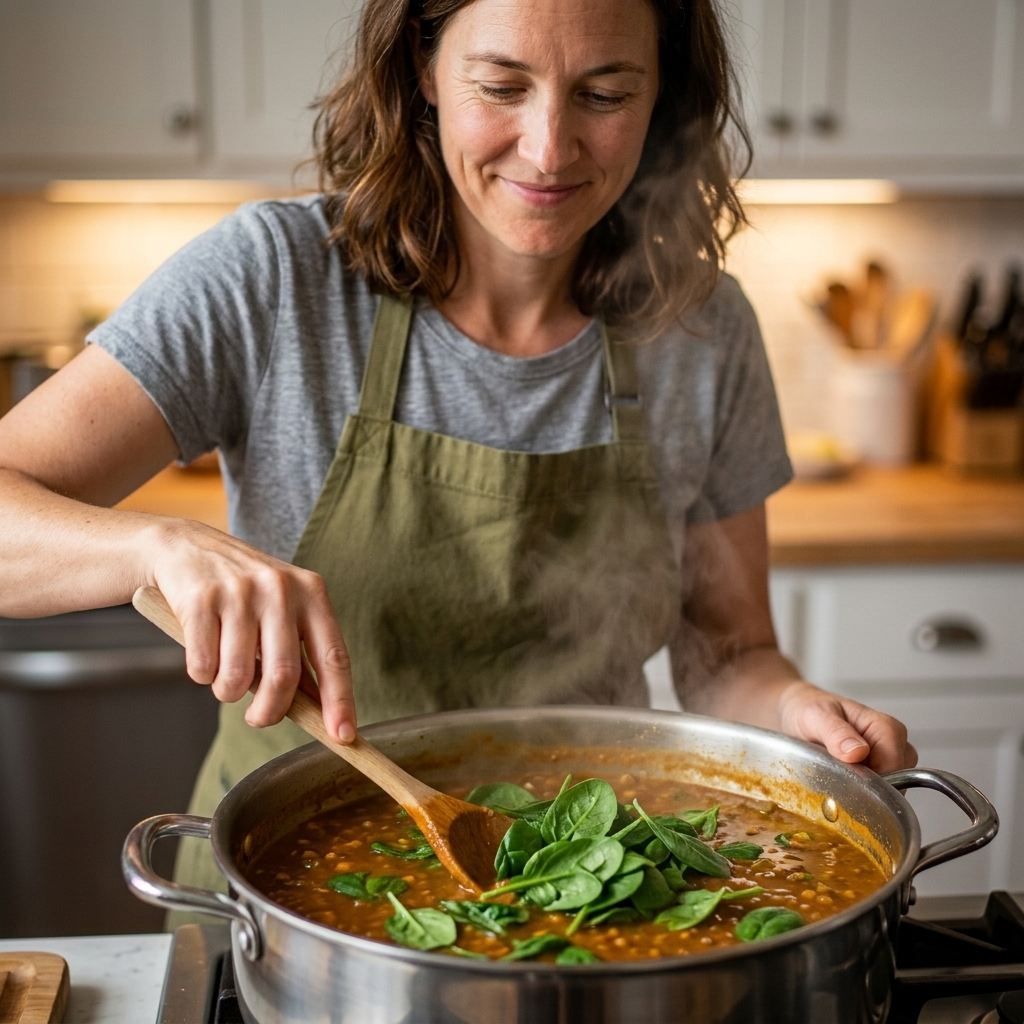
Add spinach at the very end. My favorite method is to turn off the heat, stir in spinach, cover the pot for 1 minute, then stir again. Residual heat wilts it gently and keeps the color brighter.
- 30 to 90 seconds: typical for fresh baby spinach.
- 1 to 2 minutes: better for mature spinach or if your stew is not piping hot.
- 2 to 3 minutes: better for frozen spinach or very chunky stews that cool down when you add it.
Simmer, do not boil
If you want greens that stay greener, keep the pot at a gentle simmer once the greens go in. A rolling boil beats them up, dulls the color faster, and makes stronger flavors more obvious.
- Add greens after the stew is thickened: if you simmer greens while the stew is still reducing hard, they get extra heat exposure for no benefit.
- Cover strategically: covering for a minute helps spinach wilt quickly. For kale, I often leave it partially uncovered so the stew stays at a steady simmer and does not foam up.
Salt and acid
Two little seasoning choices can make the difference between vibrant greens and dull greens.
Salt
Salt helps greens taste like themselves. In stews, I season the base gradually, then taste again after the greens wilt. Greens add their own flavor and volume, and that can shift the balance.
Acid
Acid is magic for flavor, but if your goal is the brightest green color, I prefer it at the end, especially if the greens are going to simmer for a while. A squeeze of lemon, a splash of vinegar, or even a little pickle brine right before serving wakes up kale and chard especially well.
How much to add
Greens cook down dramatically. Here is a practical baseline for a standard Dutch oven batch (about 6 servings):
- Kale: 4 to 6 packed cups chopped (about 1 large bunch)
- Swiss chard: 4 packed cups chopped leaves plus 1 cup sliced stems (about 1 large bunch)
- Spinach: 4 to 8 packed cups (5 to 10 ounces), depending on how leafy you want it
If you are doing a clean-out-the-fridge stew like I often do, you can absolutely mix greens. Just add them in waves: kale first, chard next, spinach last.
Problems and fixes
My greens turned olive green
- Next time, add them later and keep the pot at a gentle simmer.
- Finish with acid at the table. Lemon or vinegar helps the flavor even if the color is already muted.
My kale is still tough
- Make sure the ribs are removed, or sliced thin and cooked longer.
- Give it more time. Add another 10 to 15 minutes at a gentle simmer.
- Slice thinner next time. Smaller pieces soften faster.
My spinach disappeared
- That is normal. Add more next time, or add in two handfuls, stirring between each.
- Use mature spinach if you want more body than baby spinach provides.
My chard stems are crunchy
- Slice them thinner and add them earlier than the leaves.
- If the stew is already done, simmer just the stems in a ladle or two of broth in a small pan for 5 to 8 minutes, then stir them back in with the leaves.
Greens-at-the-end method
When you are riffing and do not want to overthink it, do this:
- Cook your stew fully until the main ingredients are tender and the broth tastes right.
- Lower heat to a gentle simmer.
- Add kale (if using) and simmer 15 to 25 minutes.
- Add chard stems (if using) and simmer 10 minutes.
- Add chard leaves and simmer 3 to 5 minutes.
- Turn off heat. Stir in spinach and cover 1 minute.
- Taste, then finish with lemon or vinegar, plus a final pinch of salt if needed.
FAQ
Can I add greens earlier to boost nutrition?
You can, but you will trade texture and color for convenience. If you want the most pleasant bowl, add greens near the end. That is also when they taste freshest, which usually encourages everyone to eat more of them anyway.
Do I need to massage kale before adding it?
Not for stew. Massaging helps for raw salads. In hot liquid, kale softens on its own. Just remove the ribs and chop it well.
What about collards or mustard greens?
Collards act like sturdier kale and often need 30 to 45 minutes. Mustard greens cook faster and can taste sharp if boiled hard. I treat them like tender kale: 10 to 20 minutes, gentle simmer, then finish with acid.
Should I blend stews with greens?
You can, but blend after the greens have softened to your liking. Blended kale and chard can deepen the color and make the stew look darker. If you want a brighter look, blend the base first, then stir greens in at the end.