
If you have ever sipped a vegetarian soup and thought, “Cozy, but it’s missing that something,” you are not imagining it. Meat, bones, and long simmers often deliver glutamates and nucleotides, the compounds that read as deep savory flavor. The good news is that plants can do this too, and once you learn the building blocks, you can make a pot of lentil soup taste like it has been quietly simmering all day.
This is how I build umami in vegetarian soups in my upstate New York kitchen, where soup season is basically a lifestyle. We will talk ingredients like kombu and dried shiitakes, yes, but also technique, timing, and the tiny tweaks that turn “nice broth” into “whoa, what did you put in here?”

What umami adds
Umami is that mouth-filling savoriness that makes a broth taste rounded, lingering, and satisfying. In soup, umami shows up as:
- Depth, even if the soup is light in color
- Length, meaning the flavor sticks around after you swallow
- Balance, where salt and acid taste integrated instead of sharp
- Brothiness in soups that have no meat
Practically speaking, you build umami by combining glutamate-rich ingredients (kombu, tomatoes, miso, soy sauce) with nucleotide-rich ingredients (mushrooms, especially dried shiitake). When you pair them, the savory effect gets noticeably stronger.
4 layers of vegetarian umami
When I want guaranteed flavor, I think in layers. You do not need all four every time, but the more you stack, the richer the pot.
Layer 1: A strong base
Before you add a single drop of broth, set yourself up for success.
- Brown your aromatics: onions, leeks, scallions, fennel. Go past translucent. Aim for golden edges.
- Caramelize tomato paste: cook it in oil until it turns brick red and smells sweet. This is one of my favorite “secret weapons” in vegetarian soups.
- Let vegetables catch: mushrooms, cabbage, carrots, celery root. A little browning on the bottom of the pot is flavor. Deglaze it with water, wine, or broth.
Layer 2: A kombu and mushroom broth
Think of kombu and dried shiitakes as your vegetarian soup bones. They create structure, not just saltiness.
Layer 3: Fermented boosters
Miso, soy sauce, tamari, gochujang, and even a bit of sauerkraut brine can add the kind of savory complexity we usually associate with long-simmered broths.
Layer 4: Finish for balance
Umami shines brightest when it is supported by salt, acid, and fat. A squeeze of lemon, a splash of rice vinegar, or a drizzle of toasted sesame oil at the end can make a brothy soup taste complete.
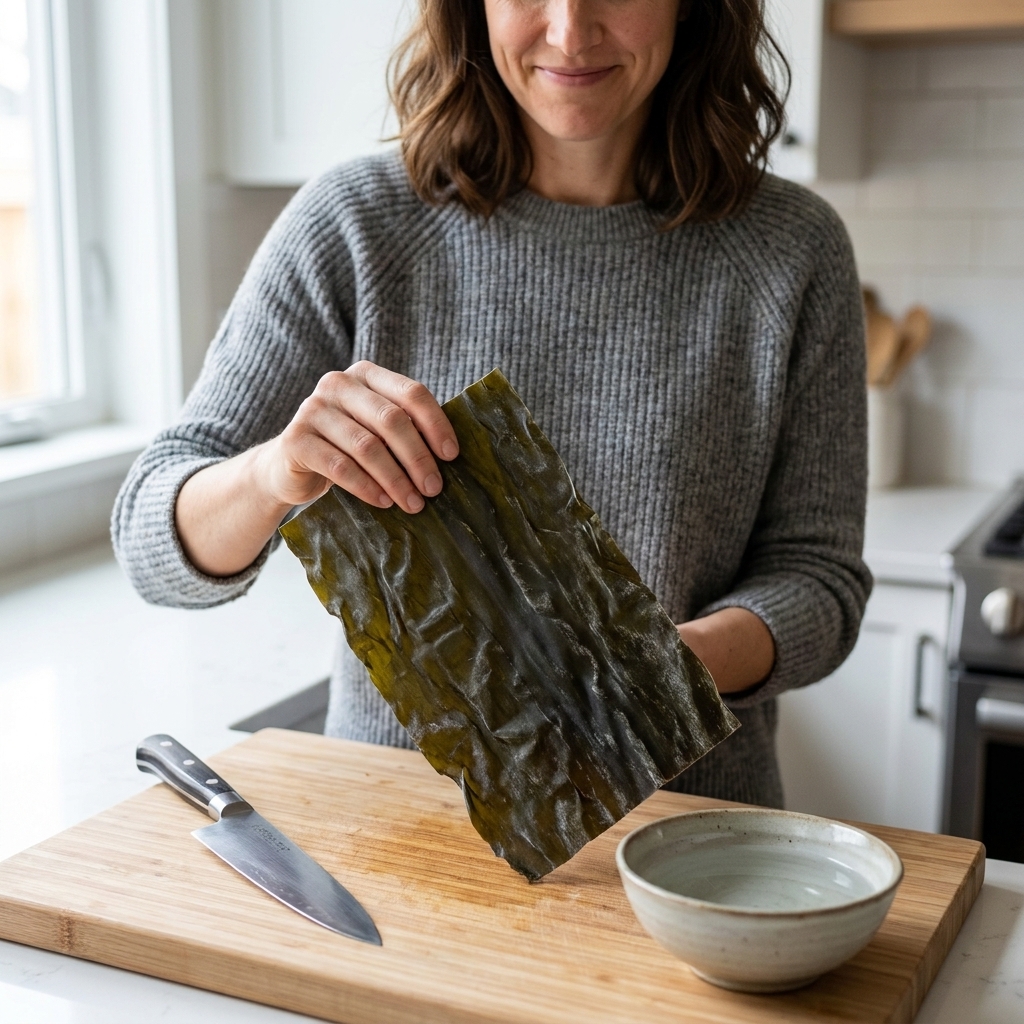
Kombu basics
Kombu is dried kelp, and it is packed with natural glutamates. It makes broth taste fuller and more dimensional, without tasting “seafood-y” when used correctly.
How to use kombu well
- Wipe, do not wash: If there is visible grit, wipe kombu with a barely damp cloth. Avoid rinsing away flavorful surface bloom.
- Keep it gentle: Warm it slowly and avoid a hard boil. If you like a more exact cue, pull the kombu as the water approaches a bare simmer, roughly 140 to 170°F (60 to 75°C).
- Know what can happen: Boiling kombu hard can make broth taste bitter or feel a little slick. It does not happen every time, but gentle heat keeps the odds in your favor.
My freezer trick
I keep a bag of kombu in the freezer and snap off pieces as needed. It lasts ages, and it makes weeknight soups feel like you planned ahead.
How much to use
For most soups, I use a piece about 3 by 4 inches for 6 to 8 cups water. If you are nervous, start smaller. You can always steep another piece in a cup of hot water and add it in.
A quick note on iodine
Kombu is naturally high in iodine. For most people, using it occasionally in soups is no big deal. If you are managing thyroid issues or have been told to watch iodine intake, keep portions modest and follow medical guidance.
Dried shiitake basics
Dried shiitakes bring umami plus a dark, woodsy aroma that reads as hearty and stew-like. Fresh mushrooms are great, but dried mushrooms are concentrated, and their soaking liquid can be liquid gold.
How to make shiitake broth
- Rinse quickly if the mushrooms look dusty.
- Soak in warm water for 20 to 30 minutes, or cold water overnight in the fridge.
- Strain the soaking liquid through a fine mesh strainer or a coffee filter to catch grit.
- Simmer the liquid with the mushrooms for 10 to 15 minutes if you want a stronger broth.
Taste before you pour it all in
Mushroom soaking liquid varies. Sometimes it is clean and deeply savory. Sometimes it is a little intense. Give it a taste and add it gradually, especially if the mushrooms are older or very dark and concentrated.
Use the mushrooms too
After soaking, trim off the tough stems. Slice the caps and sauté them until browned, then add to the soup. Browning them first gives you that “diner soup, in the best way” vibe.

Kombu and shiitake together
If you only remember one technique, make it this combo. Kombu brings glutamates. Shiitakes bring nucleotides. Together they create a broth that tastes far more complex than the ingredient list suggests.
Simple kombu-shiitake dashi
- 6 cups water
- 1 piece kombu (about 3 by 4 inches)
- 4 to 6 dried shiitakes
Method: Add everything to a pot and let it sit 20 minutes (this cold start helps extraction). Warm to a gentle simmer over medium heat, then remove from heat before a full boil. Steep 10 minutes. Strain. Taste. If it is too strong for your soup, dilute with water or unsalted vegetable broth.
Where I use it: miso soup, ramen-style vegetable noodle soups, mushroom barley, lentil soups that need backbone, and any clean-out-the-fridge veggie soup that needs a reset.
Soy sauce and tamari
Soy sauce is not just salt. It is fermented or brewed, and it is naturally rich in savory compounds like free glutamate. Some varieties are aged for extra depth, while others are made faster. Either way, a small splash can make a broth taste like it has been simmering longer than it has.
How to add it
- Add in small splashes, taste, then repeat.
- Use it to replace some salt, not pile on top of it.
- Stir it in late for the cleanest flavor, or early if you want it to mellow into the broth.
Which one to choose
- Soy sauce: balanced, familiar, great in almost anything.
- Tamari: usually gluten-free, often a bit richer.
- Coconut aminos: sweeter and milder, nice if you want less salt.
My go-to move: A teaspoon or two of soy sauce in a pot of minestrone or lentil soup, even if the soup is not “Asian.” It does not make it taste like soy sauce. It makes it taste more like itself.
Tomato paste
Tomatoes are naturally umami-rich, and tomato paste is tomatoes turned up to eleven. The trick is to cook it.
How to caramelize tomato paste
- Heat oil in the bottom of your Dutch oven.
- Add onions, carrots, celery, and cook until softened.
- Push veggies to the sides and add tomato paste to the center.
- Cook 2 to 4 minutes, stirring, until it darkens and smells sweet.
- Deglaze with broth, water, or a splash of wine, scraping up the browned bits.
This works wonders in vegetarian chili, black bean soup, lentil stew, and cabbage soup.

Miso basics
Miso is fermented soybean paste, and it brings salt, sweetness, and deep savory funk in the best way. It is also aromatic and a little delicate. A hard boil will not ruin your soup, but it can mute some of miso’s more nuanced aromas.
How to add miso
- Turn the heat down so the soup is steaming, not boiling.
- Mix miso with hot broth in a bowl to dissolve, then stir it back into the pot.
- Taste first. Some misos are much saltier than others.
Which miso to keep
- White (shiro) miso: mild, slightly sweet, very versatile.
- Yellow miso: a little stronger, great for hearty soups.
- Red (aka) miso: bold and salty, excellent in mushroom soups and ramen-style broths.
More umami boosters
If your pantry is anything like mine, it is a mix of “planned ingredients” and “I bought this once and it stuck around.” Here are reliable umami add-ins that play nicely in soup.
- Dried porcini: intense, earthy. Use sparingly or blend with shiitakes.
- Nutritional yeast: cheesy, savory. Great in creamy vegetable soups.
- Olives or capers: briny umami, especially in tomato-based soups.
- Sun-dried tomatoes: chewy, sweet-savory boost.
- Roasted vegetables: roast mushrooms, onions, or tomatoes before adding for deeper flavor.
- MSG: optional, but effective. A tiny pinch can lift a flat pot, especially if the soup is low-sodium.
Vegetarian versus vegan note: Parmesan rinds are a classic umami trick in soups, but they are not vegetarian for everyone because traditional Parmesan is made with animal rennet. If you eat dairy and want that effect, look for a rennet-free hard cheese or a vegetarian Parmesan-style wedge.
Technique that matters
I love a good ingredient shortcut, but technique is where the magic lives. Here is how to coax depth from plants.
Cold soak first
Even 20 minutes in cold water helps extract flavor gently from kombu and dried mushrooms. If you are meal-prepping, soak overnight in the fridge and you will wake up with an instant head start.
Deglaze like you mean it
When the bottom of the pot has browned bits, you are looking at concentrated flavor. Add a splash of liquid and scrape it up. That is your soup base getting richer in real time.
Simmer for harmony
Vegetarian soups do not always benefit from an all-day simmer, especially soups heavy on cabbage, greens, or delicate herbs. Build depth up front, then simmer just long enough to meld flavors.
Finish with acid and fat
If a soup tastes flat, it often needs a tiny hit of acid and a little richness.
- Acid: lemon juice, rice vinegar, red wine vinegar, balsamic (use a light hand), pickle brine.
- Fat: olive oil, toasted sesame oil, coconut milk, tahini, cashew cream.
A worked example
If you want one concrete walk-through, this is the one I make when the weather turns and I want dinner to taste like it has a backbone.
Lentil soup with built-in umami
- Broth base: 6 cups water + 1 piece kombu (3 by 4 inches) + 4 dried shiitakes
- Aromatics: 1 onion (chopped), 2 carrots (chopped), 2 celery stalks (chopped), 3 cloves garlic (minced)
- Umami core: 2 tablespoons tomato paste
- Main: 1 1/2 cups brown or green lentils, rinsed
- Seasoning: 1 to 2 teaspoons soy sauce or tamari, plus salt as needed
- Finish: 1 to 2 teaspoons lemon juice and a drizzle of olive oil
How I do it: Start the kombu and shiitake in cold water, then warm to a gentle simmer and steep. Strain. In a separate pot, brown the onion, carrot, and celery in olive oil until the edges pick up color. Add garlic, then cook tomato paste in the center of the pot until it darkens and smells sweet. Pour in the strained broth, scraping up any browned bits. Add lentils and simmer until tender, 25 to 35 minutes depending on the lentils. Season with soy sauce, then salt to taste. Turn off the heat, add lemon juice, and finish each bowl with olive oil.
Quick formulas
These are my weeknight training wheels. Pick one from each line and you will almost always land in a delicious place.
Broth builders
- Kombu
- Dried shiitake broth
- Roasted mushrooms
- Caramelized tomato paste
Salty savory boosters
- Soy sauce or tamari
- Miso
- Gochujang
- Olive brine (for tomato soups)
Finishers
- Lemon juice
- Rice vinegar
- Olive oil drizzle
- Toasted sesame oil drizzle
Common mistakes
“My broth tastes like the ocean.”
You used too much kombu or boiled it too hard. Fix: dilute with water or unsalted broth, then round it out with a little mushroom broth or tomato paste.
“My soup tastes salty, but not savory.”
Salt is present, but umami is missing. Fix: add a small amount of mushroom broth, miso (off the boil), or a teaspoon of soy sauce.
“My mushroom broth tastes muddy.”
There may be grit from the mushrooms. Fix: strain through a coffee filter or a double layer of paper towels in a strainer.
“Everything tastes fine, but it’s still flat.”
This is almost always an acid problem. Fix: add lemon juice or vinegar a teaspoon at a time, tasting as you go.
Leftovers that improve
Deeply savory vegetarian soup is a gift to your future self. The umami compounds keep developing as the soup rests, which means leftovers often taste even better.
- Day two upgrade: add a spoonful of miso to individual bowls, not the whole pot, for a fresh pop.
- Stretch the pot: add cooked rice, noodles, barley, or potatoes and loosen with kombu-shiitake broth.
- Quick ramen move: warm leftover veggie soup, add a splash of soy sauce, a drizzle of sesame oil, and whatever greens need using.

FAQ
Can I use fresh shiitake instead of dried?
You can, and they will be delicious, but dried shiitakes are more concentrated. If using fresh, brown them deeply in a hot pan first, then simmer in the broth for 20 to 30 minutes.
Is kombu vegan?
Yes, kombu is seaweed. Just check packaging if you are buying a seasoned kombu product, since some are flavored.
What is the best all-purpose umami ingredient to keep around?
If you cook a lot of soups, keep dried shiitakes and soy sauce or tamari. If you want that extra broth quality, add kombu to the list.
Can I make a big batch of kombu and mushroom broth?
Absolutely. Cool it quickly, then refrigerate up to 5 days. It also freezes beautifully. I like freezing in 1 cup portions for easy weeknight soup starts.
What vegetarian soup styles benefit most?
Lentil soups, bean soups, mushroom barley, miso soups, ramen-style vegetable noodle soups, minestrone, and vegetarian chili all love an umami boost.
A final note
If you are new to building vegetarian umami, pick just one move for your next pot. Caramelize tomato paste, or steep kombu, or stir in a splash of mushroom broth. Once you taste what it does, you will start reaching for these ingredients the way you reach for a bay leaf or a pinch of salt. And when you find the combo that makes your soup sing, do yourself a favor and serve it with the best crusty bread you can get your hands on. In my house, that is the whole point.