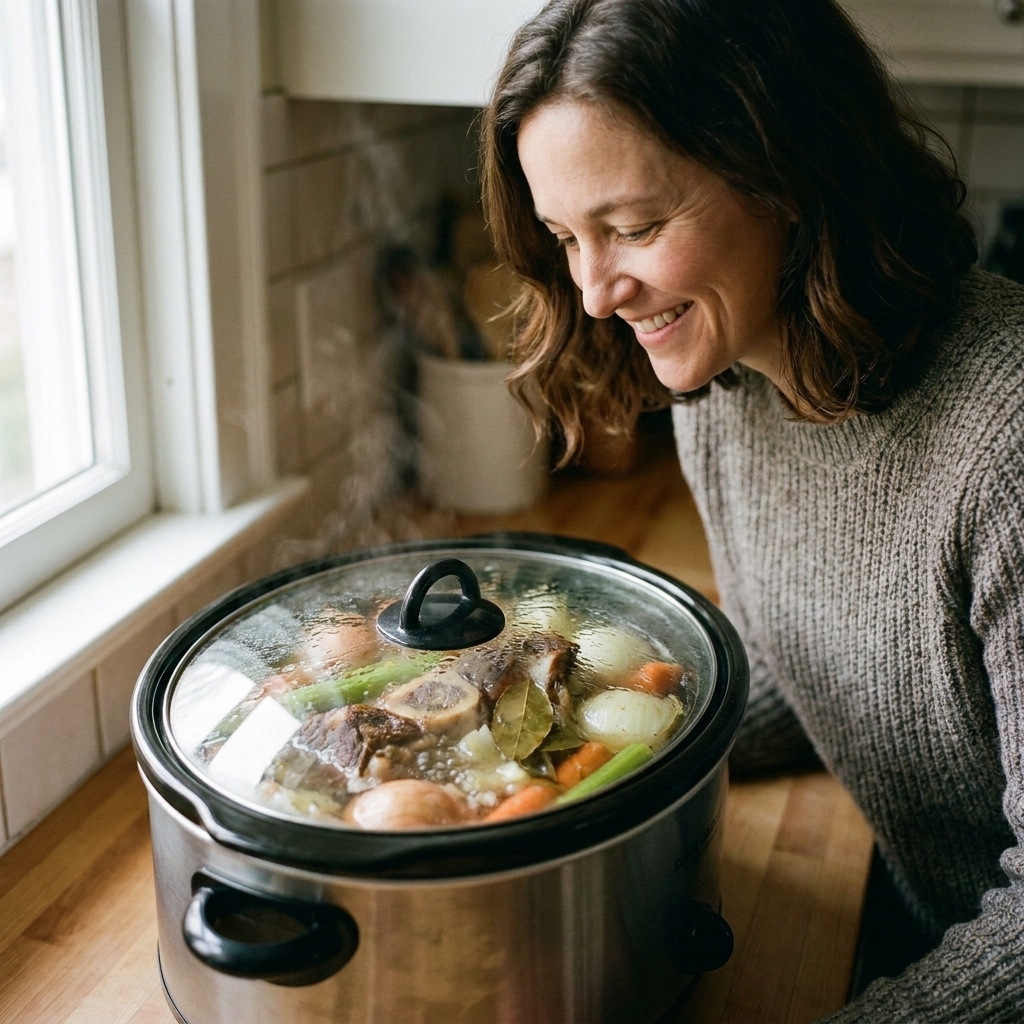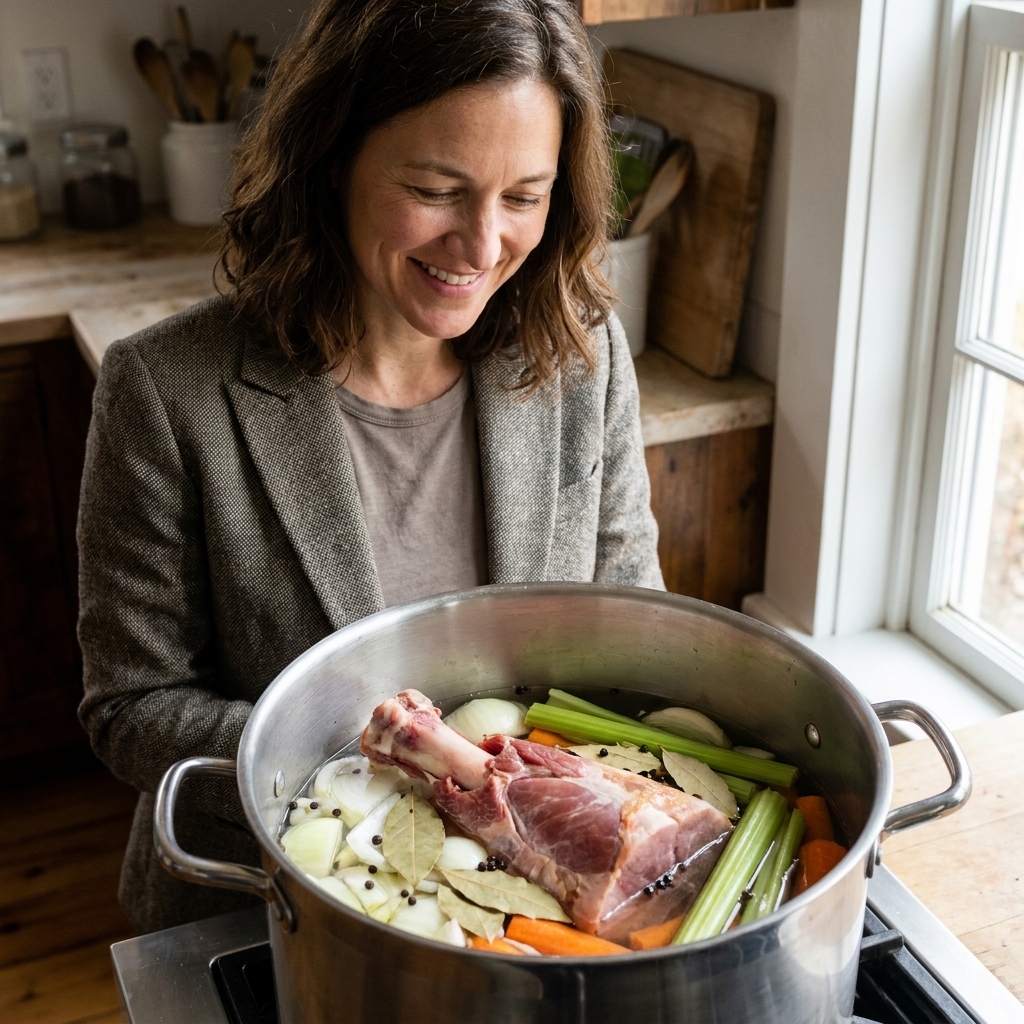
If you cooked a Thanksgiving turkey, you already did the hard part. That picked-over carcass is basically a flavor goldmine, and with one patient simmer you can turn it into a rich, golden broth that tastes like a cozy sweater feels. This is my favorite kind of post-holiday cooking: low effort, high reward, and it makes the whole house smell like you are taking care of everyone.
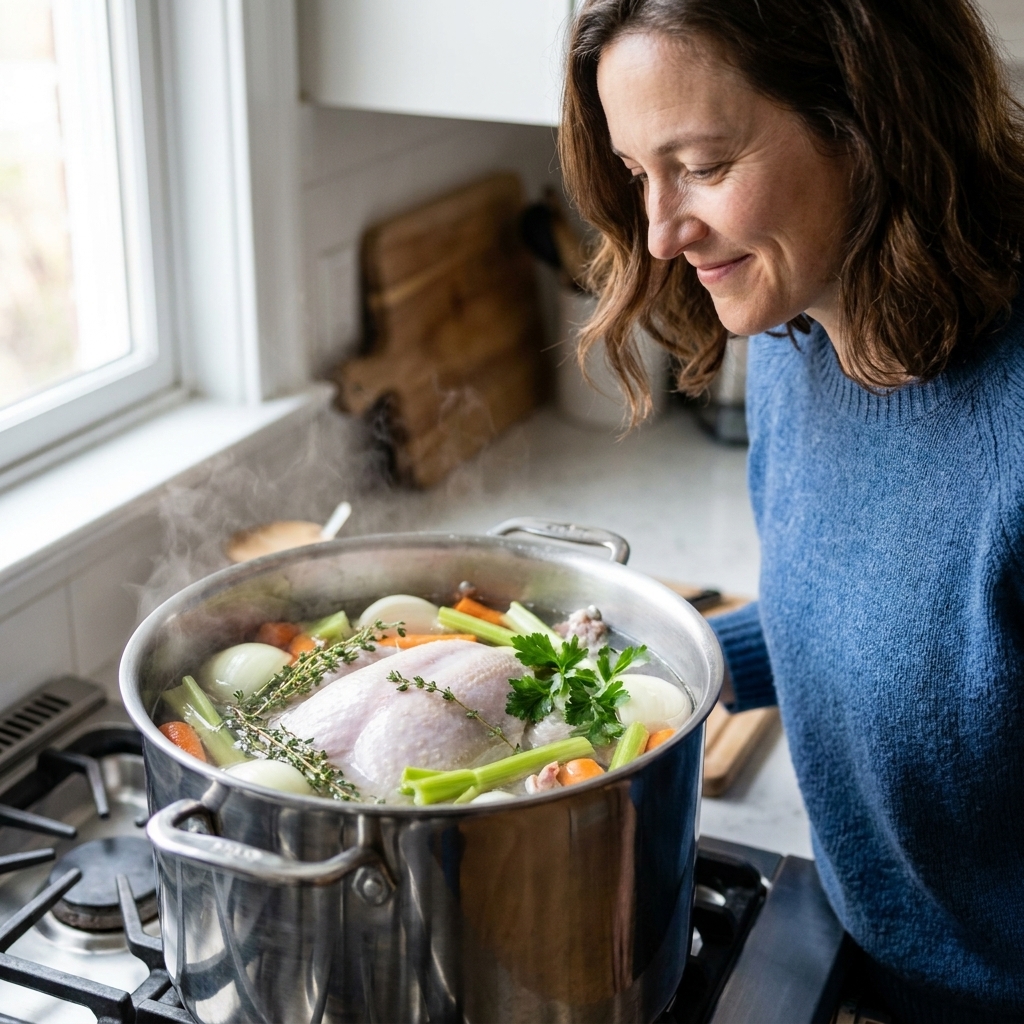
Below is exactly how I turn the turkey frame into a restorative holiday soup, plus a few smart ways to use up odds and ends from the fridge without making the soup taste like a leftovers remix.
Why turkey carcass broth works
When you simmer the turkey frame, you extract flavor from roasted bones and browned bits, plus collagen from joints and connective tissue. That collagen is what gives great broth body. It is the difference between broth that tastes like warm water and broth that feels silky and satisfying.
- Roasted flavor: If your turkey was roasted, the bones already have deep caramelized notes built in.
- Natural richness: Skin, cartilage, and joints melt down and give the broth a fuller mouthfeel.
- Waste less, eat better: One pot turns scraps into multiple meals, which is very much my cook once, eat twice love language.
Quick checklist
A little prep up front makes your broth cleaner and your soup better.
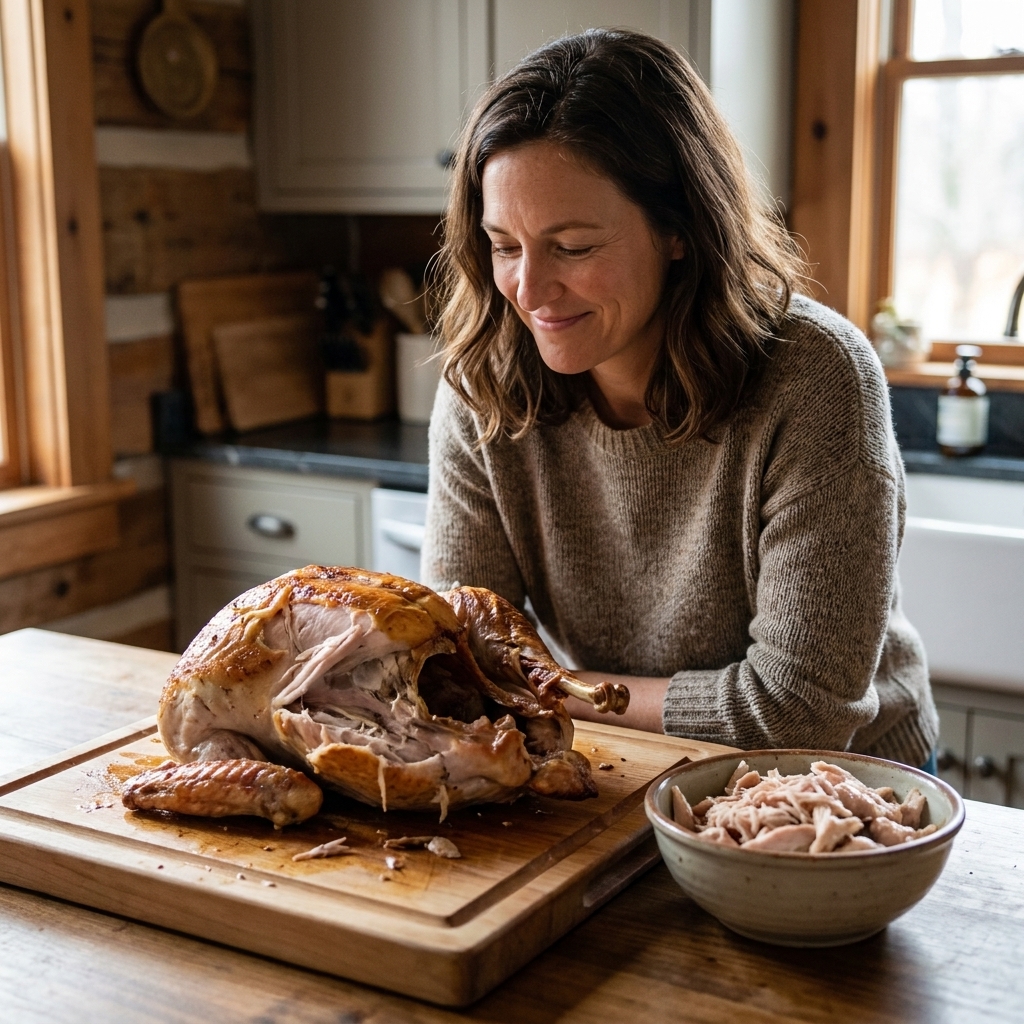
1) Strip the good meat
Pull off any usable turkey meat and set it aside in the fridge. You will add it to the soup at the end so it stays tender instead of turning stringy.
2) Break the frame down
Snap the carcass into a few big pieces so it fits your pot. If it truly will not fit, split it between two pots or do two smaller batches.
3) Decide on gravy and stuffing
I do not add leftover gravy to the broth pot. It can make things cloudy and overly salty. Stuffing is better used as its own thing. If you want stuffing vibes in soup, add herbs and a handful of diced celery and onion instead.
Turkey broth steps
This is the base for everything. Once you have the broth, turning it into soup is the fun part.
Broth ingredients
- 1 Thanksgiving turkey carcass (frame, wings, back, neck if you have it)
- 2 onions, halved (skins on is fine, just remove papery loose bits)
- 3 carrots, cut into large chunks
- 3 celery stalks, cut into large chunks
- 3 to 5 garlic cloves, smashed (optional but lovely)
- 1 to 2 bay leaves
- 1 teaspoon whole black peppercorns (or 1/2 teaspoon ground in a pinch)
- 1 small handful fresh parsley stems or thyme sprigs (optional)
- Water to cover by about 1 inch
- Salt: wait until the end
Method
- Choose a big pot. An 8 to 12 quart stockpot is ideal. Put the turkey carcass in the pot and add onions, carrots, celery, garlic, bay leaves, peppercorns, and herbs.
- Cover with cold water. Add enough water to cover everything by about 1 inch. Many cooks find starting with cold water helps build a fuller-bodied broth.
- Bring to a gentle simmer. Set the pot over medium heat. Once you see small bubbles, turn it down. You want a bare simmer with occasional bubbles, not a rolling boil.
- Skim if you want. In the first 20 minutes you may see foam. Skim it off for a cleaner broth, but do not stress if you forget.
- Simmer 2 to 4 hours. Two hours gets you a good broth. Four hours gets you the deeper, more concentrated version. Keep the lid slightly ajar to prevent boilovers and help it reduce.
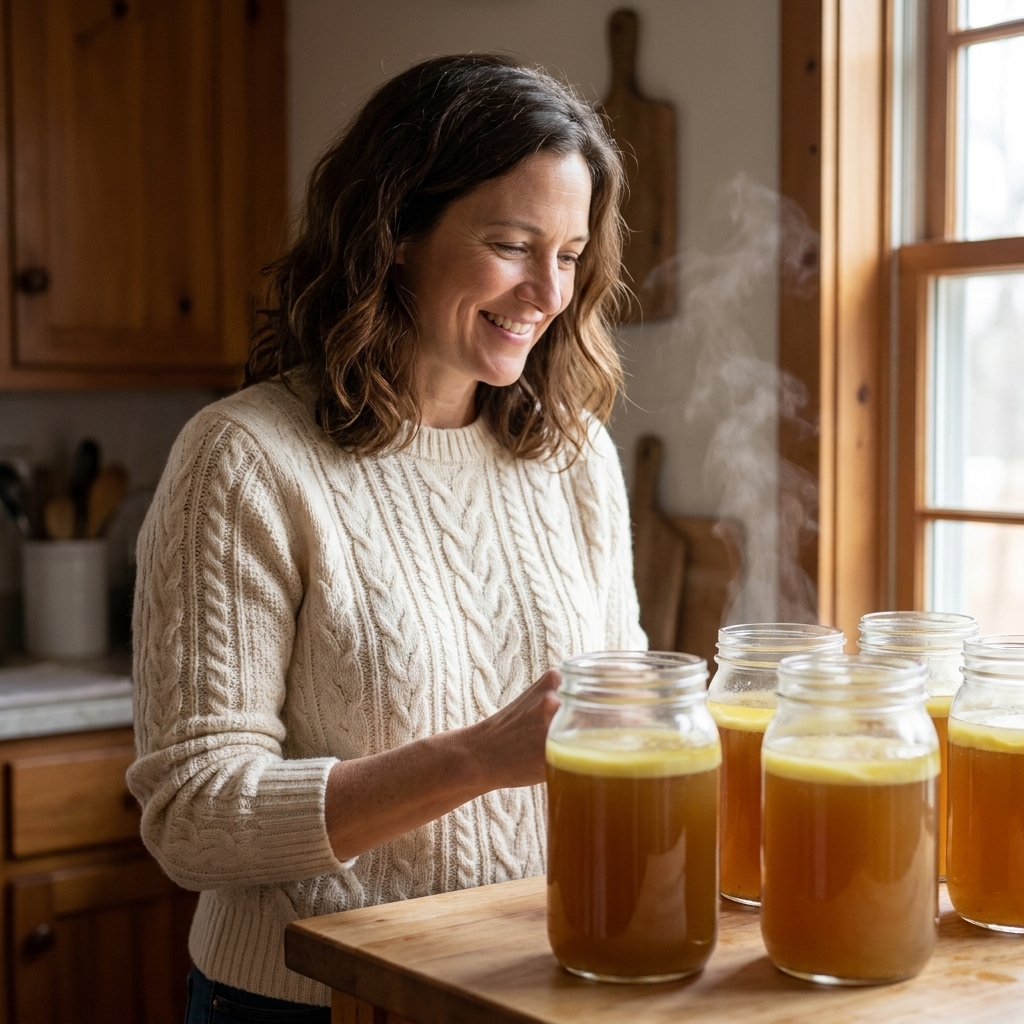
- Strain. Use tongs to pull out the big bones, then pour the broth through a fine-mesh strainer into a large bowl or pot.
- Chill and remove fat. Cool, then refrigerate. Once cold, the fat rises and solidifies, making it easy to lift off. Save a spoonful of turkey fat if you want extra flavor for sautéing soup veggies.
Tip: Do not salt the broth while it simmers. Turkey drippings and seasoned skin can make it salty fast, and the broth will reduce. Salt at the end, when you know what you have.
Make it into soup
Now the cozy part. Think of this as the master soup, and you can steer it toward whatever your fridge can support.
Basic turkey soup
- 8 to 10 cups turkey broth
- 1 tablespoon turkey fat or olive oil
- 1 onion, diced
- 2 carrots, diced
- 2 celery stalks, diced
- 2 to 3 cups cooked turkey meat, shredded or chopped
- 1 to 2 cups starch: noodles, rice, barley, or diced potatoes
- Salt and pepper to taste
- Optional: a squeeze of lemon, chopped parsley or dill
Method
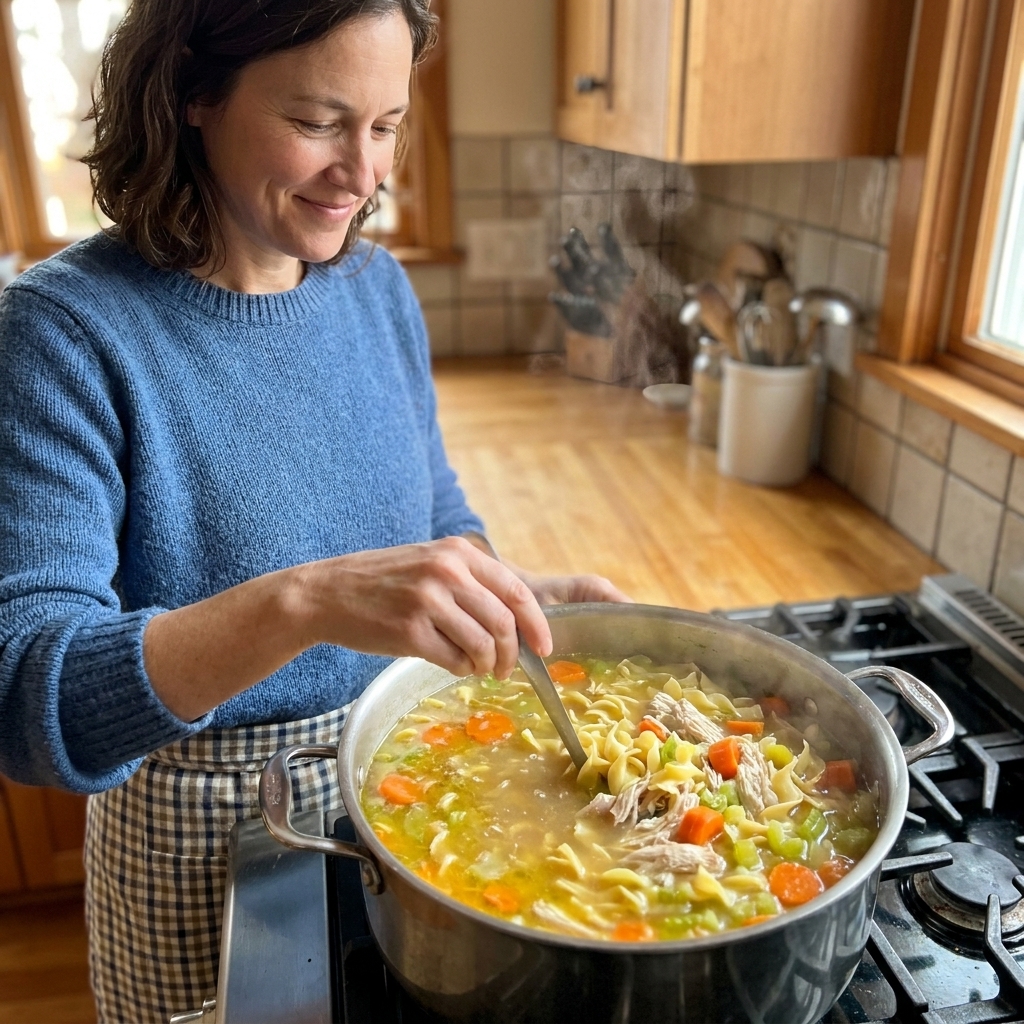
- Sauté your aromatics. In a soup pot, warm the turkey fat or oil. Add onion, carrots, and celery with a pinch of salt. Cook 8 to 10 minutes until softened and lightly golden.
- Add broth and simmer. Pour in the turkey broth and bring to a gentle simmer.
- Add your starch. Add noodles, rice, barley, or potatoes. Simmer until tender.
- Add turkey at the end. Stir in the reserved cooked turkey meat during the last 5 minutes, just to warm through.
- Finish bright. Taste, salt as needed, and add black pepper. If the soup tastes flat, a squeeze of lemon wakes everything up.
Heads up for leftovers: Noodles and rice keep drinking broth as they sit. If you want a soup that reheats like a dream, cook noodles or rice separately and add to bowls, or plan to add a splash of extra broth when reheating.
Easy flavor boosts
Some years, the broth is already perfect. Other years, it needs a little nudge. Here are my go-to fixes.
- Roast the bones (optional): If your turkey was smoked or very pale, roast the carcass pieces at 425°F for 20 to 30 minutes before simmering to deepen the flavor.
- Tomato paste trick: Sauté 1 tablespoon tomato paste with the onions and celery until it darkens. It adds savory depth without making it taste like tomato soup.
- Parm rind: Drop in a Parmesan rind during the soup simmer for extra umami. Remove before serving. (Skip if you need dairy-free.)
- Herb reset: If the broth tastes overly sage-y or thyme-forward from the roast, finish with fresh parsley or dill instead of more dried herbs.
- Warm spice: A tiny pinch of turmeric and a few grates of ginger give the soup that gentle, taking-care-of-you feeling.
Leftover add-ins
Turkey soup is the perfect clean-out-the-fridge project, but there are a few guardrails I stick to so it stays comforting.
Great add-ins
- Leftover roasted vegetables: carrots, parsnips, Brussels sprouts (slice thin), sweet potato
- Greens: spinach, kale, or chopped escarole stirred in at the end
- Beans: cannellini or chickpeas for a heartier bowl
- Corn: especially good if you are going in a turkey tortilla soup direction
Add with caution
- Creamy casseroles: they can make the soup grainy or overly thick. If you want creamy, add a splash of cream to your bowl instead.
- Very sweet sides: cranberry sauce and candied yams tend to take over.
- Gravy: it can be salty and muddy. If you love it, whisk a spoonful into a ladle of hot broth, then stir it back in gradually so you control the effect.
Storing it safely
After a big holiday meal, it is easy to let the carcass sit too long. The goal is to get everything chilled quickly.
- Chill fast. Refrigerate the carcass within 2 hours of cooking. If it is very hot out (above 90°F), aim for 1 hour.
- Fridge window. If you are not making broth right away, wrap the carcass well and refrigerate up to 2 days. (Cooked turkey meat is often fine for 3 to 4 days, but I am a little more conservative with a picked carcass.)
- Freeze for later. The carcass freezes beautifully. Bag it up and freeze up to 3 months.
- Cool broth quickly. Strained broth should not sit as a big hot pot on the counter. Divide into shallow containers, or set the pot in an ice bath in the sink and stir occasionally until it is no longer steaming, then refrigerate.
- Freeze smart. Portion broth into 2-cup containers for soups and 1-cup portions for cooking. Leave a little headspace for expansion. For best flavor, use frozen broth within 3 to 6 months (quality guidance, not a safety deadline).
Broth fixes
My broth is bland
Simmer it uncovered a little longer to reduce, then salt to taste. A squeeze of lemon or a splash of apple cider vinegar can also sharpen flavor.
My broth is too salty
Dilution is the reliable fix. Add unsalted water or low-sodium broth, then taste again. When you turn it into soup, add extra vegetables and starch, which absorb seasoning. Some people swear by simmering a peeled potato for 15 minutes to slightly blunt perceived saltiness, but it is not a magic eraser, so keep your focus on diluting and balancing.
My broth gelled in the fridge
Congratulations, you did it right. That jiggle is collagen. It will melt as it warms.
My broth looks cloudy
Cloudy broth still tastes wonderful. It usually comes from boiling too hard or stirring a lot. Next time, keep the simmer gentle and strain through a finer mesh.
Cozy variations
1) Lemon herb soup
Finish with lemon juice and lots of chopped parsley or dill. Add orzo or rice and a handful of spinach at the end.
2) Turkey and wild rice
Add wild rice early since it takes longer. Stir in turkey at the end and finish with a small splash of cream if you want it extra comforting.
3) Tortilla-style turkey soup
Sauté onion with cumin and a little chili powder. Add broth, black beans, corn, and turkey. Serve with tortilla strips, lime, and cilantro.
FAQ
Can I use a slow cooker?
Yes. Add the carcass and aromatics, cover with water, and cook on low for 8 to 10 hours or high for 4 to 5 hours. Strain and chill as usual.
Can I use an Instant Pot?
Yes, with one warning: do not overfill. Cover the carcass with water without going past the max fill line. Cook on high pressure for 45 to 60 minutes, then let it naturally release for 20 minutes before venting. Strain carefully.
How much broth will I get?
From one turkey carcass, I usually get 8 to 12 cups, depending on pot size and how long I simmer.
Should I add the skin?
A little is fine, but if your turkey skin is heavily seasoned or very salty, do not add all of it. You can always add richness later with a spoonful of turkey fat.
Final step
Once the soup is done, I like to do one last check: does it want brightness, or does it want richness? Brightness is lemon and herbs. Richness is a drizzle of turkey fat or a little extra black pepper and a longer simmer.
And please, promise me one thing. When you ladle that first bowl, get yourself a thick slice of crusty bread. You earned it.