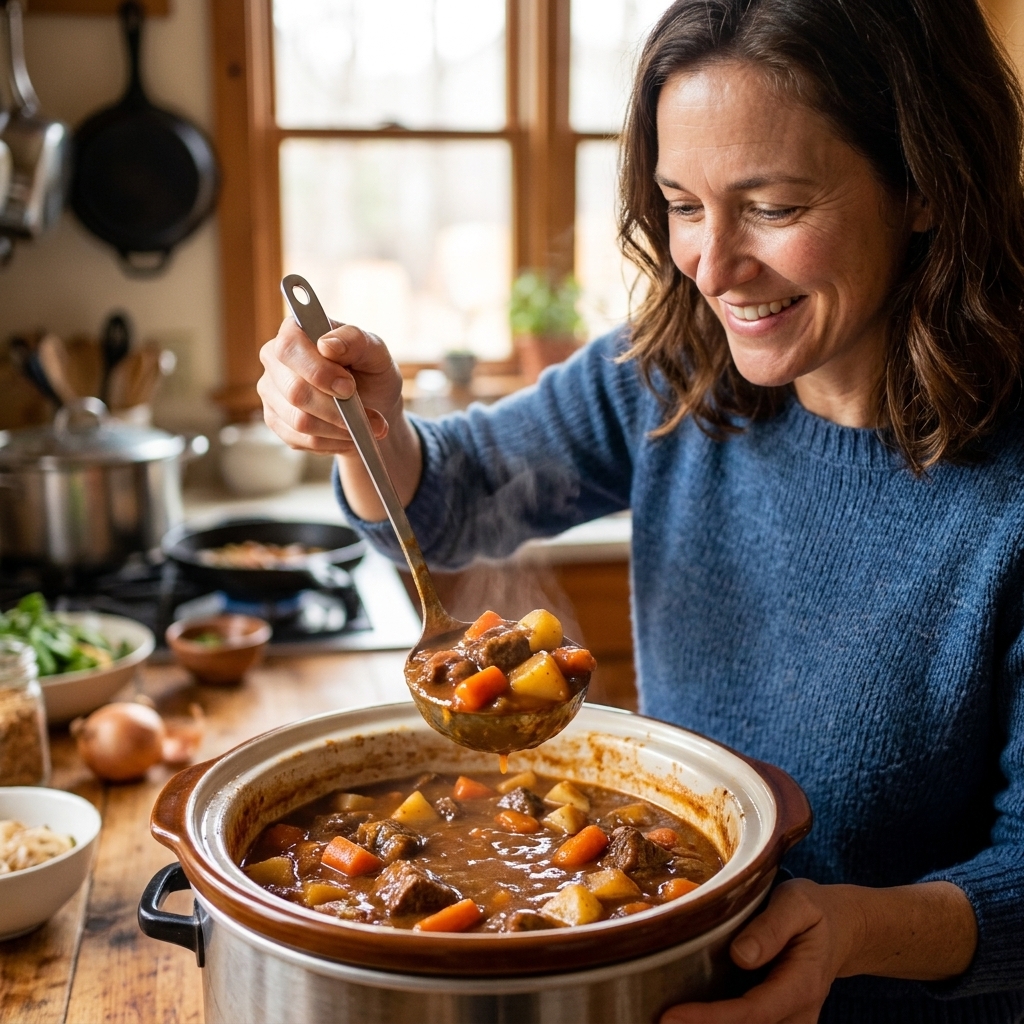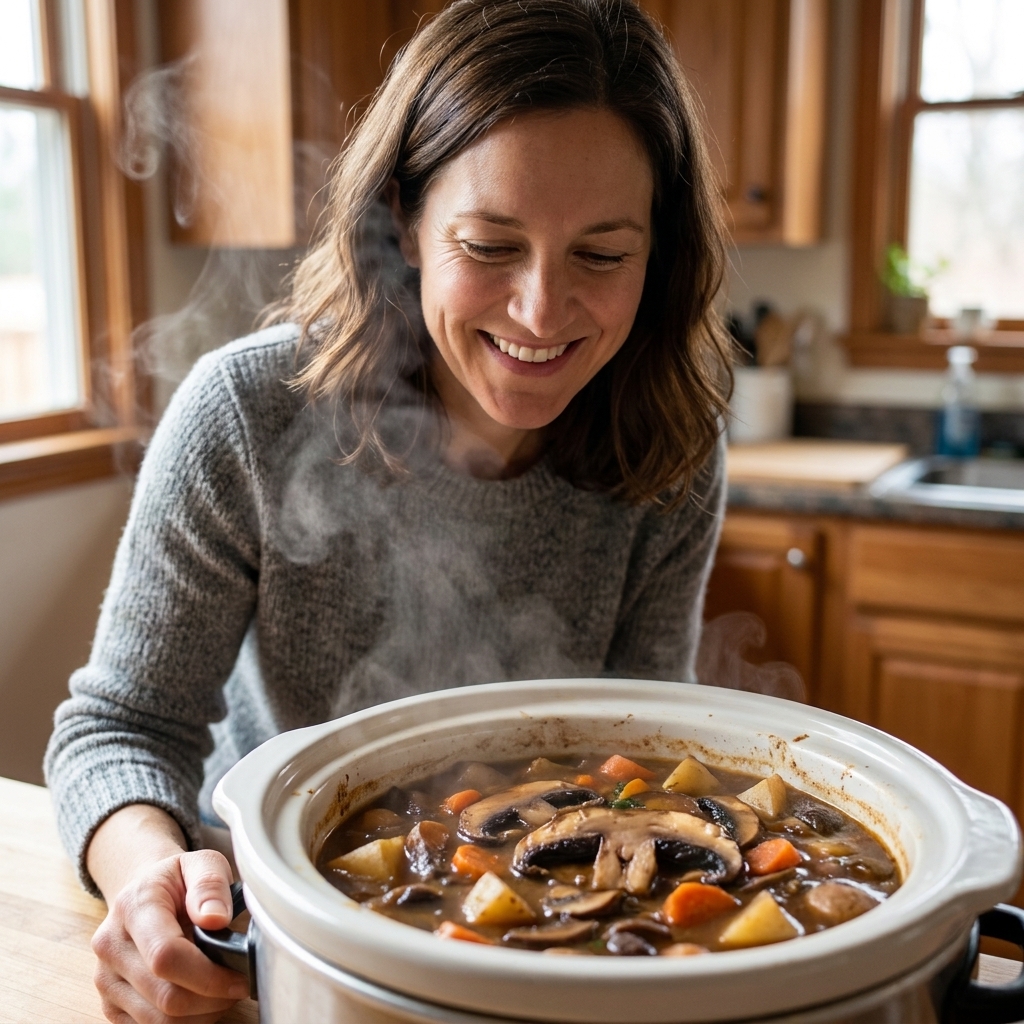
There is a specific kind of comfort in beef stew. The dark gravy, the tender chunks, the way it makes the whole kitchen smell like you are doing life correctly. The good news is you can get that same cozy, spoon-coating experience without meat. The trick is to treat vegetables like you would treat beef: build a browned foundation, add layers of umami, and give everything time to mingle.
This is my go-to approach for veganizing classic beef stew using earth-toned root vegetables and a big pile of portobellos. Think deep roast, a rich marinade, and a broth that tastes like it has been simmering since noon.
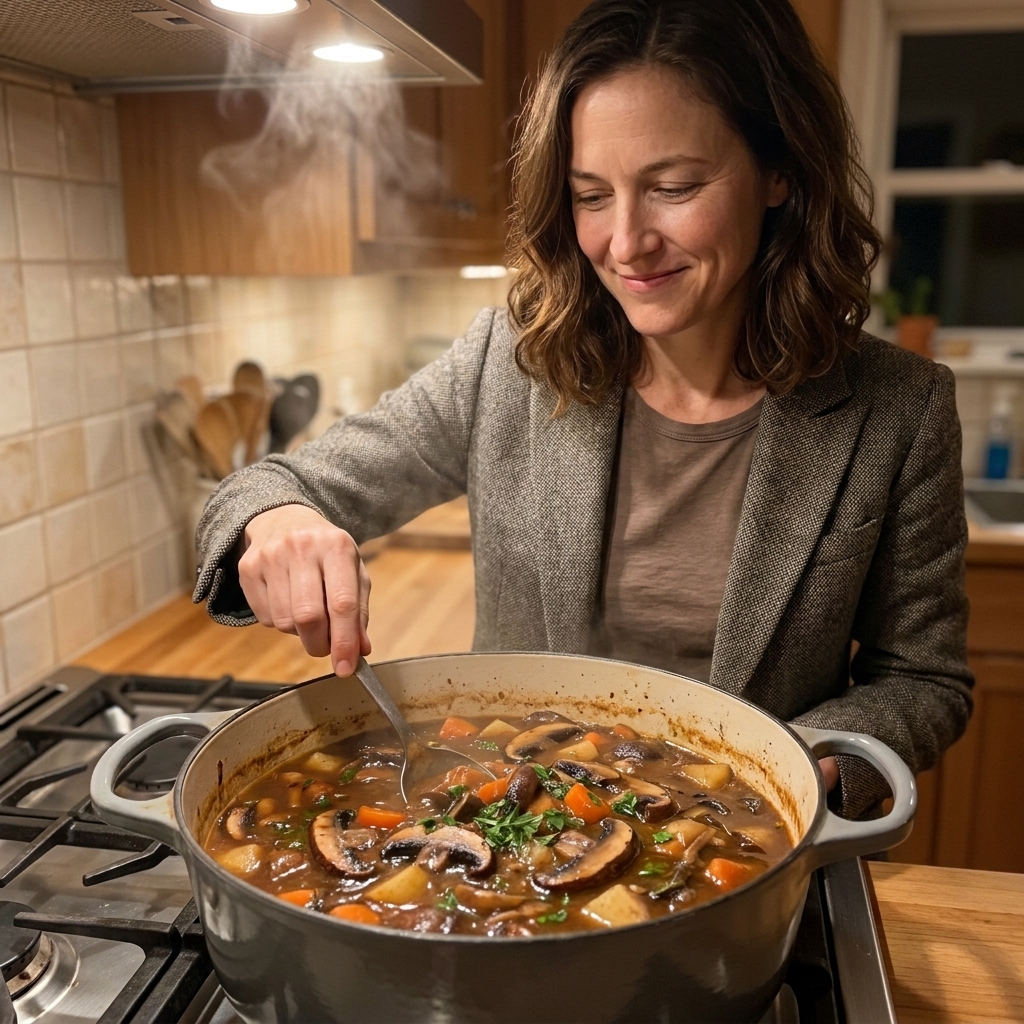
What you are replacing
Beef stew is not just about beef. It is about a handful of qualities that we can absolutely recreate.
- Chew and heft: that satisfying bite you get from well-braised meat.
- Browned, roasty flavor: the fond on the pot, the seared edges.
- Gelatin-like body: the way the broth turns silky and coats a spoon.
- Umami depth: the savory backbone that makes you keep going back in for “one more taste.”
Portobellos handle the chew. Root vegetables bring heft and sweetness. A smart combination of roasting, marinades, tomato paste, and umami boosters brings the “where did that flavor come from?” factor. And for body, we lean on starch, pureed veg, and a touch of fat.
The best veg team
Portobellos for bite
Portobellos are the workhorse here. They hold up to simmering and have that dark, woodsy flavor that reads as hearty and stew-like.
- How to prep: Wipe clean, remove the gills with a spoon if you want a cleaner-looking broth, then cut into 1 to 1.5 inch chunks. Big chunks matter. Small slices disappear.
- Optional but worth it: add a handful of cremini mushrooms too. They fill gaps and add extra mushroomy richness.
Root vegetables for heft
Classic beef stew is a balance of savory and sweet. Roots bring that natural sweetness that rounds out a dark broth.
- Carrots: obvious, essential.
- Parsnips: my favorite “secret.” They add a gentle sweetness and perfume.
- Rutabaga or turnip: adds that old-school stew vibe and keeps things from tasting too sweet.
- Potatoes: Yukon Golds give creamy edges. Russets break down a bit and help thicken.
- Celery and onion: not roots, but the base should still start with them.
One wild card for chew
If you really want that “chunk” factor, add one of these.
- Celeriac: earthy, dense, and incredibly stew-y.
- Seitan cubes: not a vegetable, but very “beefy” in texture if you use it. Add near the end so it stays pleasantly chewy.
- Jackfruit: great for shredded textures, less ideal for beef-stew chunks. I skip it here.
Roasting for depth
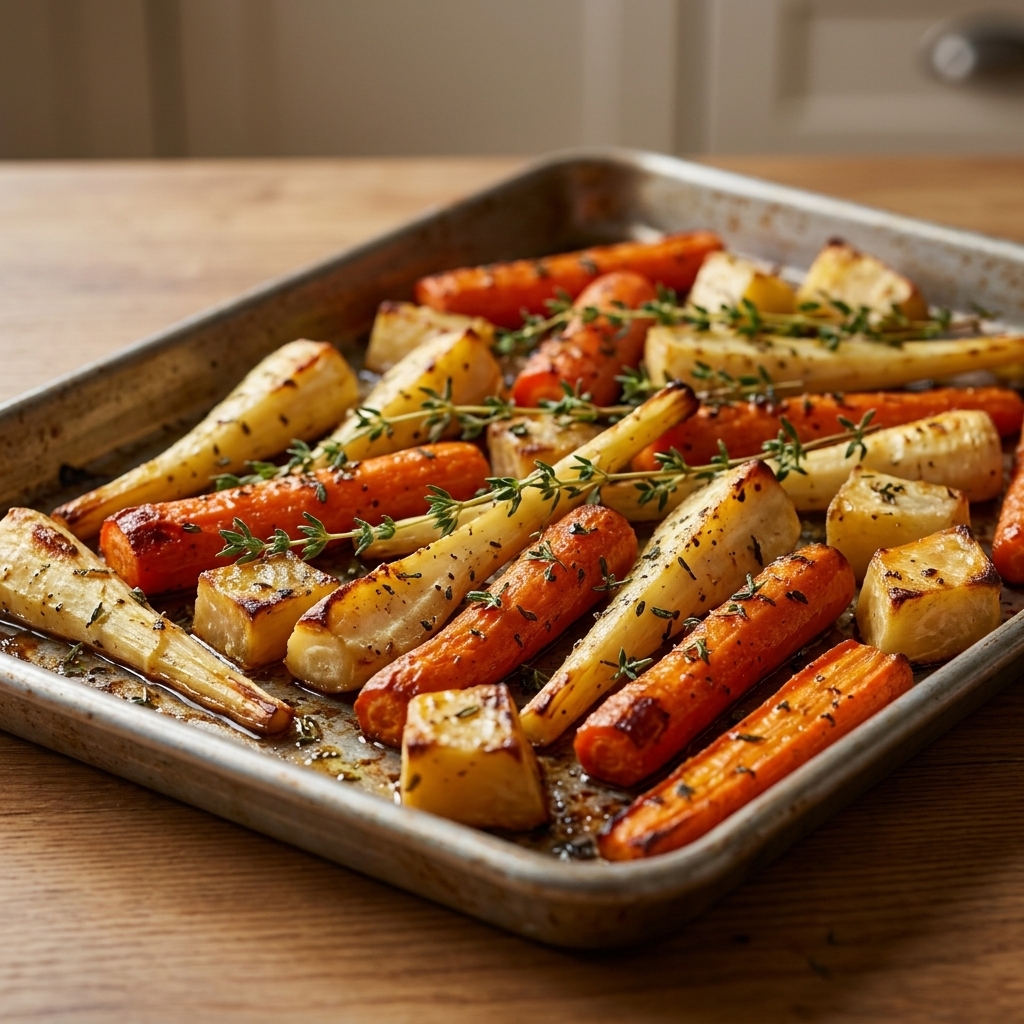
If you only take one tip from this article, let it be this: roast a good portion of your vegetables and mushrooms before they ever touch the pot. Beef stew gets its depth from browning. Roasting is our plant-based cheat code.
Sheet pan method
- Heat: 425°F.
- Pan: big sheet pan, do not crowd. Crowding steams, and steaming is the enemy of “beef stew energy.”
- Fat: a generous drizzle of olive oil.
- Season: salt, pepper, and a pinch of smoked paprika or ground porcini if you have it.
- Time: 25 to 35 minutes, tossing once, until you see real browning on edges.
Note from too many trials: roast the portobellos separately if you can. Mushrooms shed water. If they share a pan with roots, everything steams. Two pans is not fussy, it is effective.
Mushroom marinades
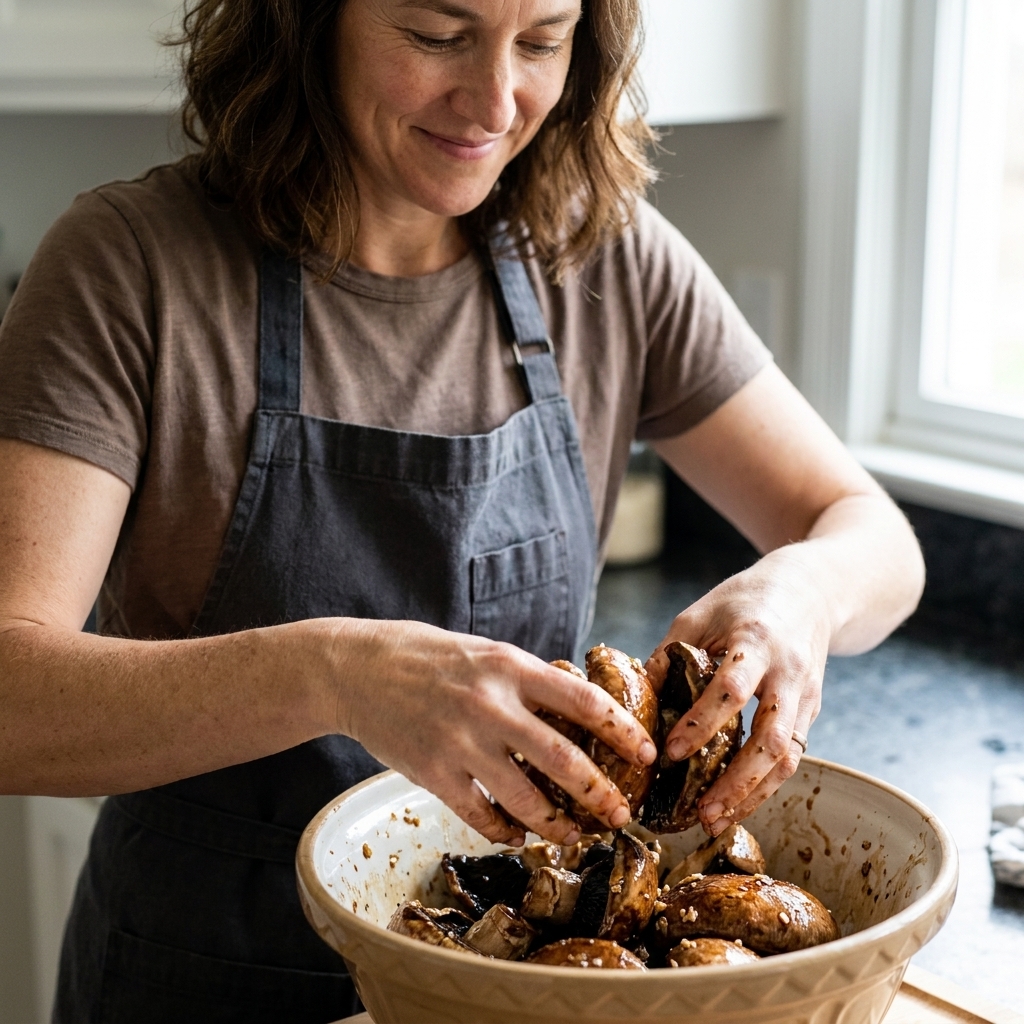
Portobellos taste good on their own, but a quick marinade turns them from “mushrooms in broth” into “oh wow, this is hearty.” You want salt, acid, umami, and a little sweetness.
My go-to marinade
- 3 tablespoons soy sauce or tamari
- 1 tablespoon balsamic vinegar
- 1 tablespoon olive oil
- 2 teaspoons tomato paste
- 2 teaspoons maple syrup or brown sugar
- 2 to 3 cloves garlic, grated
- 1 teaspoon smoked paprika
- Black pepper
Toss mushroom chunks well and let them sit 20 to 40 minutes. Then roast or hard-sear them in a hot pot to drive off moisture and concentrate flavor.
No soy option: use coconut aminos plus an extra pinch of salt, or a vegan “beef-style” bouillon in the stew base.
Broth that hits hard
The broth is where vegan stew either becomes legendary or tastes a little thin. Here is how I build richness without animal stock.
Start like classic stew
Sweat chopped onions, carrots, and celery in a Dutch oven until the onions are soft and the edges start to caramelize. Take your time. This is flavor banking.
Add your dark notes
- Tomato paste: cook it in the oil until it turns brick-red and starts sticking. That toasted tomato paste flavor is pure stew.
- Flour: sprinkle 2 to 3 tablespoons all-purpose flour over the vegetables and cook 1 minute. This gives gravy-like body. Gluten-free option: use 1.5 tablespoons cornstarch later as a slurry, or use arrowroot or tapioca starch the same way.
- Deglaze: a splash of red wine or dark beer lifts all the browned bits. If you skip alcohol, use a tablespoon of balsamic plus a ladle of broth.
Umami boosters (pick 2 or 3)
- Dried porcini: soak in hot water, chop, add the porcini and the soaking liquid (strain grit through a coffee filter or paper towel).
- Miso: 1 to 2 tablespoons stirred in near the end, off the heat.
- Vegan Worcestershire: adds that classic stew tang.
- Soy sauce or tamari: a tablespoon or two in the pot, even if you marinated the mushrooms.
- Molasses: 1 teaspoon for that dark, almost “braised” note.
- Smoked paprika: subtle, not barbecue.
Broth choice: use a good vegetable broth, then reinforce it. I often add a vegan mushroom or “beef-style” bouillon cube for backbone. If you are stacking salty ingredients (soy, bouillon, miso), hold back a little and add the final salty punch at the end to taste.
Thick, glossy texture
Traditional beef stew gets its body from collagen and slow reduction. We can get a similar spoon-coating feel with a few plant-based tactics.
- Roux method: flour cooked into the base (my default for classic gravy texture).
- Puree a portion: scoop out 1 to 2 cups of cooked potatoes and carrots with broth, blend until smooth, and stir back in.
- Starch slurry: mix 1 tablespoon cornstarch with 2 tablespoons cold water, stir in, simmer 2 to 3 minutes. (Arrowroot works too, but keep it at a gentle simmer so it stays glossy.)
- Finish with fat: a tablespoon of olive oil or vegan butter at the end makes the stew taste rounder and more luxurious.
If your stew tastes flavorful but a little watery, it almost always needs either reduction or body. Simmer uncovered for 10 to 15 minutes, then decide if you want puree or slurry.
Timing for chunks
Classic stew has tender pieces, but not baby food. Different vegetables cook at different speeds, so stagger them.
- Early in the simmer: rutabaga, turnip, celeriac, carrots
- Middle: potatoes (especially Yukon Gold)
- Later: roasted mushrooms (so they keep chew), peas (if using), green beans
Roasted elements can go in during the last 20 to 30 minutes of simmering. They will absorb broth flavor without losing their browned edges completely.
Base recipe
If you want the cozy vibe without doing math, here is a reliable pot. It is flexible, but it is also real numbers.
Ingredients (serves 6)
- 2 pounds portobello mushrooms, cut into 1 to 1.5 inch chunks
- 2 tablespoons olive oil, plus more as needed
- 1 large onion, chopped
- 2 celery stalks, chopped
- 3 carrots, chopped (about 2 cups)
- 2 parsnips, chopped (optional, about 1.5 cups)
- 1 to 2 cups rutabaga or turnip, chopped (optional but great)
- 1.5 pounds Yukon Gold potatoes, cut into chunks
- 4 cloves garlic, minced
- 3 tablespoons tomato paste
- 2 to 3 tablespoons all-purpose flour (or skip and use a slurry later)
- 1 cup dry red wine or dark beer (optional)
- 5 to 6 cups vegetable broth, plus more as needed
- 2 bay leaves
- 1.5 teaspoons dried thyme, or 4 to 6 sprigs fresh
- 1 teaspoon chopped rosemary or 0.5 teaspoon dried (optional, go light)
- 1 vegan bouillon cube (mushroom or beef-style), optional
- Salt and black pepper
- 1 to 2 teaspoons red wine vinegar or balsamic vinegar, to finish
- Chopped parsley, to finish
Mushroom marinade (optional but highly recommended)
Use the marinade above, or keep it simple with 2 tablespoons soy sauce, 1 tablespoon balsamic, and black pepper.
Method
- Marinate the mushrooms (20 to 40 minutes) if using.
- Roast the roots: Heat oven to 425°F. Toss carrots, parsnips, rutabaga or turnip, and potatoes with olive oil, salt, and pepper. Roast 25 to 35 minutes, tossing once, until browned at the edges.
- Roast or sear the mushrooms: Put mushrooms on a separate pan, or sear in batches in a hot Dutch oven. You want them browned and drier than you think you need.
- Build the base: In the Dutch oven, add a splash of oil if needed. Cook onions, celery, and a small handful of the carrots (if you held some back) until soft and lightly caramelized, 8 to 12 minutes. Add garlic for 30 seconds.
- Toast the tomato paste: Stir in tomato paste and cook until it darkens and starts sticking, 2 to 3 minutes.
- Thicken: Sprinkle flour over the vegetables, stir, and cook 1 minute.
- Deglaze: Add wine or beer and scrape up the browned bits. Simmer 2 minutes.
- Simmer: Add broth, bay leaves, thyme, rosemary (if using), and bouillon (if using). Bring to a simmer.
- Add vegetables: Add the roasted roots and simmer gently until everything is tender, 15 to 25 minutes. Add the roasted mushrooms during the last 10 to 15 minutes so they keep their bite.
- Finish: Taste, then add salt and pepper as needed. Stir in vinegar a little at a time until the flavors pop. Finish with parsley. If you want it richer, stir in a tablespoon of olive oil or vegan butter.
Thickness check: If you skipped flour or want it thicker, simmer uncovered to reduce, or add a slurry (1 tablespoon cornstarch plus 2 tablespoons cold water) and simmer 2 to 3 minutes.
Roadmap
- Marinate portobello chunks (20 to 40 minutes).
- Roast root vegetables (425°F) and roast or sear mushrooms separately.
- Build base in Dutch oven: onion, carrot, celery, garlic, tomato paste browned well.
- Thicken with flour, then deglaze with red wine or dark beer.
- Simmer with broth, herbs (thyme, bay leaf), and sturdy roots until tender.
- Add roasted mushrooms and remaining roasted vegetables, simmer briefly.
- Adjust salt, acid (a splash of vinegar), and richness (olive oil or vegan butter).
Herbs that scream “classic stew”: thyme, bay leaf, rosemary (use lightly), and parsley at the end.
Flavor fixes
If it tastes flat
- Add salt in small pinches, then taste.
- Add acid: 1 to 2 teaspoons red wine vinegar or balsamic at the end.
- Add umami: a spoonful of miso or a dash of soy sauce.
If it tastes too sweet
- Add more savory: soy sauce, bouillon, or an extra spoon of tomato paste.
- Add bitterness: a tiny pinch of coffee or cocoa powder can deepen things (tiny).
- Add a turnip or rutabaga next time for balance.
If it is too thin
- Simmer uncovered to reduce.
- Puree a portion or add a starch slurry.
If the mushrooms feel off
- If they are pale and watery: you probably crowded the pan. Roast or sear in a single layer over high heat so moisture evaporates quickly.
- If they are a little tough or rubbery: they may have simmered too long after they released their moisture. Brown them well, then add later in the simmer so they keep structure.
Leftovers
This style of vegan stew is a dream for my favorite philosophy: cook once, eat twice. The flavors deepen overnight, and the broth thickens slightly as it sits.
- Next-day pot pie: thicken the stew a bit more, tuck under puff pastry or biscuit dough.
- Stew over mashed potatoes: instant comfort, zero extra work.
- “Clean-out-the-fridge” soup: thin with broth, add greens, and call it dinner.
Storage: refrigerate 3 to 4 days. Cool quickly in a shallow container, then cover and chill. Freeze up to 3 months. Thaw overnight, then reheat gently. If potatoes grain slightly after freezing, give the pot a good stir and add a splash of broth to smooth it out.
FAQ
What is the best meat substitute for beef stew, texture-wise?
For a veggie-forward pot, I get the best “beefy chew” from large chunks of roasted portobello mushrooms plus dense roots like rutabaga or celeriac. If you want a true meat-like bite, seitan cubes added near the end are the closest match.
How do I make vegan stew taste rich without beef stock?
Brown tomato paste, deglaze, and use at least two umami boosters like dried porcini, miso, vegan Worcestershire, soy sauce, or a good vegan bouillon. Finish with a little fat and a splash of vinegar to make the flavors pop.
Do I have to roast everything?
No, but roasting at least the mushrooms (and ideally some of the root vegetables) is the easiest way to mimic the roasted notes you get from seared beef. If you skip roasting, take extra time caramelizing your onions and tomato paste in the pot.
How do I keep mushrooms from turning rubbery?
It is usually a combination of technique and timing. Avoid crowding so they brown instead of steaming, and do not let them simmer forever. Roast or sear until well-browned, then add them later so they stay chewy in a good way.