
In my upstate New York kitchen, beer is not just something you sip while the Dutch oven does its thing. It is a flavor tool. Used well, it deepens beefiness, rounds out tomato, and gives stew an all-day, slow-simmered taste even if you started at 4:30.
But beer can also go sideways if you pick one that is too bitter, too sweet, or too boozy for the job. Let’s make it simple: here is how dark stouts, amber ales, and crisp lagers behave in a beef stew or chili, and exactly when to add them so they taste rich, not sharp.
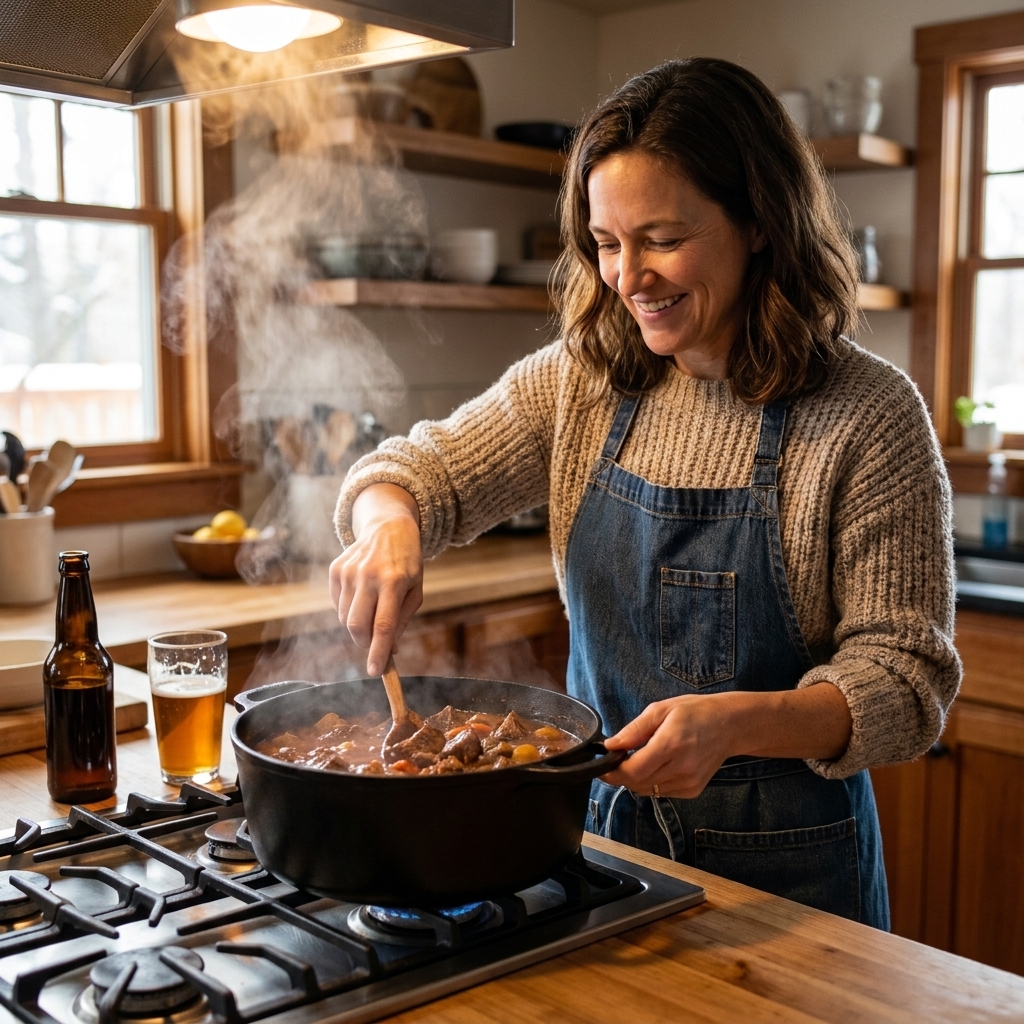
What beer does in a simmering stew
Beer brings three main things to the pot: malt sweetness, hop bitterness, and roasted flavor. Over a long simmer, most of the alcohol evaporates, but not all of it. The flavors stay and concentrate, especially if you reduce the liquid.
- Malt reads as toast, caramel, honey, bread crust, or dark sugar, depending on the style. This is what makes stew taste fuller.
- Hops are bitterness and herbal bite. A little can balance fatty beef, but too much can turn medicinal as it reduces.
- Roast (in stouts and porters) adds coffee and cocoa notes that love beef, onions, and mushrooms.
One more nerdy but useful point: beer is often slightly acidic. That helps loosen browned bits (hello, fond) and can brighten a heavy stew the way a splash of vinegar does, only softer.
Choose your beer by the stew you want
Dark stout: deep, roasty, and “it’s been simmering all day”
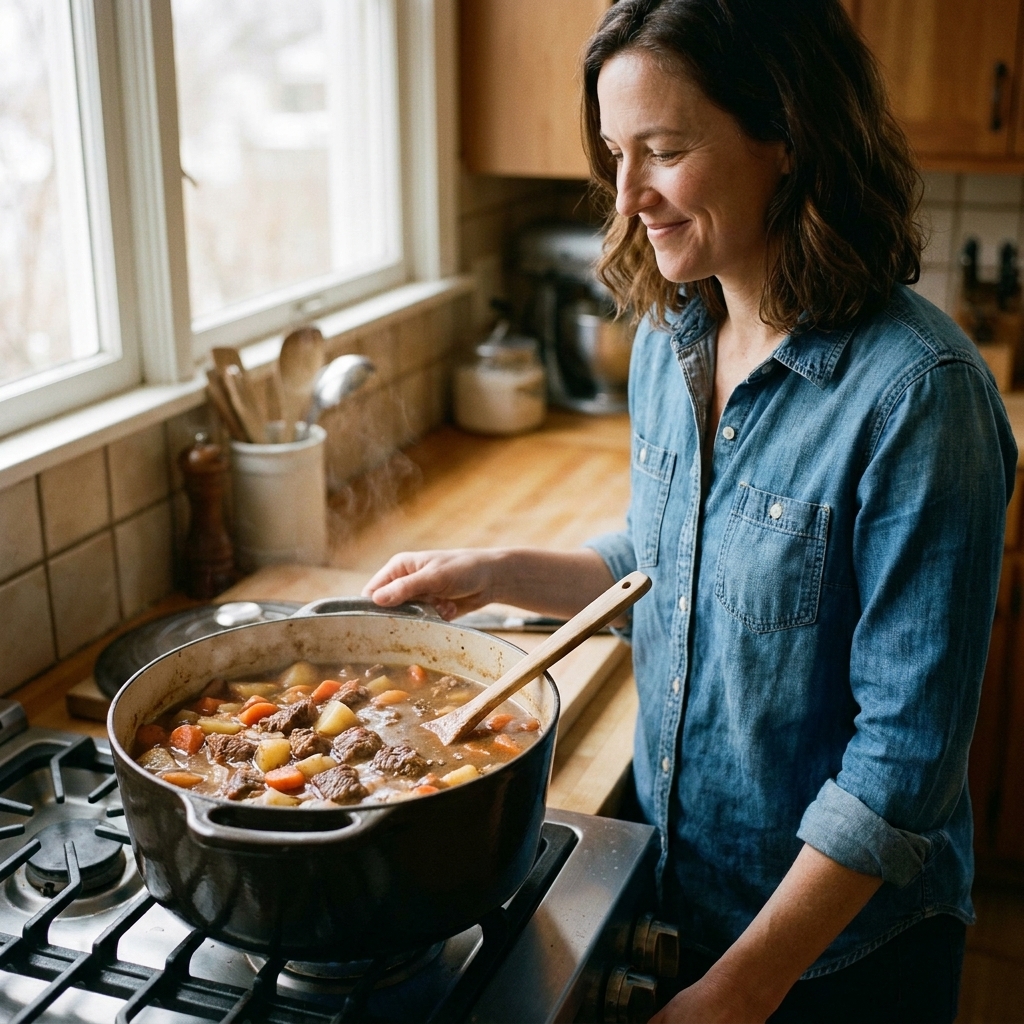
Stout is my cold-weather best friend for beef stew and for chili with beans. It brings roast and a little sweetness, which makes beef taste more savory and makes tomato taste rounder.
Best with: chuck roast, short ribs, mushrooms, lots of onions, tomato paste, and chili powder blends.
What it tastes like after simmering: coffee-cocoa depth, dark bread crust, and a gentle bitter edge that reads as richness when it is balanced.
Look for:
- Dry Irish stout (roasty, not sweet) for classic beef stew.
- Oatmeal stout for a slightly silkier feel.
- Milk stout only if you want noticeable sweetness (great for chili, less great for a savory, wine-like stew).
Avoid: super high-IBU “imperial” stouts or anything aggressively coffee-flavored if your stew is already heavy on bitter elements (burnt fond, very dark roux, lots of charred peppers). They can stack into harshness.
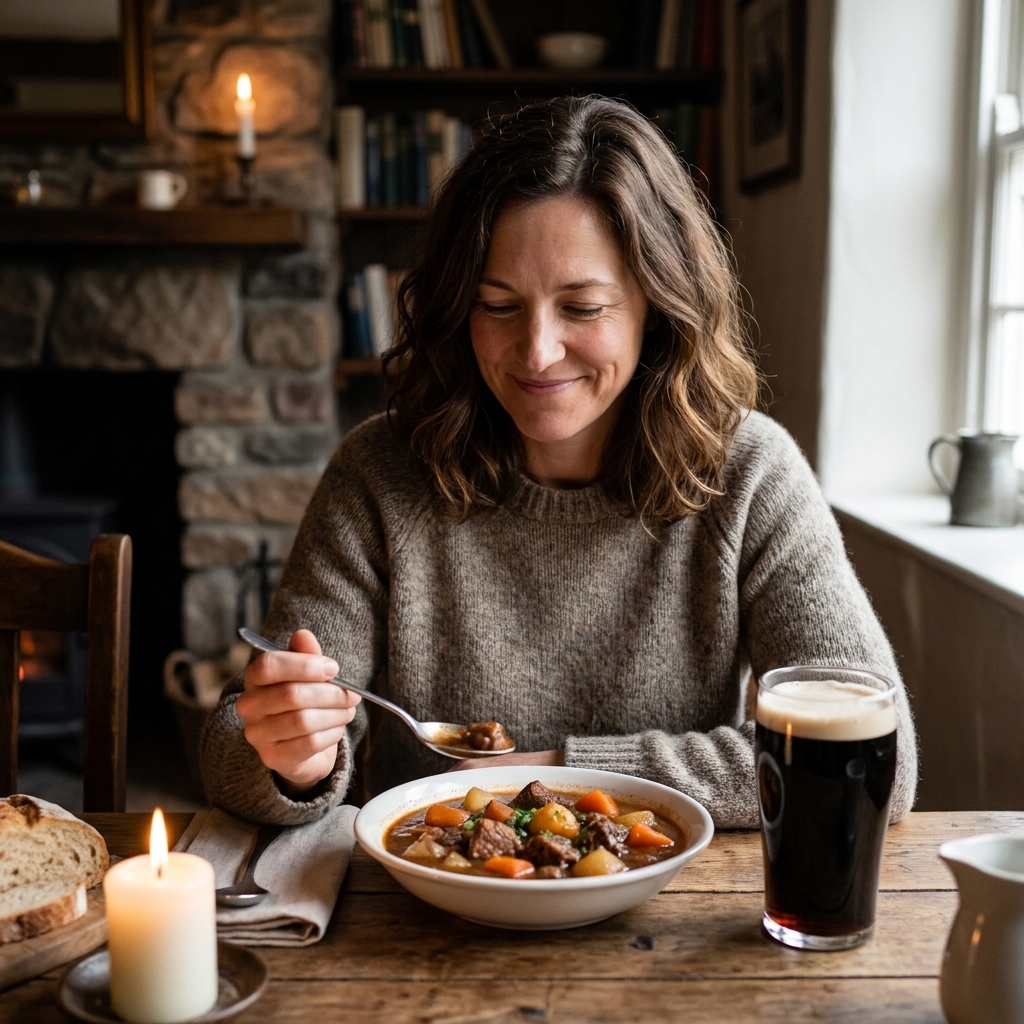
Amber ale: caramel, toasty, and easy to love
If stout feels like a wool blanket, amber ale is your favorite flannel. Ambers are malt-forward without being roasty, so they play nicely with carrots, celery, and herbs. This is the beer I reach for when I want a beef stew that tastes classic and family-friendly.
Best with: beef stew with potatoes, carrots, thyme, bay leaf, and a lighter hand on tomato.
What it tastes like after simmering: caramelized onion sweetness, toasted bread, and a gentle, balanced finish.
Look for: amber ales and red ales that say “malt-forward” or “balanced.” If the label is shouting about hops, it is probably not the one for your stew.
Avoid: very hoppy amber-style beers. The more hop bitterness you start with, the more it can concentrate into a lingering bite after a long simmer.
Crisp lager: clean, light, and great when you want the beef to lead
Lager might not sound exciting, but it is quietly useful. It deglazes beautifully, keeps the stew from feeling too sweet, and lets beef, garlic, and herbs stay in the spotlight. It is also a smart choice for chili when you want brightness and an easy spoonful, not a heavy, dessert-like depth.
Best with: Texas-style chili (no beans), beef and pepper stews, lighter broths, and anything you want to finish with lime, cilantro, or pickled onions.
What it tastes like after simmering: subtle grain sweetness, clean finish, and just enough lift to keep rich beef from tasting flat.
Look for:
- Vienna lager for a touch more toast.
- Helles or other malt-leaning lagers for a smooth, easy flavor.
Avoid: heavily hopped pilsners if your recipe already has a long simmer and a lot of reduction. You can end up with a sharper bitterness than you bargained for.
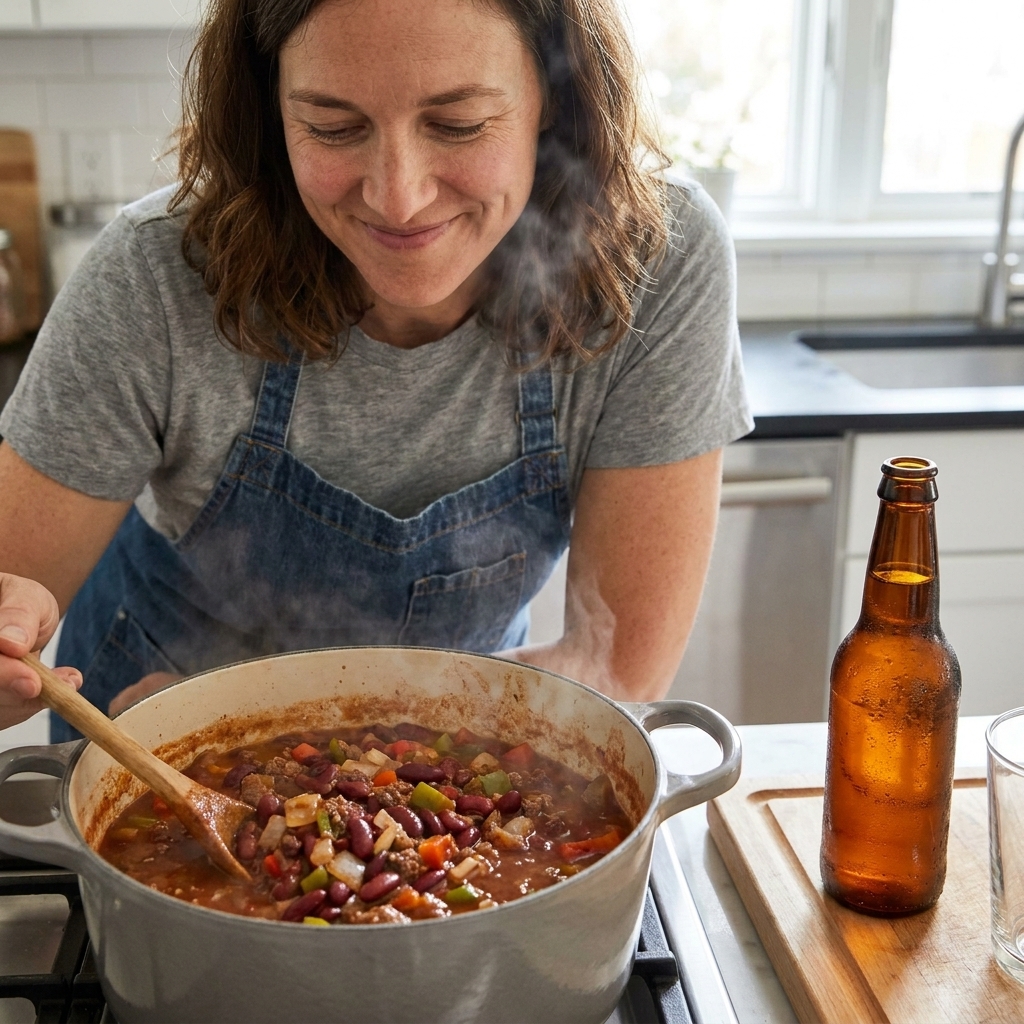
How much beer to use
For a standard Dutch oven batch that serves 6 to 8, these are my sweet spots:
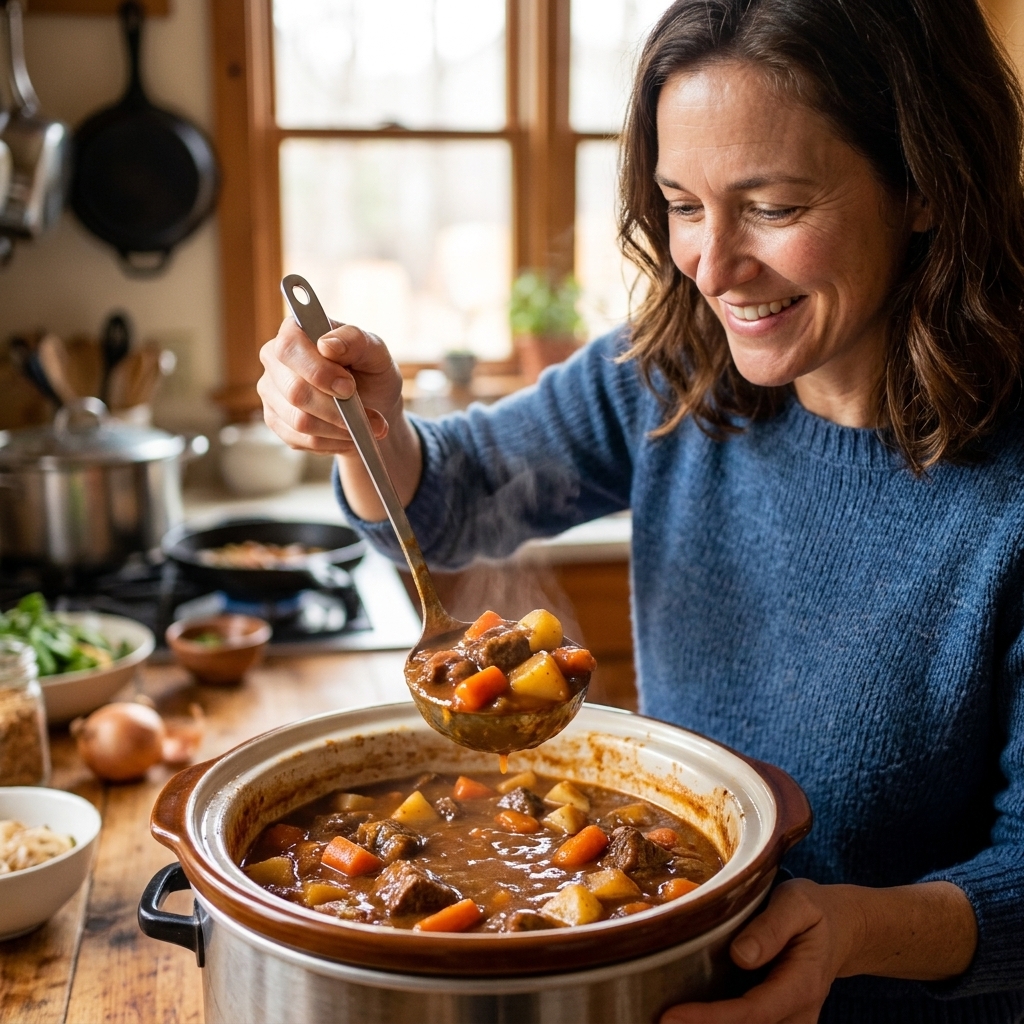
- Beef stew: 12 to 16 ounces beer (1 bottle or can), plus broth to cover.
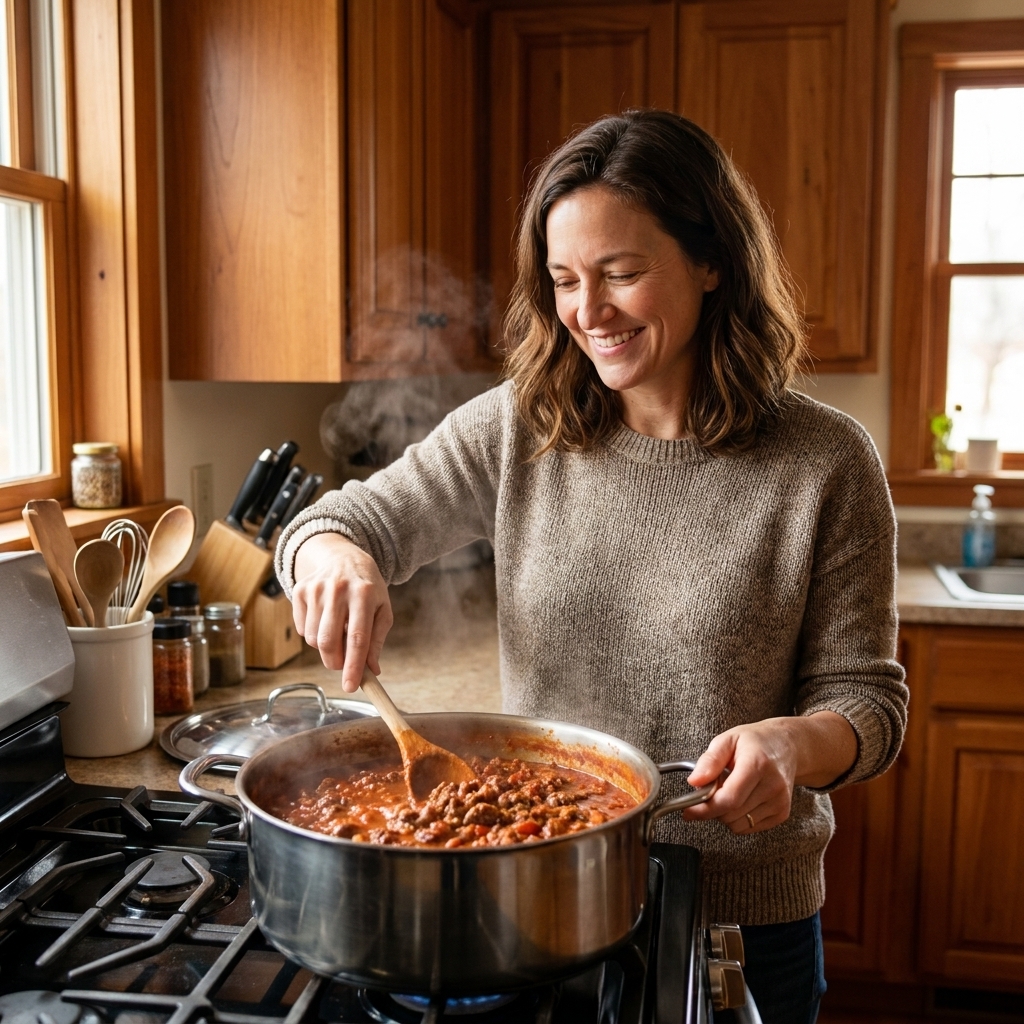
- Beef chili: 8 to 12 ounces beer, depending on how much tomato and spice is in the pot.
If you want to use more than that, do it by replacing part of the broth, not by adding extra total liquid. Otherwise you will wait all night for it to thicken.
When to add beer
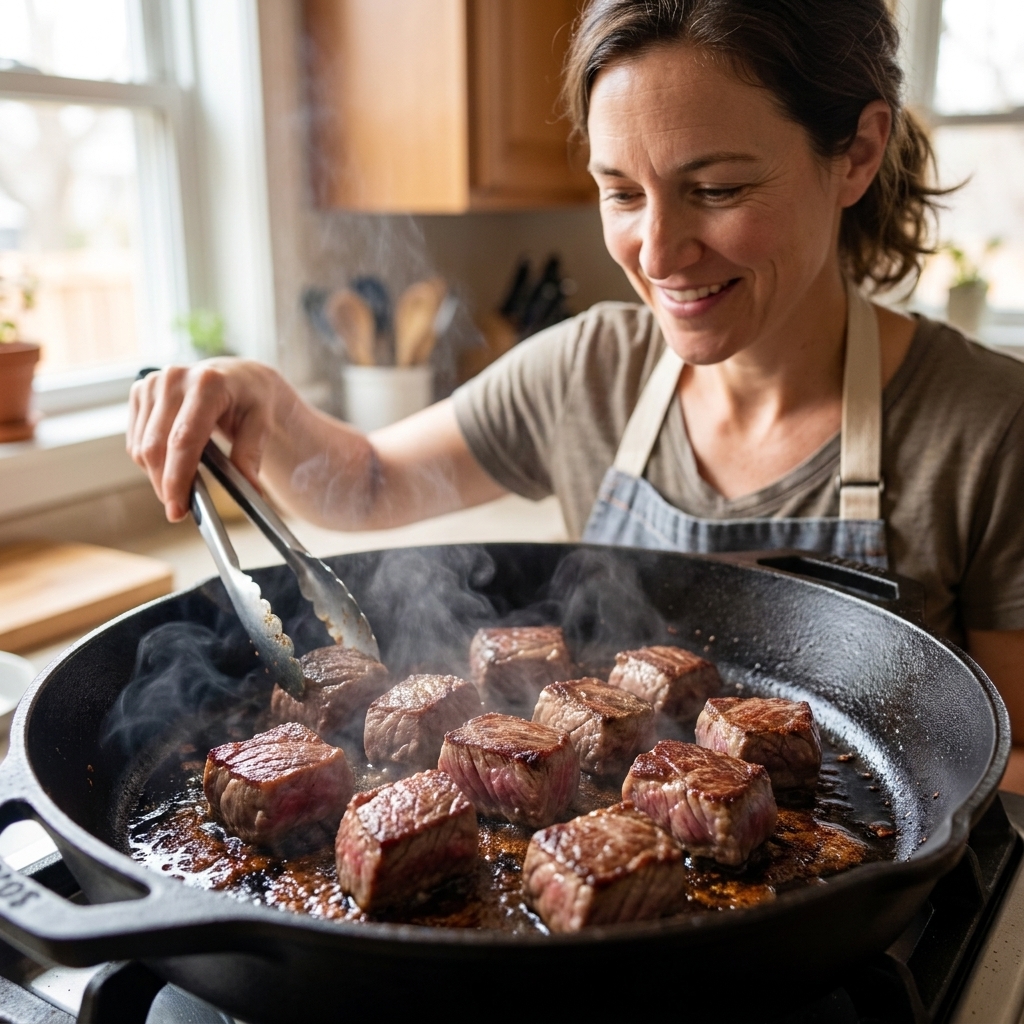
Step 1: Brown the beef well
You want deep browning, not gray steaming. Pat the beef dry, work in batches, and do not rush it. That browned fond on the bottom of the pot is future flavor.
Step 2: Deglaze with beer
After you sauté your onions (and tomato paste, if using), pour in the beer and scrape up every browned bit. Let it bubble for 2 to 3 minutes. This quick simmer knocks down raw alcohol notes and starts concentrating malt flavor.
Step 3: Add broth and simmer low
Once the beer has had its moment, add stock, return the beef, and settle into a gentle simmer. A hard boil can push hop bitterness forward and can make meat seem tighter or break it up before it turns silky-tender.
Optional: hold back a small splash
If you love the aroma of the beer you chose, reserve a quarter cup and stir it in during the last 10 minutes. This works best with low-IBU, malt-forward beers (think dry stout, amber, Vienna lager). If you are using anything hop-leaning, skip the late splash since it can add sharpness.
Flavor pairing cheat sheet
- Stout + beef: mushrooms, pearl onions, tomato paste, Worcestershire, smoked paprika, cocoa powder (a pinch), thyme.
- Amber ale + beef: carrots, parsnips, garlic, bay leaf, rosemary (light hand), Dijon mustard.
- Lager + beef: poblano or bell peppers, cumin, oregano, charred corn, lime, cilantro, pickled jalapeños.
Common problems and easy fixes
“My stew tastes bitter.”
This is usually hop bitterness concentrating.
- Stir in 1 to 2 teaspoons brown sugar or maple syrup, then taste.
- Add a tablespoon of tomato paste and simmer 5 minutes to round edges.
- Finish with a small pat of butter for softness.
- Next time, choose a more malt-forward beer and keep the simmer gentle.
“It tastes too sweet.”
This can happen with sweet stouts or very malty ambers, especially alongside carrots and onions.
- Add a splash of vinegar (apple cider or red wine) or lemon juice, 1 teaspoon at a time.
- Lean on salt. A small pinch can pull sweetness back into balance.
- Add bitterness on purpose with a little extra black pepper or a small amount of unsweetened cocoa in chili.
“The beer flavor is harsh and boozy.”
- Simmer uncovered a bit longer to let volatile alcohol notes cook off.
- Make sure you are deglazing and simmering for a few minutes before adding broth.
- Keep the heat low. A rolling boil can push sharp flavors forward.
“It tastes flat.”
- Add acid at the end: a teaspoon of vinegar, a squeeze of lemon, or even a spoonful of pickle brine.
- Add a savory booster: Worcestershire, soy sauce, or fish sauce in tiny amounts.
Cooking with beer safely and smartly
- Most alcohol cooks off, but not instantly. A long simmer reduces the alcohol a lot, but traces can remain. If you are cooking for someone avoiding alcohol completely, use broth plus a splash of vinegar instead.
- Skip “double IPA” for stew. High hop bitterness is the number one reason beer stews go wrong.
- Do not cook in nonstick if you crank the heat. Beer deglazing is best in a sturdy Dutch oven or heavy pot that can handle scraping and simmering.
Other beers that work
If you want to branch out, here are two useful guardrails from my own trial and error:
- Porter and brown ale are often the sweet spot between stout and amber: toasty, gentle roast, usually not too bitter. If you are unsure what to buy, these are quietly reliable.
- Sour and wild ales are usually a bad fit for everyday stew. They can tip the whole pot into sharpness unless you are designing the recipe around that acidity on purpose.
Non-alcoholic beer
Yes, NA beer can work in stew and chili. Pick a malt-forward NA option (amber-style, stout-style, or a bready lager-style) and taste as you go. Some NA beers read a little sweeter, so you may want a touch more salt or a small splash of vinegar at the end to keep things balanced.
My go-to beer picks for stew night
I am not precious about brands. I am precious about balance. If you are standing in the beer aisle wondering what to grab, here is a simple approach:
- For classic beef stew: a dry stout or a malt-forward amber ale.
- For chili with smoky spice: stout if you want depth, lager if you want brightness.
- For a crowd with mixed tastes: amber ale is the safest, most universally cozy option.
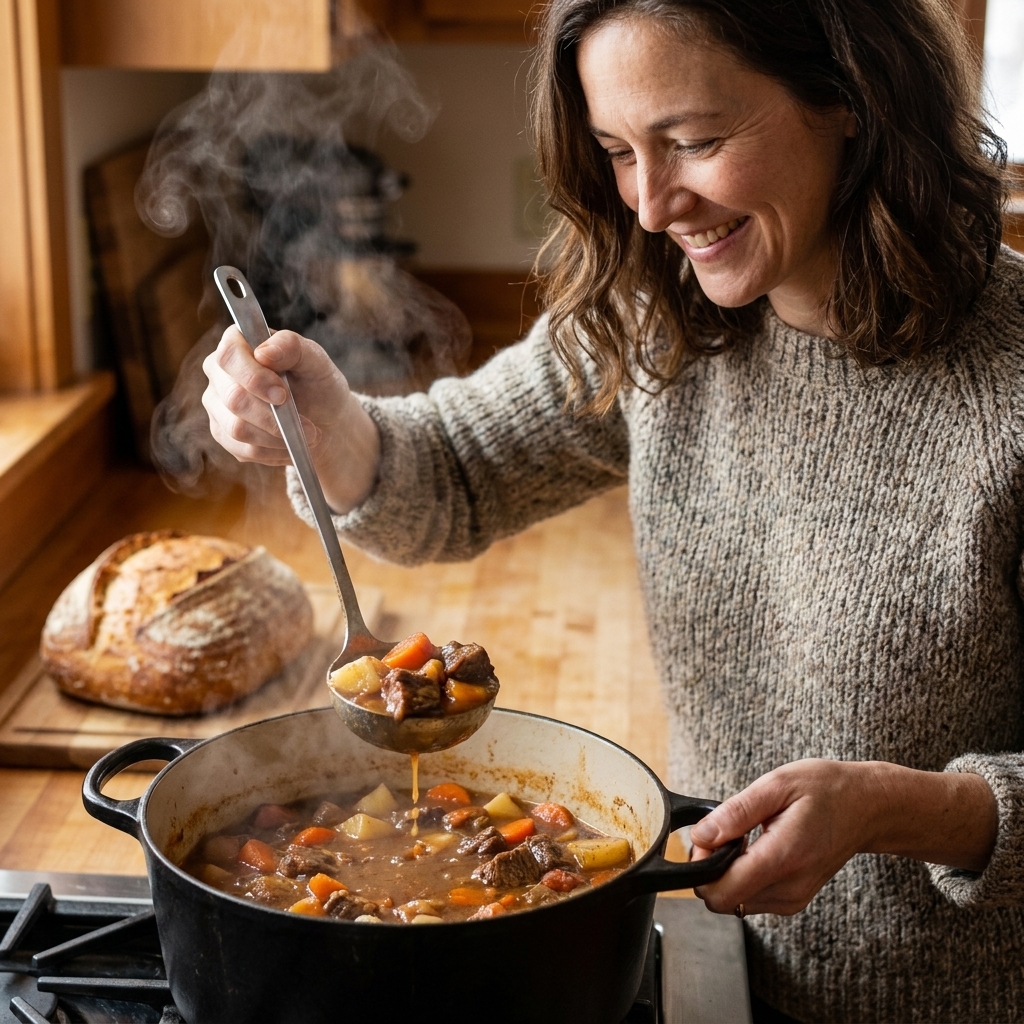
FAQ
Can I use leftover beer that has gone flat?
Yes. Flat beer is totally fine for stew and often better than very fizzy beer because it will not foam up as much when it hits the hot pot.
Should I use beer instead of wine?
You can, and it will taste different. Wine brings sharper acidity and fruit. Beer brings malt, toast, and gentle sweetness. If your recipe is built around wine, start by swapping only half the wine for beer.
Can I make beef stew with Guinness?
Absolutely. Guinness-style dry stout is one of the easiest stouts to cook with because it is roasty without being syrupy sweet.
Does beer tenderize beef?
Not in a magical way, but it helps with flavor and it supports a good braise. Tenderness still comes from time, low heat, and enough liquid for collagen to melt.