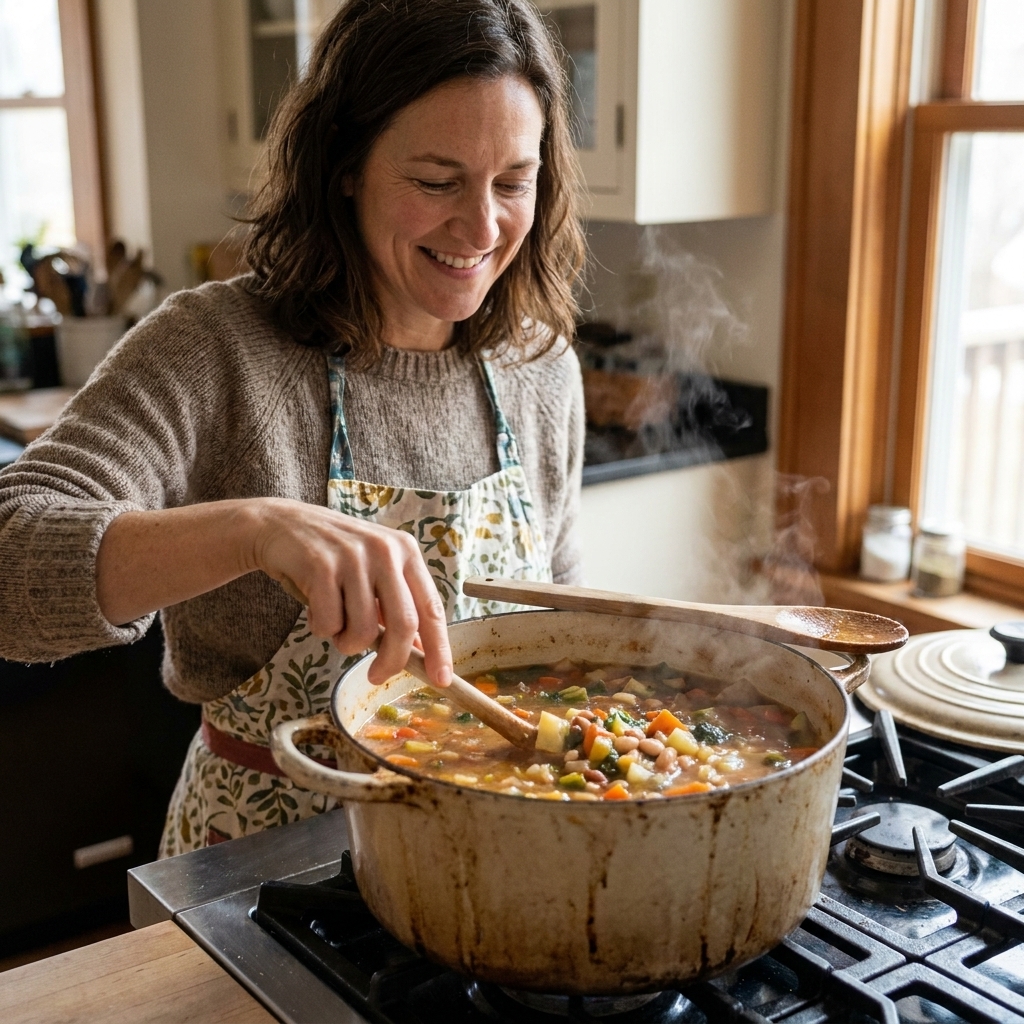
If you have ever stood in the soup aisle holding a carton of broth and thinking, “Is this going to taste like anything?”, you are in good company. When you are trying to get a real bowl of soup on the table in 20 minutes, the broth is not just a background player. It is the main act.
In my kitchen, I use all three options depending on the night: boxed broth, bouillon paste, and frozen homemade stock. Each one has a sweet spot. The key is knowing what you are trading: flavor, salt control, cost, and convenience.
The quick answer
If you want the most flavor with the least effort for a 20-minute soup, bouillon paste is usually the best weeknight tool. If you want clean, easy, and consistent, boxed broth is dependable. If you want depth and body that makes a simple soup taste like it simmered all afternoon, frozen homemade stock is unmatched.
- Best all-around for fast soup: bouillon paste
- Best open and pour option: boxed broth
- Best flavor and texture: homemade stock (frozen)
What matters in a 20-minute soup
In a long-simmered stew, you can build flavor over time. In a 20-minute soup, you need your base to show up fast. Here is what makes the difference:
- Salt level: Too salty is hard to fix without diluting. Too bland and your soup tastes like hot water.
- Body: Stock made with bones and connective tissue has a subtle silky feel that makes quick soups taste more satisfying.
- Aromatics already present: Many store-bought broths are lightly seasoned. You often need to add onion, garlic, herbs, or acid to wake them up.
- Consistency: If you are cooking on autopilot after a long day, consistency matters.
Boxed broth
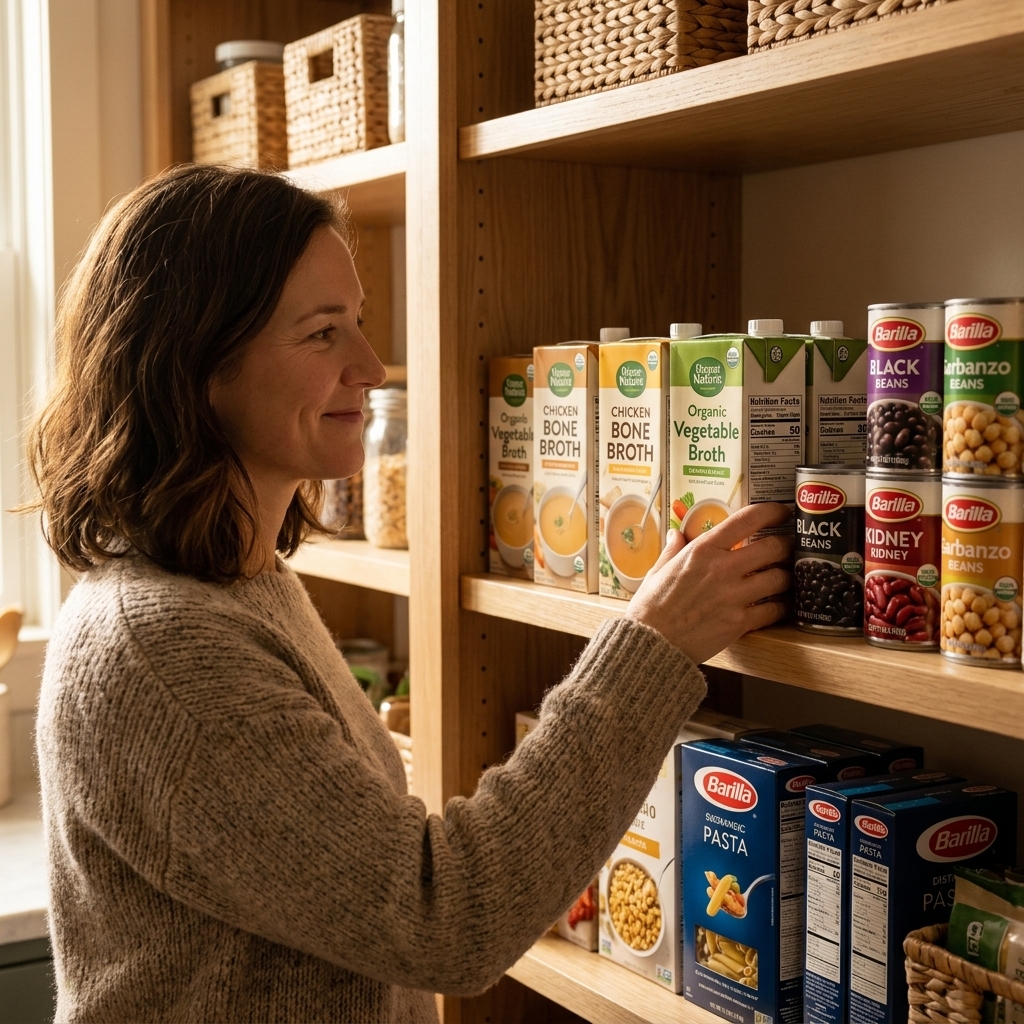
Boxed broth is the easiest path from pantry to pot. You crack the seal, pour, and you are moving. It is also widely available in low-sodium versions, which matters if you are adding salty ingredients like soy sauce, Parmesan, miso, cured meats, or canned beans.
Where it shines
- Brothy soups: chicken noodle, lemony orzo, veggie soup, tortellini soup
- Light flavors: soups where you want the vegetables, herbs, or lemon to lead
- Time pressure: when you truly need dump and simmer
Common problems
- Flat flavor: some cartons taste one-note, especially vegetable broths
- Watery texture: broth often lacks gelatin, so it can feel thin
- Salt surprises: regular versions vary a lot brand to brand
My boxed broth upgrade routine (2 minutes)
These are the fixes I reach for constantly, especially for quick soups. I also try to wait to salt until the end, because once salty ingredients pile up, it is easy to overshoot.
- Bloom tomato paste: 1 tablespoon in a little oil for 30 seconds before adding broth (instant savory depth)
- Add an allium: sliced scallions, a smashed garlic clove, or 1/4 onion if you have it
- Finish with acid: lemon juice, lime, a splash of vinegar, or a spoon of pickling brine
- Umami bump: a little soy sauce, fish sauce, miso, or a Parmesan rind if you have one
- Fresh herbs at the end: parsley, dill, cilantro, basil
Bouillon paste
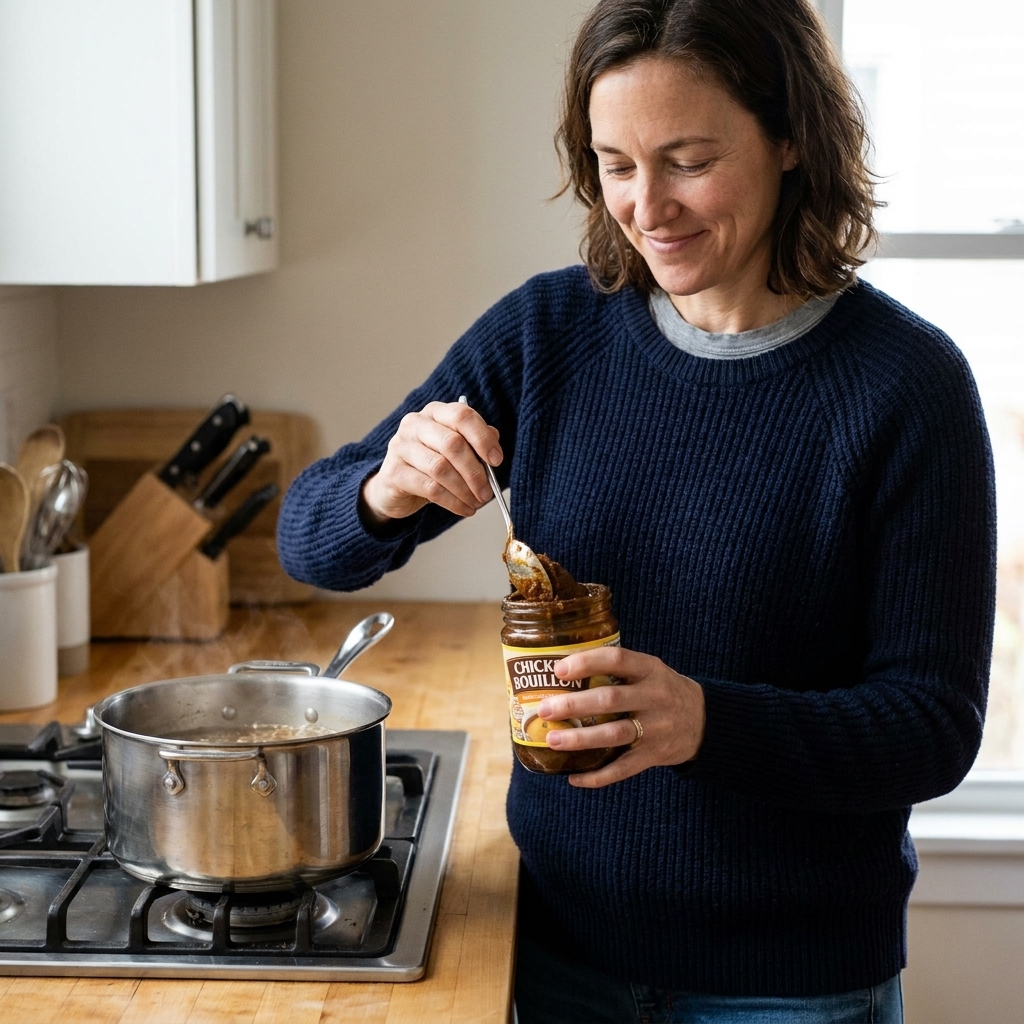
Bouillon paste is my secret weapon for quick soups because it is concentrated and designed to be intensely savory. It dissolves quickly, lets you make exactly the amount you need, and takes up almost no pantry space.
Where it wins
- You need flavor now: 20-minute soups, ramen-style bowls, quick bean soups
- You want flexibility: mix stronger broth for hearty soups, lighter for delicate ones
- You are low on ingredients: when your fridge is looking sparse but you still want a cozy bowl
Things to watch
- Salt: pastes are typically salty, so start light and adjust at the end
- Distinct seasoning: some have noticeable herb or roasted notes that may not fit every cuisine
- Clarity: paste-based broth can be slightly cloudy, which is totally fine for most soups
How I use it for 20-minute soups
I build the soup with vegetables and aromatics first, then stir the paste into hot water right in the pot. Ratios vary by brand, but as a starting point I usually begin around 1 teaspoon per cup of water, then adjust after everything is simmering. For a more homemade stock feel, I go a touch stronger than the jar suggests, then balance with acid and a little fat.
- Cozy chicken soup shortcut: bouillon paste + shredded rotisserie chicken + frozen peas + egg noodles
- Fast veggie soup: bouillon paste + canned tomatoes + white beans + spinach
- Clean-out-the-fridge noodle bowl: bouillon paste + whatever quick-cooking veg you have + thin noodles
If you only have bouillon cubes or powder, you can absolutely use them. They are similar to paste but often a little saltier and less nuanced, so taste early and plan to finish with something bright like lemon, vinegar, or herbs.
Frozen homemade stock
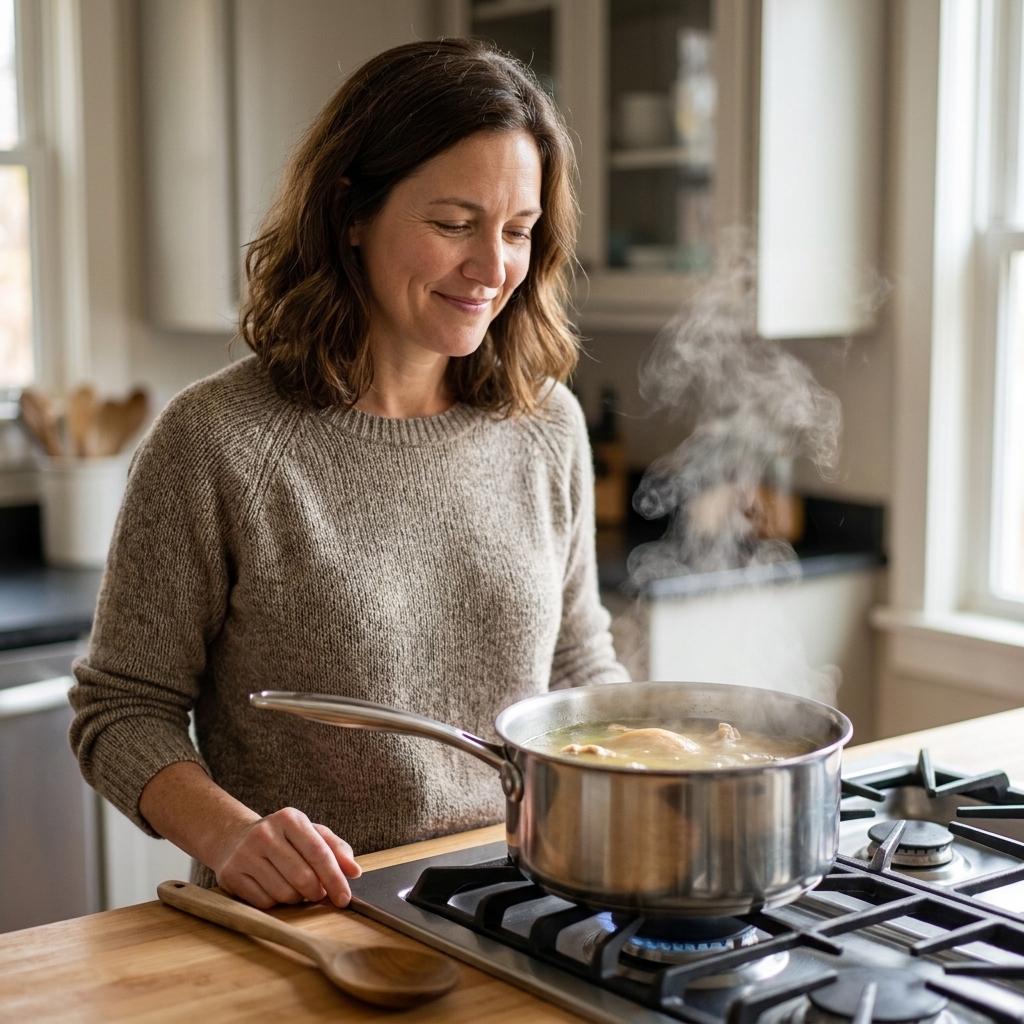
Homemade stock is the best-tasting option, no question. Even when you turn it into a soup in 20 minutes, it tastes like you did something special. The reason is body: stock made from bones and connective tissue brings natural gelatin. Vegetable stock does not have gelatin, but it can still taste full and rounded, especially if you roast the vegetables well and use mushrooms, tomato paste, or seaweed for depth.
Where it is worth it
- Simple soups: when the broth is the star, like chicken and rice, matzo ball soup, or a clean ginger chicken soup
- Small ingredient lists: when you are not adding lots of spices, cheeses, or bold sauces
- Leftover reinvention: turning last night’s roast chicken bits into today’s soup
The freezer strategy that works
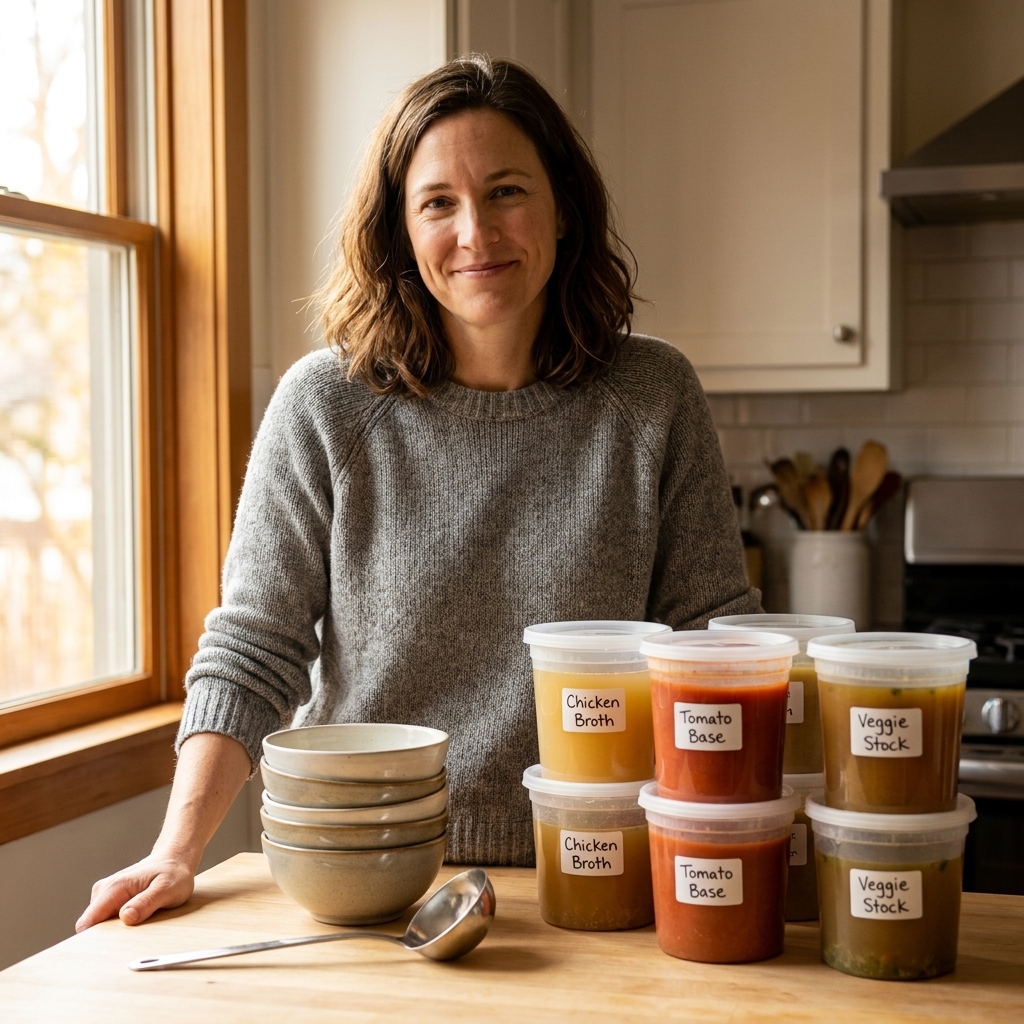
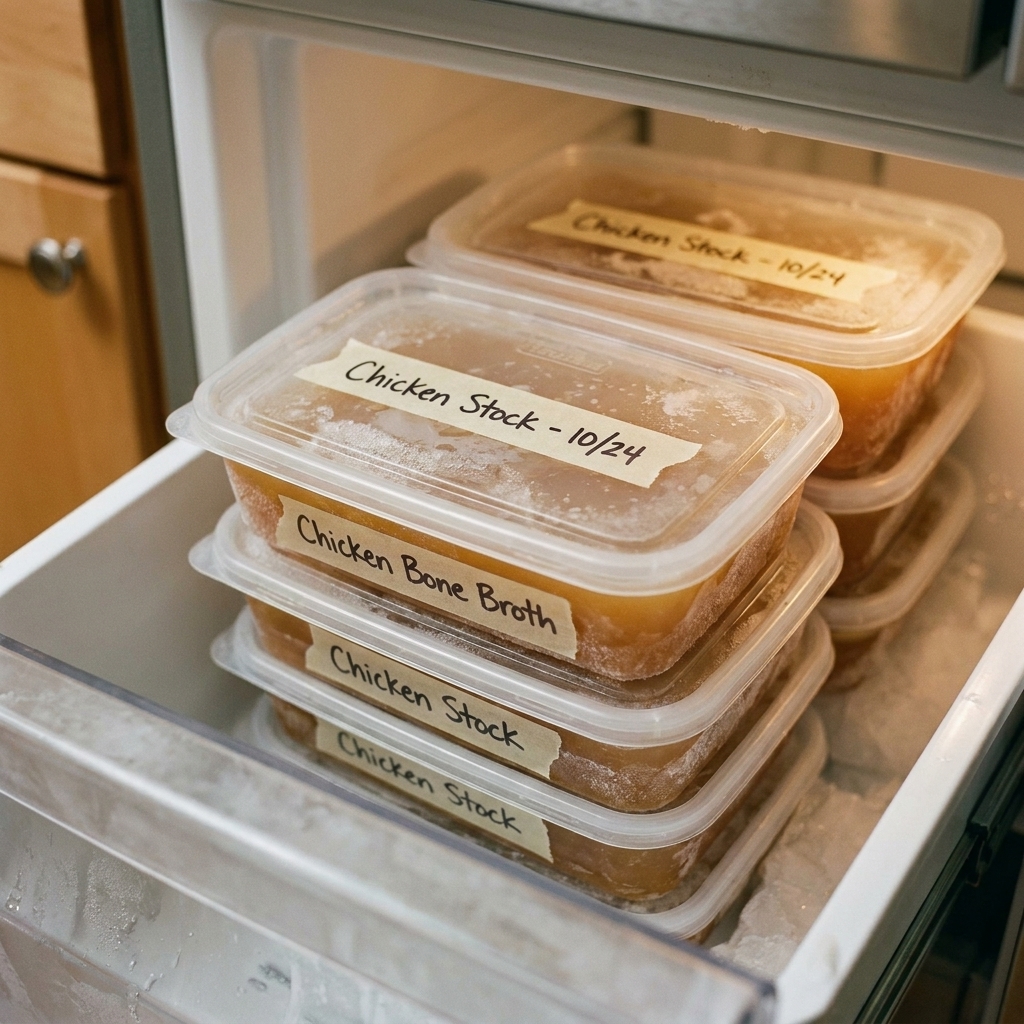
I am a cook once, eat twice person, so I treat stock like a freezer staple. When I make it, I freeze it in two sizes:
- 1-cup portions: perfect for quick pan sauces, cooking grains, or boosting boxed broth
- 4-cup portions: a full batch of soup without thinking
Freezer tip from many snowy upstate New York winters: freeze stock flat in zip-top bags on a sheet pan. They stack like books and thaw quickly.
Food safety note: cool stock quickly, refrigerate promptly, and freeze what you will not use within a few days. For best quality, try to use frozen stock within a few months.
What to use tonight
If you want a simple decision tree, here is mine:
Choose boxed broth if:
- You want the most straightforward open and pour option
- You need low-sodium control
- You are making a soup with lots of other flavor boosters (tomatoes, sausage, curry paste, miso)
Choose bouillon paste if:
- You want maximum flavor with minimum prep
- You do not want half a carton lingering in the fridge
- You are building a quick soup from pantry odds and ends
Choose homemade stock if:
- You have it frozen already (past-you did you a favor)
- The soup is simple and brothy
- You want that restaurant-level body without simmering for hours
Make any broth taste better
No matter what you start with, you can make a quick soup taste deeper and more intentional with a few fast moves:
1) Start with fat and an aromatic
Olive oil, butter, or a spoon of rendered sausage fat plus onions, garlic, scallions, ginger, or celery. Even 3 minutes helps.
2) Add one concentrated flavor
- Tomato paste
- Miso
- Soy sauce or tamari
- Parmesan rind
- A spoon of pesto stirred in at the end
3) Finish with acid and freshness
Acid is the turn-the-lights-on moment for soup. Lemon juice, vinegar, hot sauce, or even a few chopped pickled peppers can rescue a pot that tastes sleepy. Then add herbs or greens right at the end so they stay bright. Taste first, then salt if it needs it.
4) Do not forget texture
Quick soups love a crunchy topper: croutons, toasted nuts, crushed tortilla chips, or just a good piece of crusty bread. Texture makes a fast soup feel like a full meal.
My favorite blends
Some of the best weeknight soups come from mixing broth types:
- Half boxed broth, half homemade stock: stretches your freezer stash but keeps that silky feel
- Boxed broth plus a spoon of bouillon paste: the quickest way to turn up the volume without simmering
- Homemade stock plus a tiny bit of bouillon paste: helpful if your stock is unsalted and you want more savory depth without over-salting
Quick FAQ
Is stock better than broth for quick soups?
If you have it, yes. Stock usually has more body from bones and connective tissue. For a 20-minute soup, that body reads as richness.
Should I buy low-sodium broth?
I usually do, especially if I am adding salty ingredients. You can always add salt at the end, but it is tough to take it out once it is in there.
How long does opened boxed broth last in the fridge?
Plan on about 3 to 4 days, and always check the carton for the brand’s guidance. Keep it tightly sealed, and if it smells off or tastes odd, do not use it. If you routinely forget about open cartons, bouillon paste (or freezing leftover broth in 1-cup portions) is your friend.
Can I make homemade stock quick?
True stock takes time, but you can do a fast, flavorful cheat by simmering boxed broth with aromatics for 15 minutes. Add onion, garlic, a bay leaf, and a few peppercorns, then strain if you want it extra clean.
What is the best broth base for vegetarian 20-minute soups?
Bouillon paste tends to be the most flavorful vegetarian option, especially for quick bean soups and noodle bowls. With boxed vegetable broth, plan on adding extra aromatics and a splash of acid.
The bottom line
For quick 20-minute soups, there is no single best broth, just the best tool for the night you are having. Keep boxed broth around for convenience, bouillon paste for bold flavor on demand, and a few freezer portions of homemade stock for when you want your simplest soups to taste like a Sunday afternoon.
And if you are reading this with a loaf of crusty bread in mind, I fully support that plan.